
VCSEL in Automotive LiDAR Systems: Driving the Future
What is a VCSEL Diode Laser?
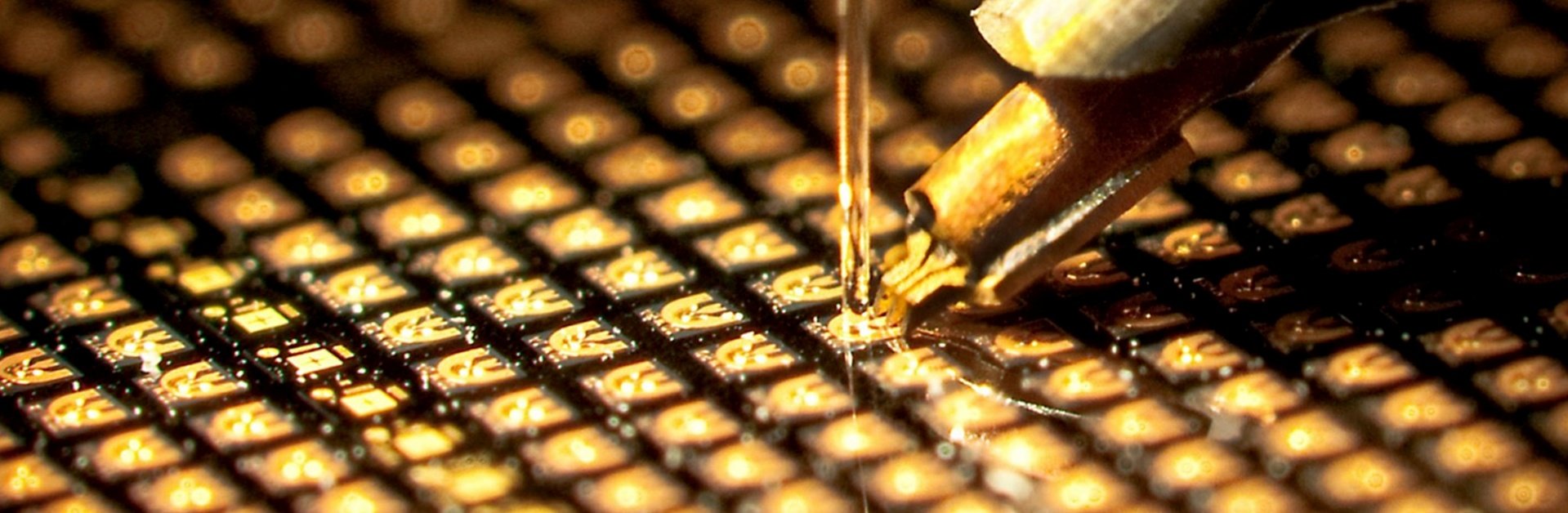
A Vertical Cavity Surface Emitting Laser (VCSEL) is a type of semiconductor diode laser that emits light perpendicular to the surface of the chip. Instead of radiating from the edge like a traditional edge-emitting laser, a VCSEL emits a highly efficient, well-collimated beam directly from the top surface. This structure makes VCSEL diode lasers easy to package into arrays, simple to test at wafer level, and highly suitable for large-scale manufacturing.
Importance of VCSELs in Automotive LiDAR Systems
In automotive LiDAR (Light Detection and Ranging) systems, the light source is at the heart of overall performance. VCSEL-based diode laser solutions generate short, powerful pulses of infrared light that are projected into the environment. By measuring the time of flight of the reflected light, the LiDAR system can detect objects, determine their distance, and build a precise 3D model of the vehicle’s surroundings.
For car makers and Tier-1 suppliers, VCSEL diode lasers offer a compelling combination of reliability, scalability, and optical performance, which is why they are becoming a preferred light source for next-generation LiDAR platforms.
Understanding LiDAR Technology
Overview of Automotive LiDAR Systems
Automotive LiDAR systems use pulsed diode laser beams to measure distances to objects around the vehicle. The system sends out laser pulses, collects the reflected signals with a detector, and uses this information to calculate distance and shape.

By stitching together millions of these distance measurements per second, LiDAR creates a detailed, real-time 3D point cloud. This depth information gives the vehicle accurate spatial awareness, complementing cameras and radar and enabling safer decision-making for advanced driver assistance systems (ADAS) and autonomous driving.
Role of Diode Lasers in LiDAR
Diode lasers—including VCSELs—are the primary illumination source in most modern LiDAR designs. A VCSEL diode laser can:
Emit coherent light with a very stable wavelength
Switch on and off at high speed to support fast pulse patterns
Be integrated into dense 2D arrays for wide field-of-view coverage
Because of these characteristics, VCSEL diode lasers help LiDAR systems achieve high resolution, long range, and robust performance in demanding automotive environments.
LiDAR and the Automotive Industry
The rapid development of self-driving and highly automated vehicles is driving strong demand for reliable sensing technologies. LiDAR fills a critical gap by providing precise distance and elevation data that cameras alone cannot deliver.
LiDAR modules built around VCSEL diode laser arrays enable vehicles to:
Detect pedestrians, cyclists, and obstacles at various ranges
Accurately map complex road environments in 3D
Support advanced features like automated lane changes and highway pilot
As the industry moves toward higher levels of autonomy, VCSEL-based LiDAR is expected to play a central role in achieving safe, scalable deployment.
Advantages of VCSEL Diode Lasers in LiDAR Systems
1. Precision and Accuracy
VCSEL diode lasers provide excellent beam quality and a narrow, stable wavelength. This stability helps LiDAR systems maintain consistent performance over time and temperature, resulting in highly accurate distance measurements.
In high-speed driving scenarios—such as highway ADAS—this measurement accuracy supports faster, more reliable perception, which directly contributes to driving safety.
2. Reliability and Durability
Compared with many conventional edge-emitting laser diodes, VCSELs typically offer:
Longer operating lifetimes
Better resistance to mechanical shock and vibration
Stable output over a wide temperature range
These features are critical for automotive applications, where components must survive harsh conditions for many years. A robust VCSEL diode laser platform reduces maintenance needs and supports stringent automotive qualification standards.
3. Cost Effectiveness and Scalability
VCSELs are inherently well suited for high-volume production. They can be:
Tested at wafer level, which lowers test costs
Manufactured in large arrays, reducing per-channel cost
Integrated with optics and driver electronics in compact packages
For automakers focused on cost per sensor and total system cost, VCSEL diode laser solutions offer a path to scalable LiDAR deployment across multiple vehicle models and trim levels.
Key Automotive LiDAR Applications of VCSEL Diode Lasers
VCSEL-based diode lasers are already being designed into a range of automotive LiDAR applications, including:
Collision Avoidance Systems
Forward-looking LiDAR detects vehicles, pedestrians, and obstacles, enabling emergency braking and other collision-mitigation functions.Adaptive Cruise Control and Highway Assist
LiDAR enhances distance and relative speed measurement to support smoother, more reliable adaptive cruise control and automated lane-keeping on highways.Automated and Autonomous Driving Functions
High-resolution LiDAR using VCSEL diode laser arrays provides the 3D perception backbone needed for advanced automated driving features, from parking assist to higher-level autonomy.
Challenges and Solutions for VCSEL-Based LiDAR
1. Environmental Factors
Automotive LiDAR must operate in rain, fog, snow, dust, and strong sunlight. These conditions can attenuate or scatter laser signals.
To address this, VCSEL diode laser solutions are typically combined with:
Optimized wavelengths for better performance in adverse weather
Advanced signal processing and filtering to improve signal-to-noise ratio
Robust optical designs with protective windows and coatings
Together, these measures help maintain reliable detection even in challenging real-world environments.
2. Integration with Other Sensing Technologies
For self-driving vehicles, LiDAR does not operate in isolation. It must work alongside radar, cameras, and ultrasonic sensors.
From a system perspective, VCSEL-based LiDAR must:
Synchronize timing with other sensors
Share data with centralized perception and fusion algorithms
Fit into tight mechanical and electrical integration constraints
Our VCSEL diode laser platforms are designed with these integration requirements in mind, enabling compact LiDAR modules that fit seamlessly into multi-sensor architectures.
3. Standards and Compliance
Automotive suppliers must ensure that VCSEL-based LiDAR systems comply with:
Eye-safety regulations for diode laser emission
Automotive reliability and quality standards (such as AEC-Q requirements)
Interoperability and performance benchmarks defined by OEMs and industry bodies
By carefully controlling power levels, beam patterns, and thermal behavior, VCSEL diode laser designs can meet these requirements while still delivering the performance needed for next-generation LiDAR.
By combining high efficiency, reliability, and scalability, VCSEL diode laser technology provides a strong foundation for automotive LiDAR systems. For vehicle manufacturers aiming to bring advanced driver assistance and autonomous features to market, choosing the right VCSEL partner and light source architecture is a key step toward safer and smarter mobility.