
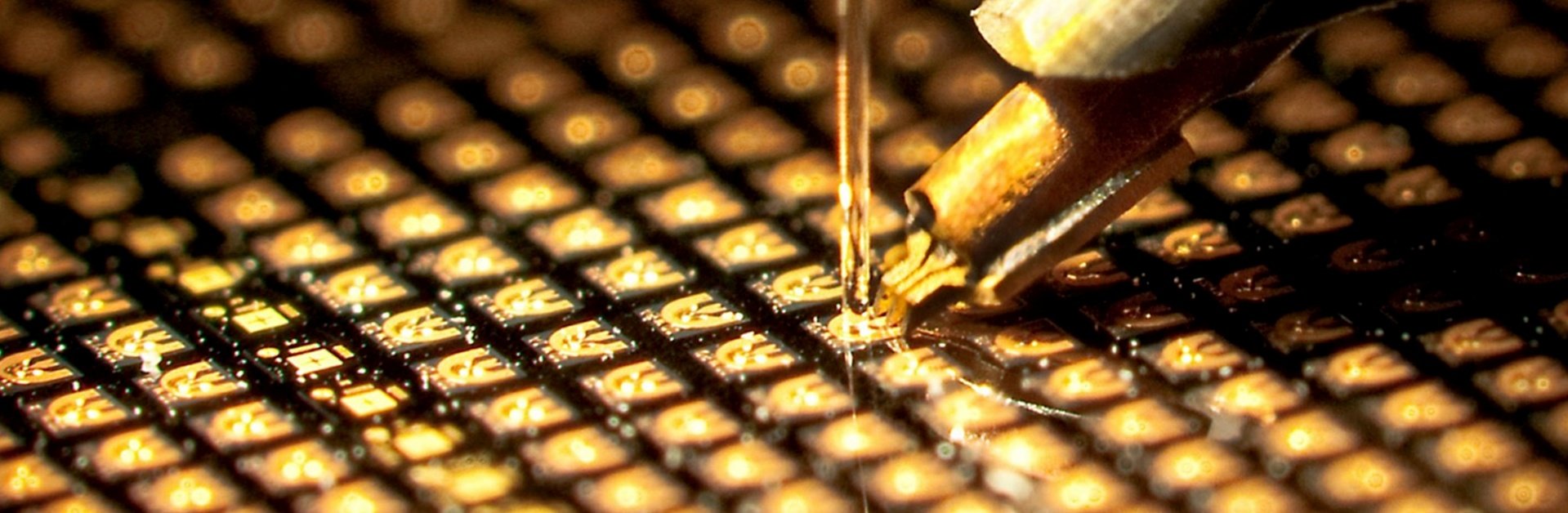
Edge Emitting Laser vs VCSEL: How to Choose for Your Design
What Are Lasers?
Lasers (Light Amplification by Stimulated Emission of Radiation) generate a narrow, coherent beam of light by amplifying photons inside an optical cavity. Because this beam can be tightly focused and precisely controlled, lasers are used everywhere: in fiber-optic networks, industrial cutting systems, medical instruments, sensing modules and consumer electronics.
When engineers compare edge emitting laser vs VCSEL, they are really choosing between two very different semiconductor structures. Understanding those differences is essential before you commit to a platform, package or wavelength.
As a VCSEL manufacturer, Ace Photonics focuses on high-performance VCSEL dies, packages, gain chips and modules, especially in the 750–900 nm range for quantum sensing, 3D sensing and precision instrumentation.
Edge Emitting Lasers in Brief
What Is an Edge Emitting Laser?
An edge emitting laser (EEL) is a semiconductor laser that emits light from the side of the chip. The optical cavity is formed along the plane of the wafer, and light exits through a cleaved facet at one or both ends.
Because the cavity can be relatively long, edge emitters can support high optical gain and high output power, which explains their dominance in long-haul telecommunications and high-power industrial systems.
How Do Edge Emitting Lasers Work?
Inside an edge emitting laser:
A p-n junction is formed along the length of the chip.
When forward-biased, carriers recombine in the active region and generate photons.
The photons are trapped between two reflective facets, forming a horizontal resonator.
Once the gain exceeds the losses, stimulated emission builds up a coherent beam that leaves through the cleaved edge.
The long in-plane cavity helps deliver high power and good beam quality but makes wafer-level testing and array integration more complex.

Typical Applications of Edge Emitting Lasers
Telecommunications & Datacom over long distance
High-power single-mode or multi-mode EELs are widely used in long-reach fiber links where link budget and distance are critical.Industrial Manufacturing
Edge emitters power many cutting, welding and materials-processing systems where watts to kilowatts of optical power are required.Medical & Scientific Systems
They appear in surgical tools, dermatology systems and some analytical instruments that need high power density and continuous-wave operation.
Understanding VCSELs
What Is a VCSEL?
A Vertical-Cavity Surface-Emitting Laser (VCSEL) emits light perpendicular to the surface of the wafer instead of from the edge. The resonator is built vertically, with distributed Bragg reflector (DBR) mirrors above and below a very thin active region.
This vertical geometry enables:
Emission directly from the wafer surface
On-wafer testing of every die
Easy fabrication of 1D and 2D arrays
Compact, symmetric beams with low divergence
Ace Photonics focuses on single-mode VCSELs in the 750–900 nm band, including 795 nm and 895 nm devices for atomic sensing and quantum applications. These VCSELs offer high wavelength and polarization stability, wide operating temperature ranges and output powers up to the milliwatt level with further scalability in development.
How Do VCSELs Work?
In a VCSEL:
DBR mirrors above and below the active region form a vertical cavity only a few wavelengths long.
The active region typically consists of quantum wells engineered for the target wavelength.
Current confinement and thermal management structures (e.g., oxide apertures, metal apertures) guide carriers into the lasing region.
When biased, stimulated emission builds up between the DBRs and the beam exits through the top surface in a mostly circular pattern.
Because the active region is short, VCSELs require highly reflective mirrors but benefit from very low threshold currents and low power consumption.
Applications of VCSELs
VCSELs have moved from datacom into a wide set of markets:
Short-Range Data Communications
Multimode VCSELs are the workhorse for high-speed links inside data centers.3D Sensing & LiDAR
VCSEL arrays power facial recognition, structured-light depth sensing and LiDAR illuminators thanks to their fast modulation and array scalability.Wearables & Consumer Electronics
In smartwatches, fitness bands and AR glasses, VCSELs enable heart-rate monitoring, SpO₂ sensing and gesture recognition while preserving battery life.Quantum & Precision Sensing
Single-mode VCSELs at 795 nm and 895 nm are used to probe atomic vapors and NV centers in diamond, making them ideal for chip-scale quantum magnetometers and other quantum sensors.Medical & Bio-Optical Systems
High-power devices around 850 nm provide deeper tissue penetration (up to several centimeters, depending on the medium) for imaging and therapeutic applications.
Edge Emitting Laser vs VCSEL: Key Differences
Structural Differences
Edge Emitting Laser (EEL)
Cavity runs along the chip plane.
Light exits through a cleaved facet.
Device length is typically hundreds of micrometers or more.
VCSEL
Cavity is vertical; thickness is only a few wavelengths.
Light exits from the top surface.
Devices can be fabricated and tested directly on the wafer and then arranged in dense arrays.
This difference drives nearly all the practical trade-offs: power handling, packaging, testing and integration.
Performance Comparison
Power Output
EELs usually achieve higher single-emitter power, which is why they dominate in long-haul fiber links and high-power industrial tools.
VCSELs can reach significant power levels via arrays and optimized thermal design; Ace Photonics offers high-power VCSEL dies, modules and gain chips for applications like laser processing and laser medicine.
Efficiency & Power Consumption
VCSELs exhibit very low threshold currents and high wall-plug efficiency, particularly around 750–900 nm, making them suitable for battery-powered and thermally constrained systems.
Beam Shape & Divergence
EEL beams are often elliptical and can require additional optics to shape.
VCSELs provide symmetric, low-divergence beams that are easy to couple into multimode fiber and to shape with micro-lens arrays.
Range
EELs are preferred for long-distance fiber links where optical power and link budget dominate.
VCSELs excel in short-range, high-density interconnects (e.g., rack-to-rack or in-rack links) and free-space sensing within a few meters to tens of meters.
Cost and Manufacturing
Edge Emitters
Require cleaving and facet coating.
Testing happens after dicing, so wafer-level screening is limited.
Packaging and alignment can be more complex and costly.
VCSELs
Emit from the wafer surface, enabling full wafer-level testing and high-volume manufacturing.
Arrays and multi-channel modules are easier to realize, reducing cost per channel for many-link systems.
Ace Photonics’ wafer-level fabrication and strict quality control allow large volumes of VCSEL dies, SMDs and TO46 / non-magnetic packages to be produced and tested efficiently.
Advantages of Edge Emitting Lasers
High Single-Emitter Power
Ideal where high optical power is needed from a single chip, such as high-power fiber lasers or long-reach optical networks.Long-Range Transmission
EELs are still the standard choice for tens to hundreds of kilometers of fiber, especially around telecom wavelengths like 1310 nm and 1550 nm.Mature Ecosystem
Design practices, drivers and packaging options for EELs are well established in telecom and industrial markets.
Advantages of VCSELs
From a VCSEL manufacturer’s perspective, the key benefits are especially compelling:
High Efficiency & Low Power Consumption
VCSELs combine low threshold current with high efficiency, reducing energy usage in data centers, wearable devices and always-on sensors.Wafer-Level Testing and Scalability
Surface emission allows every die to be tested on the wafer, improving yield and reliability while supporting dense 2D arrays.Compact Size and Flexible Packaging
VCSEL dies can be integrated into tiny modules, including non-magnetic packages for quantum sensors or compact modules for laser processing and medical devices.Beam Quality for Sensing
Narrow spectral linewidth, stable wavelength and well-controlled polarization are particularly important in atomic spectroscopy and high-precision sensing—areas where Ace Photonics single-mode VCSELs are optimized.
Limitations of Each Technology
Edge Emitting Laser Limitations
Complex Manufacturing & Packaging
Cleaving, facet coating and high-precision alignment add cost and complexity.Thermal Management
High-power operation leads to significant heat that must be removed with sophisticated mounting and cooling.Array Integration
Building large, closely spaced arrays of EELs is more challenging than with surface-emitting devices.
VCSEL Limitations
Lower Single-Emitter Power
A single VCSEL aperture typically delivers less power than a comparable EEL, though arrays and advanced heat management can compensate in many use cases.Shorter Native Range
VCSELs are naturally suited to short-to-medium distances; for ultra-long-haul links, EELs still have an advantage.Temperature Sensitivity
VCSEL characteristics shift with temperature. Modern designs, including those from Ace Photonics, extend operating ranges up to around 150 °C, but thermal design still needs attention.
Choosing Edge Emitting Laser vs VCSEL by Application
Industrial & Laser Processing
Best Fit:
High-power EELs for cutting, welding and heavy materials processing.
High-power VCSEL modules can be considered for specialized processing, laser medicine and demonstrations where array-based beams and flexible beam shaping are useful.
Telecommunications and Data Communications
Long-Haul & Metro Networks
Edge emitting lasers remain the primary choice due to their power and established telecom wavelengths.
Short-Reach & Data Centers
VCSELs dominate in high-speed multimode fiber links within and between racks because of their efficiency, cost advantages and array support.
Consumer Electronics & Wearables
Best Fit: VCSELs
For smartphones, tablets, AR/VR devices and wearables, VCSELs excel due to low power draw, compact footprint and suitability for 3D sensing and health monitoring.
Medical and Bio-Optical Devices
Use Both, Depending on Requirements
EELs are favored where very high power or long propagation in tissue is required.
VCSELs at 850 nm and related wavelengths are attractive for imaging, non-invasive sensing and compact therapeutic systems that value efficiency and fine control over penetration depth.
Quantum and Precision Sensing
Best Fit: Single-Mode VCSELs
For atomic magnetometers, high-precision spectroscopy and NV-center sensing, single-mode VCSELs with non-magnetic packaging and stable polarization deliver narrow linewidths and excellent signal-to-noise ratio.
Future Trends
Edge Emitting Lasers
Improved cooling, higher reliability and new wavelength bands will keep EELs relevant in high-power and ultra-long-distance roles.
Integration with advanced drivers and coherent modulation formats will further extend data rates.
VCSEL Technology
Higher Output Power & Arrays
Advanced epitaxial structures and thermal designs are pushing single-emitter and array power higher, enabling broader use in LiDAR, industrial sensing and even some processing tasks.Wider Temperature Ranges
Modern VCSELs are engineered for operation up to 150 °C, which is crucial for automotive, aerospace and harsh-environment sensing.New Application Domains
Quantum sensing, chip-scale atomic clocks, high-resolution 3D imaging and advanced wearables are all opening new markets for high-performance VCSELs.
Conclusion: Which Should You Choose?
Choose an edge emitting laser when:
You need maximum power from a single emitter.
Your system must transmit over long distances or through highly lossy media.
You are designing traditional long-haul telecom or high-power industrial equipment.
Choose a VCSEL when:
Efficiency, power consumption and temperature stability are critical.
You need compact modules or dense arrays for 3D sensing, wearables, quantum sensing or short-range high-speed links.
You want wafer-level testing, scalable manufacturing and flexible packaging options.
From a VCSEL manufacturer’s standpoint, VCSELs are increasingly the technology of choice for short-range communication, 3D and quantum sensing, wearable health monitoring and compact medical systems. If your project sits in these domains, exploring Ace Photonics VCSEL dies, packages, gain chips and modules can help you balance performance, cost and long-term scalability.