
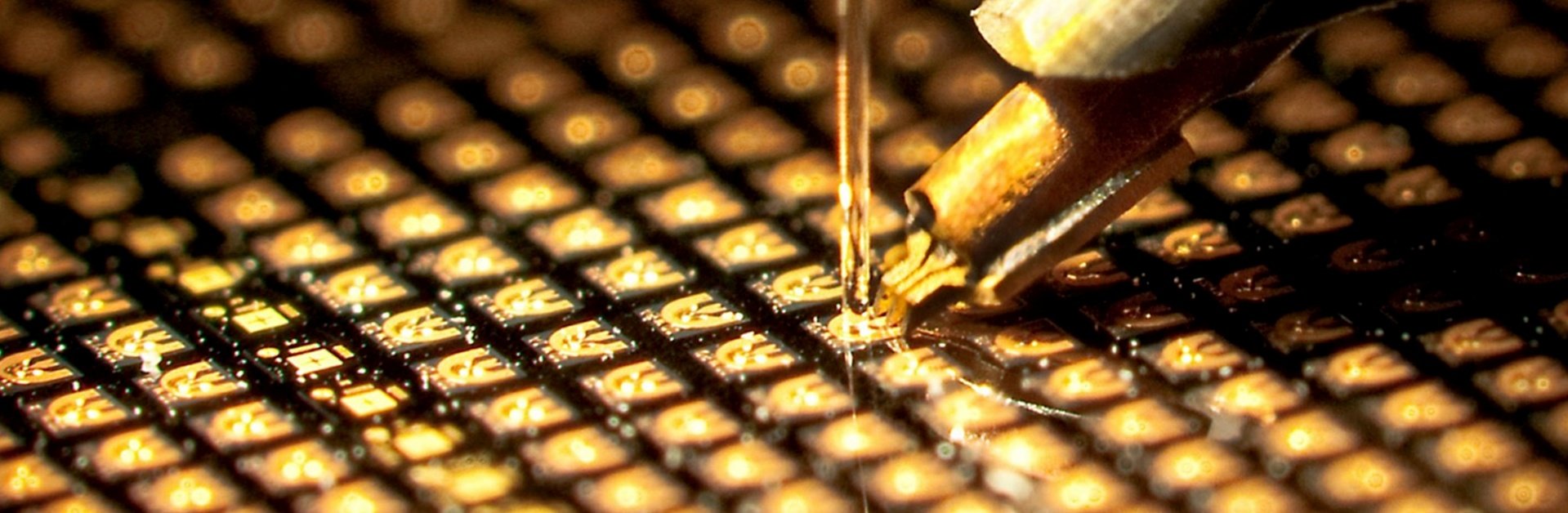
Developments and Trends in Face ID VCSEL Technology for 2024
Face ID VCSEL technology is moving from a niche component to a core enabler of secure human–machine interaction. For device makers, the choice of Face ID VCSEL directly affects 3D sensing performance, power consumption and the overall user experience. As a dedicated VCSEL manufacturer, Ace Photonics designs and fabricates VCSELs that are ready for high-volume Face ID applications in smartphones, tablets, wearables and access-control systems.
Understanding Face ID VCSEL Technology
How Face ID Works in Practice
Modern Face ID systems project structured infrared light onto the user’s face, capture the reflected pattern with an image sensor and reconstruct a 3D depth map. The pattern is compared with an enrolled template to unlock devices, authorize payments or grant access to protected systems.
Within this architecture, the light source determines how robust and repeatable the depth information will be. That is where the Face ID VCSEL comes in.
Why VCSELs Are Central to Face ID
Vertical-Cavity Surface-Emitting Lasers (VCSELs) emit infrared light perpendicular to the wafer surface, enabling efficient wafer-level testing and array integration. For Face ID, this structure brings several critical advantages:
Stable wavelength over temperature, supporting reliable detection through IR bandpass filters.
High electro-optical efficiency, reducing system-level power consumption.
Low beam divergence and symmetric output, ideal for precise beam shaping in 3D sensing.
Array scalability, enabling flood illumination or structured light patterns from compact modules.
Ace Photonics’ GaAs-based VCSEL designs are engineered for these requirements, with single-mode operation across the 750–900 nm band and excellent polarization and wavelength stability—key for repeatable depth maps in facial recognition.
How Face ID VCSEL Design Has Evolved
From Early Prototypes to Compact Arrays
Early Face ID implementations used relatively large laser emitters with conservative drive conditions. Modules took more board space, consumed more power and offered limited flexibility for advanced beam shaping.
Progress in epitaxial growth, chip processing (including ICP etching, wet oxidation and BCB processes) and wafer-level testing has transformed VCSEL technology. Today, Ace Photonics can deliver:

Bare die suitable for direct integration.
TO-can and SMD packages with tailored thermal performance.
Non-magnetic packages for sensitive sensing environments.
These advances allow OEMs to shrink the optical stack while improving reliability and efficiency.
Milestones on the Path to 2024
By 2024, several milestones have become standard expectations for Face ID VCSEL sources:
Higher efficiency: room-temperature wall-plug efficiencies exceeding 45% in typical devices.
Tight wavelength control: narrow emission bandwidth and stability over temperature for consistent sensing.
Improved polarization control: supporting higher signal-to-noise ratios in 3D sensing optics.
Rigorous wafer-level screening: every die tested before packaging, improving yield and field reliability.
Ace Photonics incorporates these capabilities into its VCSEL die, packages and modules to support demanding Face ID projects.
2024: What Device Makers Expect from Face ID VCSELs
Enhanced Accuracy and Robust 3D Sensing
For 2024 designs, OEMs are looking for Face ID VCSELs that help capture finer geometric details—nose bridges, eye sockets, hairlines and partial profiles. From the component side, this means:
Linear polarization and narrow wavelength spread to improve depth reconstruction quality.
Uniform output across arrays for clean structured light patterns.
Stable output power across the full operating temperature range.
Ace Photonics’ single-mode VCSELs, with high wavelength and polarization stability, are tailored to deliver this level of consistency for facial recognition and other 3D sensing tasks.
Improved Energy Efficiency for Mobile and Wearables
Battery life remains a critical selling point. A modern Face ID VCSEL must support:
High peak power during short illumination bursts.
Low threshold current and efficient conversion to optical output.
Minimal thermal load on compact optical modules.
By optimizing cavity design, current confinement and thermal management, Ace Photonics reduces power consumption and heat generation, enabling longer battery life without sacrificing unlock speed or security.
Miniaturization and Flexible Packaging
Industrial designers want slimmer bezels, under-display sensors and more freedom in layout. On the VCSEL side, this requires:
Compact die formats that are easy to integrate with microlens and micro-optics arrays.
Thin, thermally optimized packages that fit into tight spaces.
Support for custom footprints and array geometries.
Ace Photonics provides a wide range of die and package options, along with OEM customization, to match different Face ID module architectures.
Key Technical Trends in Face ID VCSEL Technology
Integration with Multi-Modal Biometrics
Face ID no longer stands alone in many devices. Manufacturers are combining it with fingerprint sensors, iris scanning or voice recognition. The Face ID VCSEL must therefore:
Deliver reliable performance even when used less frequently (e.g., as a secondary factor).
Maintain calibration over long device lifetimes.
Support fast wake-up and short pulses to minimize user-perceived latency.
VCSELs with fast rise and fall times and stable characteristics across operating conditions are well suited to these multi-modal authentication stacks.
AI, Machine Learning and Illumination Quality
On-device AI and machine learning models continually refine how faces are recognized and how spoofing is detected. The quality of the illumination provided by the VCSEL has a direct impact on the data these models see. A stable, low-noise infrared pattern leads to:
Cleaner depth maps for training and inference.
Better liveness detection when combined with temporal analysis.
Reduced false acceptance and false rejection rates.
By offering narrow-linewidth, single-mode VCSELs with controlled divergence, Ace Photonics helps system designers feed their algorithms with high-quality data.
Advancements in Security and Anti-Spoofing
Security expectations keep rising. Face ID systems must distinguish a living face from photos, masks or 3D-printed replicas. From the light source side, this drives:
Support for dynamic illumination patterns and time-of-flight schemes.
Compatibility with high-speed modulation for advanced anti-spoofing.
Tight control over output power and emission profile to keep the system within eye-safety limits.
High modulation speed and excellent stability make VCSELs an ideal match for these next-generation security features.
Expansion into New Application Markets
Face ID-style 3D sensing is moving beyond smartphones into:
Automotive driver and occupant monitoring.
Smart door locks and access-control terminals.
Healthcare devices requiring hands-free authentication.
Industrial and retail terminals with shared users.
In many of these environments, temperature extremes, vibration and electromagnetic interference are more challenging than in consumer electronics. Ace Photonics’ experience in aerospace-related payloads and special-environment testing helps translate Face ID VCSEL technology into these emerging markets.
Challenges for OEMs and How Manufacturers Respond
Managing Privacy and Data Protection
Although Face ID data handling is primarily a system-level issue, component suppliers still play a role. By supplying consistent, verifiable VCSEL performance, manufacturers like Ace Photonics help integrators design systems where:
Raw biometric data can be processed securely on-device.
Stable sensing reduces the need for storing multiple redundant templates.
System-level certification and compliance become easier to achieve.
Environmental and System Integration Constraints
Variations in ambient light, temperature and device assembly tolerance can degrade depth sensing. From the VCSEL design side, solutions include:
Wide operating temperature ranges with stable wavelength and power.
Low divergence beams that are less sensitive to small alignment shifts.
Customizable array designs to match different optics and sensor placements.
Ace Photonics addresses these needs through careful epitaxial structure design, front- and back-end processing, and thorough testing of each VCSEL die.
Market Adoption and Design Cycles
Introducing a new Face ID VCSEL into a high-volume device requires validation, qualification and close collaboration. To support that, Ace Photonics offers:
Datasheets and characterization for multiple wavelength and power levels.
Application support for 3D sensing and facial recognition use cases.
OEM customization of die layout, packaging and thermal management.
This reduces risk for device makers and shortens the path from concept to mass production.
How Ace Photonics Supports Face ID VCSEL Projects
As a VCSEL manufacturer focused on quantum sensing, 3D sensing and facial recognition, Ace Photonics brings together:
Core VCSEL technologies: vertical resonant cavity design, current confinement, thermal and polarization control, wavelength control and array integration.
Broad product coverage: single-mode VCSELs in the 750–900 nm band, with output powers from sub-milliwatt levels to several milliwatts.
Flexible formats: bare die, SMD, TO46 and non-magnetic packages, plus integrated modules with temperature control and sensing.
Engineering depth: rich experience in GaAs-based VCSEL R&D and semiconductor chip processing.
For Face ID projects, this translates into tailored Face ID VCSEL solutions that match specific optical, mechanical and environmental requirements.
Outlook: The Next Wave of Face ID VCSEL Innovation
Looking beyond 2024, Face ID VCSEL roadmaps are converging on even more compact, efficient and intelligent systems. We can expect:
Higher-density VCSEL arrays for finer depth resolution.
Tighter integration of VCSELs with drivers, temperature control and sensors in a single module.
Further improvements in efficiency and reliability for long-lived mobile and automotive platforms.
By investing in advanced epitaxial structures, wafer-level processing and application-driven design, Ace Photonics aims to remain a trusted partner for OEMs building the next generation of secure, convenient Face ID solutions powered by high-performance VCSEL technology.