

Gas Sensors Powered by VCSELs: A Better Way to Detect Gas with Precision
Gas Sensors are used in places where mistakes can be expensive, dangerous, or both. They monitor factory floors, check exhaust emissions, track indoor air quality, and help detect invisible leaks before they become serious problems.
As more systems become smaller, smarter, and connected, the demand for better Gas Sensors keeps rising. Traditional gas detection methods still have their place, but many applications now need lower power consumption, smaller optical modules, better selectivity, and more stable long-term performance.
This is where VCSEL technology becomes important.
VCSELs, or Vertical-Cavity Surface-Emitting Lasers, are compact semiconductor lasers that emit light from the surface of the chip. For optical Gas Sensors, especially those based on absorption spectroscopy, VCSELs offer a practical way to improve accuracy while keeping the sensor module small and efficient.
For a VCSEL manufacturer such as Ace Photonics, gas sensing is not just another application. It is a field where wavelength control, packaging reliability, and device consistency directly affect the final sensor performance.
Why VCSELs Are Useful in Gas Sensors
A Gas Sensor often works by measuring how a target gas absorbs light at a specific wavelength. Different gases absorb light differently, so the light source must be stable, narrow, and accurately matched to the absorption line of the gas.
VCSELs are well suited for this job because they can provide:
Compact chip size for small sensor modules
Low power consumption for portable and IoT devices
Narrow linewidth for selective gas detection
Current and temperature tuning for wavelength control
Wafer-level testing for better production consistency
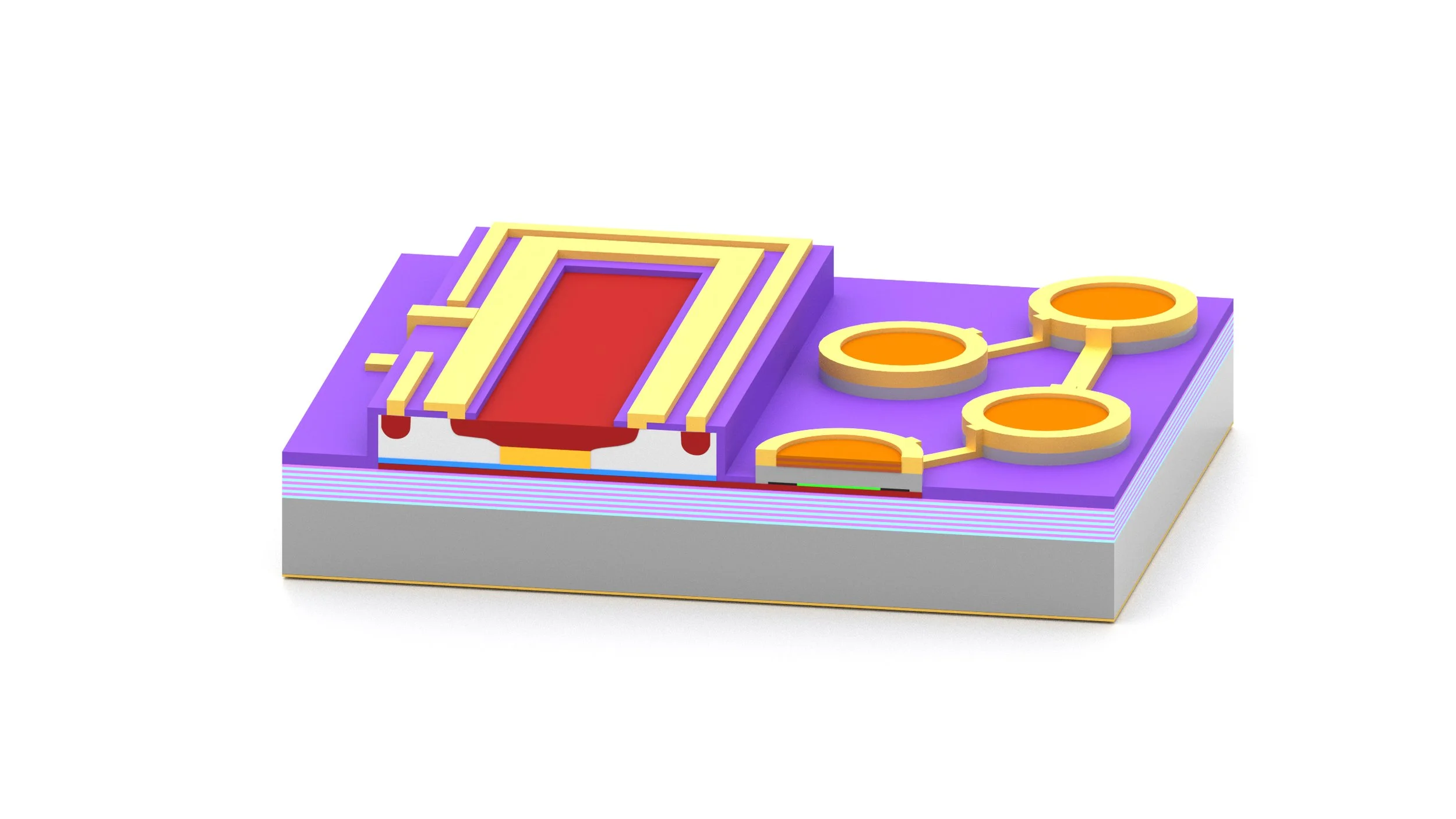
Compared with many traditional edge-emitting lasers or broadband light sources, VCSELs can make Gas Sensors easier to integrate, easier to scale, and more suitable for long-term monitoring.
How VCSEL-Based Gas Sensors Improve Detection
The biggest advantage of VCSEL-based Gas Sensors is precision. Because the VCSEL wavelength can be designed and tuned around a target gas absorption line, the sensor can focus on the gas it needs to measure while reducing interference from other gases.
This is useful for detecting gases such as:
Oxygen
Carbon dioxide
Methane
Volatile organic compounds
Other industrial or environmental gases
For example, VCSELs around 760 nm are commonly attractive for oxygen-related sensing. Other wavelengths can be selected depending on the target molecule and the optical design of the Gas Sensor.
In real applications, this means the sensor can be smaller but still sensitive enough for demanding measurement tasks.
Lower Power and Smaller Sensor Design
Many modern Gas Sensors are no longer installed only in large industrial equipment. They are also used in portable detectors, smart home devices, automotive systems, and distributed monitoring networks.
These systems often have limited space and limited power. A bulky light source or high operating current can make the whole design harder to manage.
VCSELs help solve this problem. Their small size and low power operation allow engineers to build compact Gas Sensors that can fit into tight spaces. This matters for battery-powered devices, wireless monitoring nodes, and embedded systems where every milliwatt and every millimeter counts.
Better Scalability for Gas Sensor Production
For Gas Sensors used in consumer electronics, automotive platforms, or large industrial networks, performance is not the only concern. Production consistency also matters.
VCSELs can be tested at wafer level before the chips are separated and packaged. This helps manufacturers identify performance differences early and improve device consistency across large batches.
For Gas Sensor manufacturers, this can support:
More stable sensor performance
Lower production risk
Easier volume manufacturing
Better cost control per sensing channel
This is one reason VCSELs are becoming more attractive for scalable gas detection systems.
Application Areas for VCSEL-Based Gas Sensors
Environmental Monitoring
Environmental monitoring systems need Gas Sensors that can work for long periods with low drift. VCSEL-based sensors can support continuous measurement of gases such as CO₂ and other emission-related gases.
They can be used in industrial parks, emission monitoring systems, smart city networks, and air quality stations where stable data is important.
Industrial Safety and Leak Detection
Factories, refineries, chemical plants, and processing facilities all rely on Gas Sensors to detect leaks early. A fast and reliable sensor can help prevent accidents and reduce safety risks.
VCSEL-powered Gas Sensors are suitable for continuous monitoring because they offer low power consumption, compact design, and strong wavelength selectivity.
Automotive Exhaust and Engine Systems
Automotive gas sensing often involves high temperature, vibration, and compact installation space. VCSELs can be used in exhaust gas detection and under-the-hood sensing where stable optical performance is required.
For these applications, packaging reliability becomes just as important as the laser chip itself.
Smart Home and IoT Devices
Gas Sensors are also becoming more common in smart homes, HVAC systems, wireless alarms, and indoor air quality monitors.
In these products, users expect small size, long battery life, and stable performance. VCSELs fit this direction well because they make it possible to design compact optical Gas Sensors for connected devices.
Ace Photonics VCSEL Solutions for Gas Sensors
Ace Photonics develops VCSEL and VECSEL products across the 750–1550 nm range, which gives engineers flexibility when selecting wavelengths for gas detection and spectroscopy systems.
For Gas Sensors, Ace Photonics can support customized requirements such as:
Specific wavelength selection
Output power adjustment
Beam shape optimization
Package customization
High-temperature operation
Non-magnetic packaging options
This is important because gas sensing projects are rarely identical. A sensor used in a factory may need a different package from one used in a smart home device or automotive system.
By adjusting the VCSEL design and packaging approach, Ace Photonics can support both R&D projects and volume production needs.
Packaging Matters in Gas Sensors
A good VCSEL chip is only part of the solution. In many Gas Sensors, the package must also handle heat, vibration, space limits, and environmental stress.
For harsh industrial or automotive conditions, high-temperature VCSEL packaging can help maintain stable performance. For sensitive measurement systems, non-magnetic packaging may also be required.
This is why VCSEL customization for Gas Sensors should consider the full device structure, not only the wavelength on the datasheet.
The Future of Gas Sensors with VCSEL Technology
Gas Sensors are moving toward smaller modules, lower power use, and smarter connected networks. Instead of checking gas levels occasionally, many systems now need continuous data.
VCSELs support this trend because they can provide stable, wavelength-specific light in a compact form. When combined with smart electronics, cloud platforms, and AI-assisted analysis, VCSEL-based Gas Sensors can help build more predictive monitoring systems.
This is valuable for industrial safety, environmental protection, automotive control, and everyday air quality monitoring.
Conclusion
Gas Sensors are becoming more important as industries, cities, vehicles, and homes require better gas detection. To meet these demands, sensor systems need light sources that are compact, efficient, stable, and selective.
VCSEL technology offers a strong solution.
With narrow wavelength control, low power consumption, wafer-level consistency, and flexible packaging options, VCSELs can improve the design and performance of modern Gas Sensors.
For companies developing optical gas detection systems, working with an experienced VCSEL manufacturer such as Ace Photonics can make it easier to match the laser source to the sensing requirement, whether the goal is environmental monitoring, industrial safety, automotive sensing, or smart IoT gas detection.