High Power Diode Laser Solutions Based on VCSEL Technology
A high power diode laser is not selected by output power alone. In most real systems, engineers also need to consider beam shape, wavelength stability, thermal control, package size, and long-term reliability.
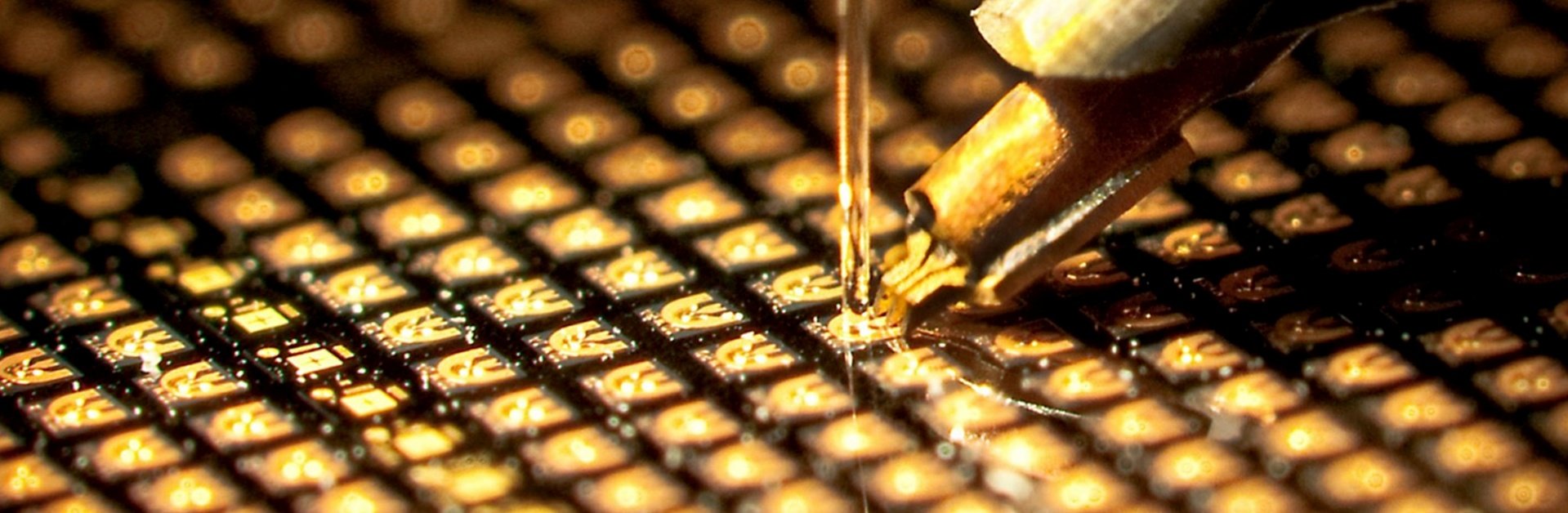
VCSEL technology offers a practical way to balance these requirements. Unlike traditional edge-emitting lasers, a VCSEL emits light vertically from the wafer surface. This structure makes it easier to build compact arrays, test devices before packaging, and control optical performance across production batches.
For applications such as LiDAR, industrial sensing, medical instruments, machine vision, and optical communication, these advantages can make VCSELs a strong choice for high power diode laser designs.
What Is a VCSEL Diode Laser?
VCSEL stands for Vertical-Cavity Surface-Emitting Laser. It is a semiconductor diode laser, but its emission direction is different from a traditional edge-emitting laser.
An edge-emitting laser sends light from the side of the chip. A VCSEL emits light from the surface. This difference changes the way the laser can be tested, packaged, and scaled.
For high power applications, the most important advantage is array design. Many VCSEL emitters can be arranged in a 1D or 2D layout to increase total optical power while keeping the beam more uniform.

Why VCSELs Are Suitable for High Power Diode Laser Designs
Scalable Output Power
VCSELs are well suited for array structures. Instead of forcing one emitter to deliver all the power, multiple emitters share the load.
This helps with:
This is why VCSEL-based high power diode laser arrays are often used in systems that need stable illumination rather than only maximum single-point brightness.
Easier Optical Design
Many traditional edge-emitting lasers have an asymmetric beam. That usually requires more beam correction, tighter alignment, and additional optical components.
VCSELs usually provide a more circular beam. For engineers, this can reduce the complexity of the optical path.
In practical terms, it may help reduce:
Lens count
Alignment time
Module size
Assembly variation
Optical loss caused by poor beam matching
For volume production, these details can matter as much as the laser chip itself.
Better Production Control
VCSELs can be tested directly on the wafer before dicing and packaging. This allows manufacturers to sort devices by wavelength, output power, forward voltage, and other parameters earlier in the process.
For OEM projects, this improves consistency. It also helps when multiple modules must perform similarly in the same system.
A high power diode laser used in real equipment must be stable from unit to unit, not just impressive in a single prototype.
VCSEL vs Edge-Emitting Laser
VCSELs do not replace edge-emitting lasers in every case. The right choice depends on the application.
If the system needs very high single-emitter brightness, an edge-emitting laser may still be better. If the system needs scalable power, compact optics, and uniform illumination, VCSELs are often more practical.
Common Applications
LiDAR and 3D Sensing
VCSEL arrays are widely used in LiDAR and depth sensing because they can provide fast pulsed operation and controlled infrared illumination.
They are suitable for:
ADAS
Robotics
Mapping systems
Short-range LiDAR
3D sensing modules
For these systems, beam control and repeatable performance are often more important than simply increasing raw output power.
Industrial Sensing and Machine Vision
Industrial systems often need stable illumination for inspection, positioning, and measurement. A VCSEL-based high power diode laser can provide uniform light in a compact package.
Typical uses include structured light, surface inspection, object detection, and machine vision illumination.
Medical and Diagnostic Equipment
Medical instruments often require compact laser sources with stable wavelength and output power. VCSEL modules can be used in selected imaging, analysis, and sensing systems where thermal stability and repeatability are important.
Optical Communication
VCSELs are already common in short-reach optical communication. Their compact size, modulation capability, and production consistency make them suitable for data links, active optical cables, and specialty communication modules.
Key Design Points Before Choosing a High Power Diode Laser
Before selecting a laser, the system requirements should be clear.
Wavelength
The wavelength must match the detector, filter, absorption band, or sensing target. Ace Photonics supports VCSEL solutions in bands such as 790–795 nm and 890–895 nm, depending on the project.
Output Power
Do not only look at the laser chip power. The more useful number is the optical power available after packaging, optics, and thermal limits are considered.
Beam Profile
A cleaner beam can simplify the optical system. VCSELs are often selected when uniform illumination or compact beam shaping is needed.
Thermal Design
High power operation creates heat. Package structure, substrate material, duty cycle, and cooling method all affect laser stability.
Package Type
The package should fit the optical, electrical, and mechanical design. Options may include bare die, chip-on-submount, ceramic packages, or integrated VCSEL modules.
Custom High Power VCSEL Solutions
Many high power diode laser projects need more than a standard product. Ace Photonics can support customization based on system requirements.
Customization may include:
Wavelength selection and binning
VCSEL array size and layout
Optical power targets
Beam shaping design
Thermal package design
CW, pulsed, or quasi-CW operation
Bare die, array, or module-level supply
This type of customization helps customers match the laser source to the final product instead of redesigning the system around a fixed component.
FAQ
Is a VCSEL a diode laser?
Yes. A VCSEL is a type of semiconductor diode laser. Its main difference is that it emits light vertically from the chip surface.
Can VCSELs be used as high power diode lasers?
Yes. A single VCSEL emitter has limited power, but VCSEL arrays can combine many emitters to achieve higher total optical output.
Are VCSELs better than edge-emitting lasers?
Not always. VCSELs are better for scalable arrays, compact optics, uniform illumination, and production consistency. Edge-emitting lasers may be better for very high single-emitter brightness.
What industries use high power VCSEL diode lasers?
Common fields include LiDAR, 3D sensing, machine vision, industrial inspection, optical communication, medical instruments, and selected consumer electronics.
Conclusion
A high power diode laser should be judged by more than output power. Beam quality, thermal behavior, packaging, production consistency, and application fit all affect final system performance.
VCSEL technology gives engineers a practical path to scalable optical power, compact module design, and reliable production. For many sensing, LiDAR, medical, industrial, and communication systems, VCSEL arrays can be a strong alternative to traditional edge-emitting laser designs.
Ace Photonics provides VCSEL dies, arrays, and modules for customers developing high power diode laser solutions with specific wavelength, package, power, and integration requirements.