
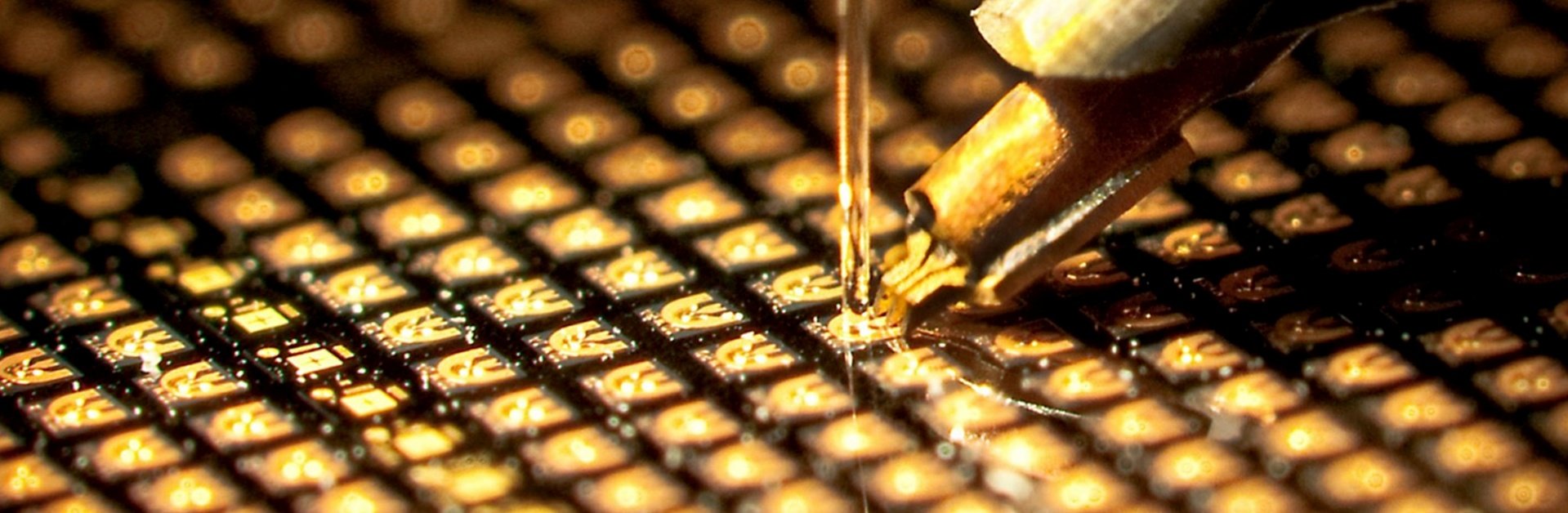
High Power Single Mode Laser Diodes in Industrial Applications
As a VCSEL manufacturer, Ace Photonics designs and produces high power single mode laser diodes that are optimized for demanding industrial, medical, and sensing environments. Our portfolio spans single-mode VCSEL dies, high power laser diode arrays and gain chips, combined with advanced packaging such as non-magnetic VCSEL modules and integrated thermal control.
What Is a High Power Single Mode Laser Diode?
A high power single mode laser diode is a semiconductor light source that operates in a single transverse (spatial) mode. Compared with multimode devices, single mode diodes deliver a narrow, highly coherent beam with low divergence and excellent focusability—ideal whenever alignment, resolution or coupling efficiency matter.
In our VCSEL platform, single mode operation is achieved through carefully engineered cavity and aperture structures, combined with high-reflectivity DBR mirrors. This architecture provides stable output with low threshold current, tight beam shape and very good wavelength and polarization stability across temperature.
The High power single mode laser diode 1.8 mW (<2 mW) showcased on the Ace Photonics site is a representative device that delivers nearly 2 mW of single-mode optical power. For customers who require higher power, our single-mode VCSELs reach close to 5 mW in the lab, and our gain-chip and array platforms scale power into the watt range per channel.
Single Mode Operation and Beam Quality
When we describe a VCSEL as “single mode”, we are emphasizing three practical benefits:
Single spatial mode – The device emits in a well-defined fundamental mode, producing a narrow, nearly circular beam that is easy to collimate and focus.
Stable wavelength – The short resonant cavity and DBR design provide tight wavelength control over temperature, which is critical in spectroscopy, quantum sensing and optical communication.
Controlled polarization – Many of our single mode VCSELs offer stable polarization, which simplifies downstream optics and improves signal contrast in sensing and metrology.
For system designers, this means that a High power single mode laser diode can deliver the optical performance of a laboratory source inside a compact, rugged package.
High Power in a Compact Footprint
“High power” is application-dependent. In close-range sensing or integrated instruments, a 1–2 mW single-mode VCSEL may already be “high power” because it produces a high irradiance on target with low electrical consumption. The 1.8 mW (<2 mW) device is designed with exactly this balance in mind—enough power for demanding tasks, while remaining energy-efficient and easy to cool.

For applications that require significantly more power, Ace Photonics extends the same VCSEL technology into:
High power laser diode arrays, where many emitters are combined to reach high total output in a compact form factor.
VCSEL gain chips, used in external cavities to achieve watt-level power per channel at wavelengths such as 1064, 1122, 1154 and 1180 nm.
This allows customers to build systems that scale from milliwatt-level single emitters to multi-watt pump modules on a common technology base.
Key Benefits of High Power Single Mode Laser Diodes
1. Precision and Efficiency
Because the beam is tightly focused and well controlled, single-mode VCSELs excel in tasks like measuring displacement, aligning components, or interrogating narrow absorption lines in atoms and molecules. The optical power is concentrated where it is needed, so less electrical power is wasted.
2. Cost-Effectiveness and Reliability
VCSELs are surface-emitting devices, so they can be fully tested at the wafer level before dicing. This manufacturing advantage supports high yields, stable performance, and long lifetimes in volume production. Combined with low maintenance requirements, this leads to attractive lifetime cost of ownership for industrial users.
3. Thermal and Wavelength Stability
Our single mode VCSELs are designed to operate over a wide temperature range while keeping wavelength drift and polarization changes under control. Integrated thermistors and TECs can be added at the module level to further stabilize operating conditions where temperature is critical, such as quantum sensing or medical instrumentation.
4. Scalability and Flexible Packaging
Ace Photonics offers multiple packaging options—SMD, TO-can, non-magnetic modules and custom packages—so the same underlying VCSEL die can be integrated into different platforms, from compact sensors to high channel-count arrays.
Industrial and Related Applications
Manufacturing, Metrology and Machine Vision
In industrial environments, a High power single mode laser diode is often used as a stable, point-like source:
Laser alignment and metrology – Single-mode beams simplify optics for triangulation, displacement sensing, and dimensional inspection.
Machine vision and barcode systems – VCSEL illumination with controlled divergence improves contrast and repeatability.
For applications that demand more power or structured illumination (for example, 3D machine vision or time-of-flight ranging), VCSEL arrays provide high output while maintaining uniform beam profiles.
Quantum and Precision Sensing
Ace Photonics is heavily involved in VCSELs for quantum technologies. Our high power single mode devices at 795 nm and 895 nm are widely used in:
Chip-scale atomic magnetometers and gyroscopes
Atomic clocks and cold-atom instruments
NV-center and alkali-vapor-cell-based sensors
Here, narrow linewidth, low noise and non-magnetic packaging are as important as output power. Non-magnetic VCSEL modules minimize stray fields that could distort ultra-sensitive measurements, especially inside shielded enclosures or MRI systems.
Medical and Life Science Systems
High power single mode VCSELs are increasingly used in medical and bio-instrumentation:
Medical imaging and monitoring – Stable, low-noise beams support optical oxygen sensors, tissue monitoring and other diagnostic tools.
MRI-compatible instruments – Non-magnetic VCSEL packages allow optical subsystems to operate near strong magnetic fields without disturbing the imaging process.
In many of these systems, the combination of moderate power, excellent stability, and compact packaging is more valuable than raw wattage.
3D Sensing, LiDAR and Consumer Electronics
For 3D sensing and LiDAR, VCSEL-based high power laser diode arrays deliver:
High electrical-to-optical efficiency
Fast modulation for time-of-flight systems
Controlled beam patterns via microlens arrays or diffractive optics
Single mode emitters are especially useful when fine depth resolution or long working distances are required, while multimode options are available when maximum total power is the priority.
Communication and Fiber-Optic Links
In short-reach optical links and data transmission, single mode laser diodes offer:
High coupling efficiency into single-mode or specialty fibers
Stable wavelength for multiplexing or narrowband communication
Fast modulation capability for high data rates
The same characteristics that benefit industrial communication networks also support specialized optical interconnects inside data acquisition systems or instruments.
Choosing the Right High Power Single Mode Laser Diode
When customers approach Ace Photonics to specify a High power single mode laser diode, we typically walk through a few key parameters.
1. Wavelength
The first decision is wavelength, which is usually driven by:
Material absorption (for processing or sensing)
Detector sensitivity (in cameras or photodiodes)
Atomic or molecular transitions (for spectroscopy and quantum devices)
Our single mode VCSELs cover the 750–900 nm band, with especially mature platforms around 795 nm, 850 nm and 895 nm.
2. Optical Power and Operating Mode
Next comes power and operating mode:
Milliwatt-level single emitters, such as the 1.8 mW (<2 mW) device, for compact sensors and precision instruments.
Multi-milliwatt single mode VCSELs for more demanding illumination or coupling tasks.
Watt-level gain chips and arrays when higher power density or pumping applications are required.
We also consider whether the system will run CW or pulsed, and what rise/fall times are needed for time-of-flight or high-speed modulation.
3. Beam Quality and Coupling
Single mode devices are chosen when:
Tight focusing or long working distance is needed
Coupling into fiber or waveguides is critical
High spatial coherence improves measurement precision
If the application can tolerate broader beam quality in exchange for more total power, we may recommend mixing single-mode and multimode VCSELs or moving up to an array configuration.
4. Packaging, Thermal Management and Special Requirements
Packaging defines how well the laser integrates into the system:
Standard SMD or TO-packages for compact boards and modules
Non-magnetic packages for quantum sensing and MRI environments
Modules with integrated thermistors/TECs where wavelength and output must remain extremely stable over temperature
Thermal resistance, mounting method and available heatsinking are all factored into the final recommendation.
5. Customization and Co-Engineering
As a VCSEL manufacturer, we often co-design devices and arrays with customers:
Custom epitaxial structures and aperture layouts on GaAs platforms
Tailored array geometries, channel counts and pitches
Wavelength and power “bins” matched to sensors or optical coatings
This approach ensures that the chosen High power single mode laser diode or array is not just “in spec” but actually optimized for the real system constraints.
Conclusion
High power single mode laser diodes sit at the center of many modern systems—from atomic magnetometers and compact LiDAR units to precision metrology tools and medical instruments. By combining single-mode beam quality with efficient VCSEL architectures, Ace Photonics delivers devices that are precise, stable and scalable in power.
Whether you need a milliwatt-level single emitter like the 1.8 mW (<2 mW) device, a customized VCSEL die, or a multi-watt high power laser diode array, our role as a VCSEL manufacturer is to translate your performance targets into a manufacturable, long-lived light source that fits your industrial, medical or sensing application.