
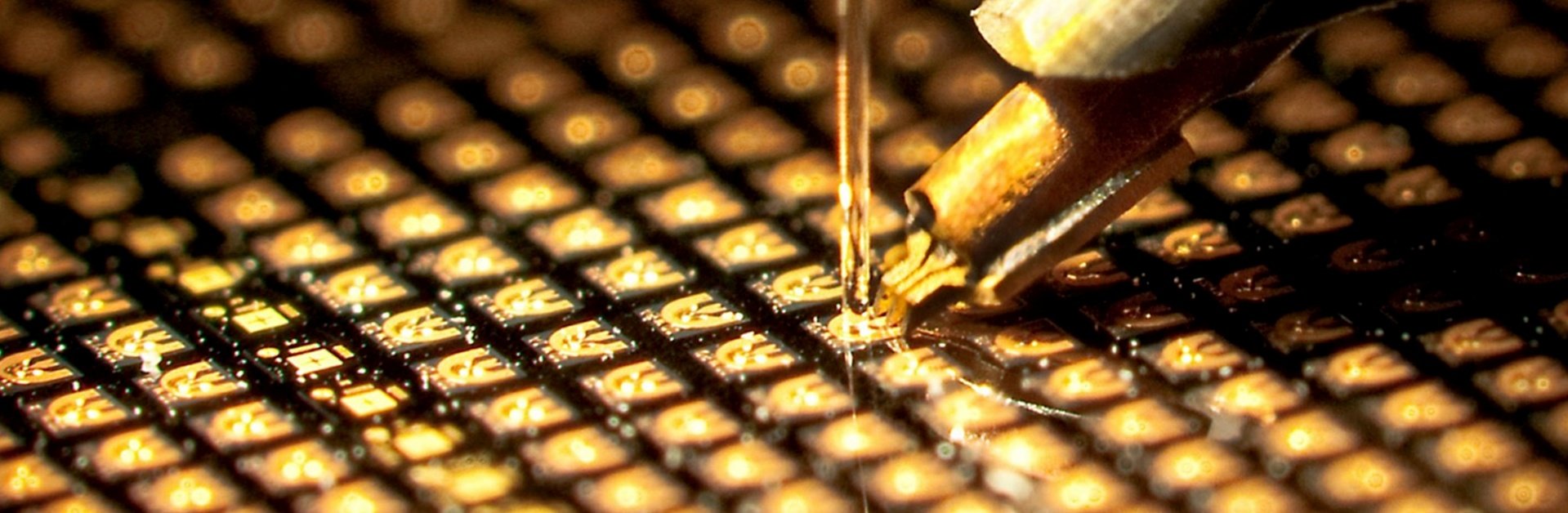
High Power VCSEL for Precision Sensing and OEM Applications
A High Power VCSEL is useful when an optical system needs more output from a compact surface-emitting laser, but optical power alone rarely determines whether a device is suitable.
For sensing and precision photonic systems, wavelength, spectral characteristics, beam behavior, operating temperature, package design and drive conditions often matter just as much as the number printed in milliwatts.
This is particularly important for OEM projects. A 795 nm single-mode VCSEL used in an atomic sensing system has very different requirements from an 850 nm device used for near-infrared illumination. Both may be described as higher-power VCSEL devices, but they should not be selected in the same way.
Ace Photonics develops VCSEL dies and packaged devices across selected wavelengths from 760 nm to 895 nm, with output-power options for atomic sensing, spectroscopy, gas sensing, optical sensing and customized photonic systems.
What Is a High Power VCSEL?
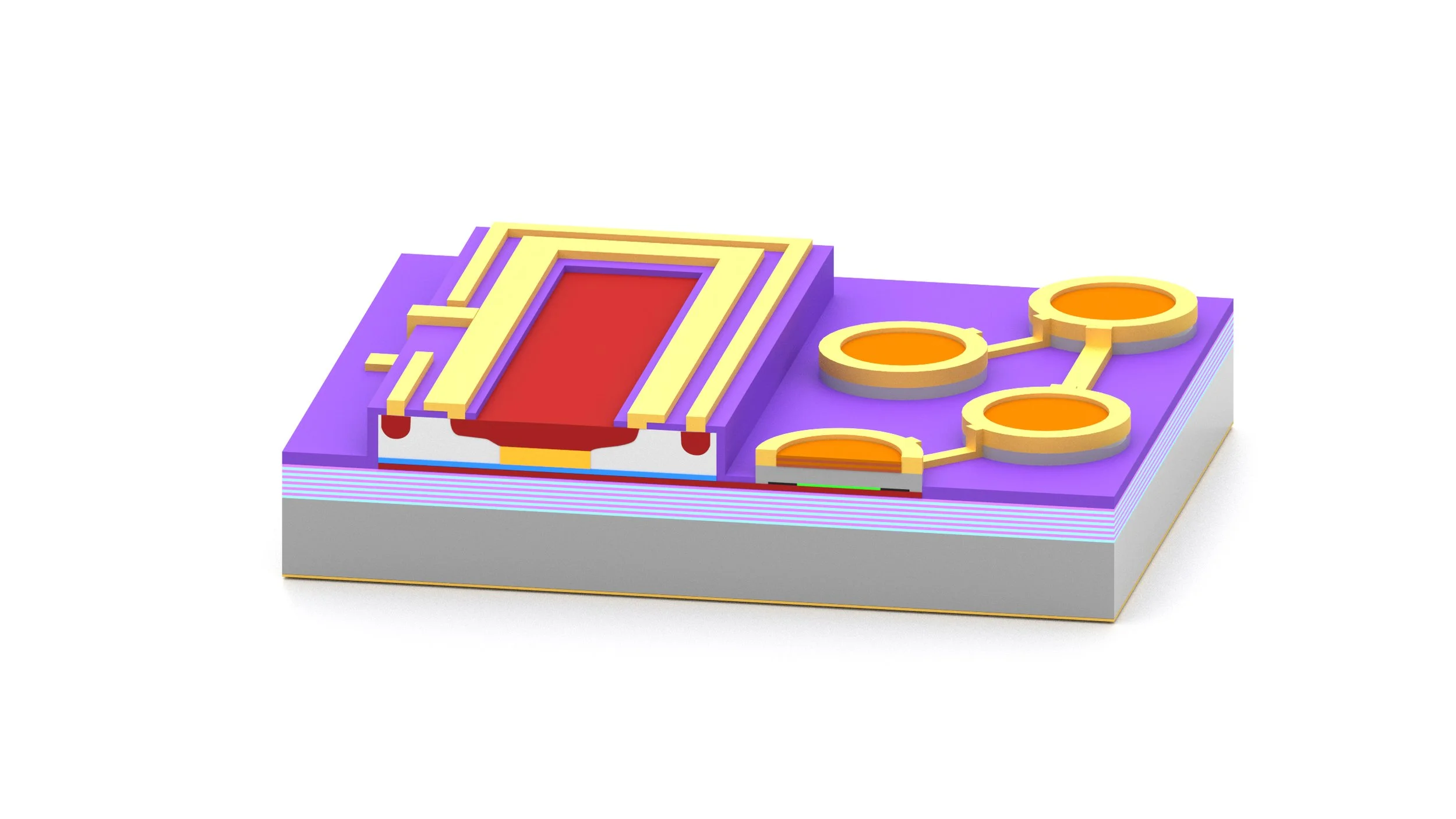
A VCSEL, or Vertical-Cavity Surface-Emitting Laser, emits perpendicular to the wafer surface. This structure supports wafer-level testing, compact chip dimensions and flexible integration into different package and optical configurations.
The term High Power VCSEL does not refer to one universal power threshold.
What counts as high power depends on several factors:
wavelength
single-mode or multimode operation
aperture and device structure
operating current
thermal conditions
package configuration
intended application
For a single-mode device designed for atomic spectroscopy, an increase from a fraction of a milliwatt to more than 1 mW can be significant. A multimode illumination device may operate at a different power level altogether.
For this reason, comparing VCSELs only by maximum output power can be misleading.
High Power VCSEL Options by Wavelength
Different wavelengths serve different optical and sensing requirements. The wavelength should normally be chosen first, followed by the required power, spectral characteristics and package.
These values should be treated together with the requirements of the complete optical system. A higher-output device is not automatically the better choice if linewidth, wavelength tuning, thermal behavior or beam characteristics are more important for the application.
795 nm and 895 nm High Power VCSEL for Atomic Sensing
795 nm and 895 nm are particularly relevant wavelengths for atomic and precision sensing.
795 nm VCSELs can be used in systems working with rubidium-related atomic transitions, while 895 nm devices are used in cesium-related applications.
Ace Photonics provides single-mode options at these wavelengths with output power up to 1.8 mW.
In an atomic sensing system, however, the selection process normally extends well beyond optical power.
Typical considerations include:
target wavelength and tolerance
spectral linewidth
single-mode behavior
polarization
wavelength tuning with current and temperature
beam divergence
operating temperature
package materials
magnetic requirements
A system may need more optical power because of optical losses, beam expansion, cell geometry or other integration conditions. In that case, the correct High Power VCSEL is the device that provides the required output while still meeting the spectral and thermal requirements of the system.
Package Choice Matters
Atomic magnetometers, atomic clocks and other precision instruments may place additional constraints on materials near the sensing region.
Depending on the project, the VCSEL can be supplied as a bare die, TO package, SMD package, non-magnetic configuration or customized assembly.
Non-magnetic packaging can be considered where reducing magnetic materials near the sensing region is important.
The final package should be selected according to the complete system rather than the laser alone.
760 nm High Power VCSEL for Oxygen Sensing
The oxygen A-band is located around 760 nm, making this wavelength region useful for optical oxygen sensing and absorption spectroscopy.
For this type of system, simply increasing output power does not solve every design problem.
The laser wavelength has to match the selected absorption feature, and the available tuning range needs to be considered together with operating temperature and drive current.
Other parameters may include:
spectral characteristics
required tuning range
optical path length
detector sensitivity
package size
thermal control
optical window requirements
Ace Photonics provides 760 nm VCSEL die with output options up to 0.3 mW, together with several packaging configurations for optical gas-sensing integration.
850 nm High Power VCSEL for Optical and 3D Sensing
850 nm is commonly used in near-infrared optical sensing.
Ace Photonics offers 850 nm VCSEL dies with output-power options up to 3 mW for optical sensing and selected 3D sensing applications.
In these systems, optical power needs to be matched with the receiver and optical architecture.
A practical evaluation may include:
working distance
field of view
detector sensitivity
beam divergence
modulation requirement
duty cycle
optical losses
operating temperature
The VCSEL may also be combined with lenses, micro-optics or other beam-shaping components where a particular illumination pattern is required.
For compact sensing modules, this interaction between the VCSEL and downstream optics is often more important than the maximum power specification by itself.
Higher Optical Power Is Only One Parameter
When discussing a High Power VCSEL, the first question is often:
“How many milliwatts can it deliver?”
That is useful information, but it should not be the only question.
For many precision applications, the following parameters may determine system performance more directly.
This is one reason two devices with the same nominal optical power may behave very differently inside the same instrument.
Thermal Considerations for High Power VCSEL Operation
Higher optical output generally requires more attention to current and heat dissipation.
The actual thermal load depends on how the VCSEL is operated.
Continuous-wave operation, pulsed operation and low-duty-cycle operation create different thermal conditions. Package structure and mounting method also affect how efficiently heat can leave the device.
Important factors include:
drive current
CW or pulsed operation
duty cycle
ambient temperature
package thermal path
PCB or heat-sink design
temperature-control requirements
Temperature can also shift the emission wavelength. In spectroscopy and atomic sensing systems, this effect may be intentionally used for wavelength tuning, but it still needs to be controlled according to the application.
Some systems can operate with passive thermal management. Others may require a thermistor, TEC or additional temperature-control components.
There is no single thermal configuration that is appropriate for every High Power VCSEL.
Package Options for High Power VCSEL Integration
A VCSEL die rarely works in isolation. The package determines how the device connects to the electrical, mechanical and optical parts of the system.
Ace Photonics supports several integration formats:
Bare Die
Suitable for customers developing their own chip-level assembly, optical structure or specialized package.
TO Package
Useful where a conventional through-hole laser package is preferred. Package options can be selected according to optical and thermal requirements.
SMD Package
Suitable for compact PCB-level integration and applications where package footprint is an important design constraint.
Non-Magnetic Package
Available for systems where reducing magnetic materials near a sensitive measurement region is required.
Custom Package
Package dimensions, optical windows, electrical configuration, thermal components and mechanical structure can be adapted to specific OEM requirements.
For higher-output devices, the package should also provide an appropriate thermal path and maintain the required alignment with any external optical elements.
High Power VCSEL Die or Integrated Module?
Some customers need only the VCSEL die. Others need a more complete optical assembly.
A bare die gives the system designer more freedom over packaging and optics, but it also places more responsibility on the customer's assembly process.
A packaged VCSEL simplifies handling and electrical integration.
For projects requiring collimation, beam shaping, thermal control or specific mechanical interfaces, a customized module may be more practical.
The right level of integration depends on where the VCSEL will sit in the final product.
What to Provide for a Custom High Power VCSEL Project
The fastest way to evaluate a suitable VCSEL is to start with the application requirements rather than with a generic request for “higher power.”
Useful information includes:
For atomic sensing or spectroscopy projects, it is also useful to provide the target transition or absorption feature.
For optical sensing projects, working distance, detector type and optical configuration can help determine whether an existing device is suitable.
Selecting the Right High Power VCSEL
A High Power VCSEL should not be selected by optical power alone.
The better approach is to start with the wavelength and application, then determine the required power, spectral behavior, thermal conditions, package and optical interface.
For atomic sensing, linewidth and wavelength control may be critical. For oxygen sensing, wavelength tuning around the required absorption feature matters. For near-infrared illumination, beam characteristics and optical integration may take priority.
Ace Photonics supports VCSEL die, package and customized integration development for customers working with these different requirements.
Providing the system parameters early makes it easier to determine whether an existing VCSEL can be used or whether a customized wavelength, power level, package or optical configuration is more appropriate.