
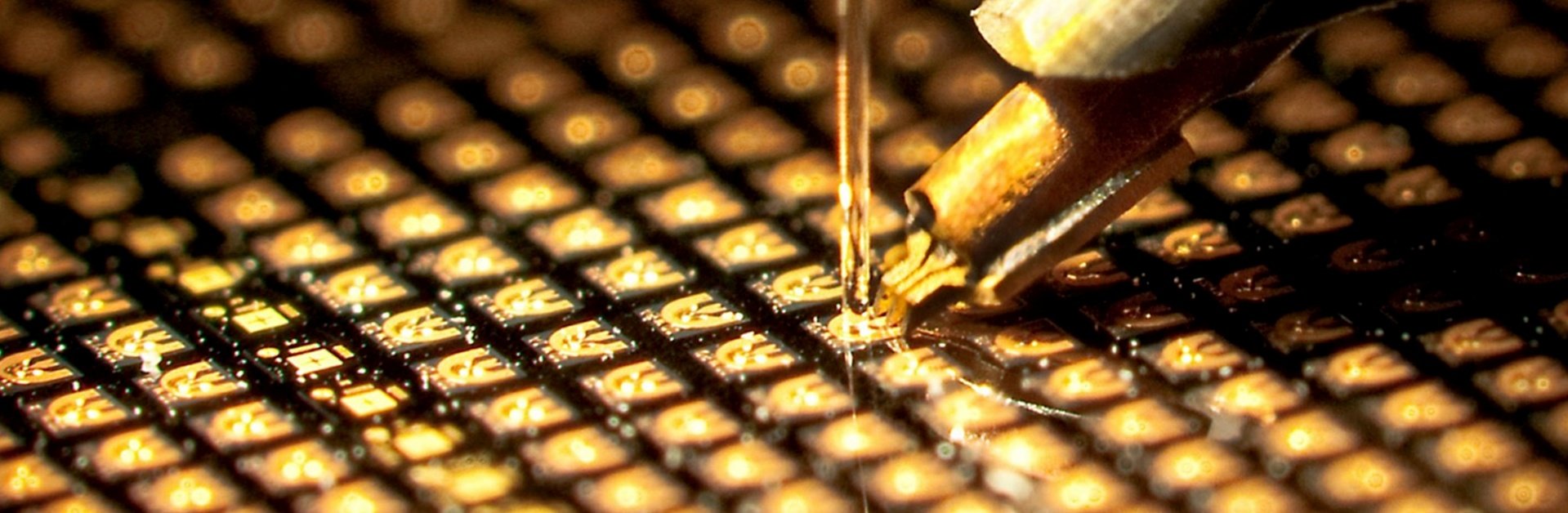
High Power VCSEL Array for Industrial Sensing and 3D Vision
Industrial sensing systems increasingly depend on compact infrared light sources that can deliver enough optical power for machine vision, depth sensing, positioning, and automated inspection.
A High Power VCSEL Array combines multiple VCSEL emitters on one chip or within one optical assembly. Compared with a single emitter, the array structure makes it possible to increase total optical output while keeping the light source compact and suitable for integration with collimation, diffusion, or beam-shaping optics.
For industrial applications, however, optical power is only one part of the design. Array layout, wavelength, operating current, thermal conditions, package structure, and the downstream optics all influence how the light source performs inside the final sensing system.
What Is a High Power VCSEL Array?
A VCSEL, or Vertical-Cavity Surface-Emitting Laser, emits perpendicular to the wafer surface. This structure allows multiple emitters to be arranged within a defined chip area, making array designs practical for applications that require more total optical power than a single emitter can provide.
In a High Power VCSEL Array, the number, spacing, and geometry of the emitters can be selected according to the optical and electrical requirements of the system.
Depending on the application, the array may be supplied as a bare die, packaged device, or integrated module.
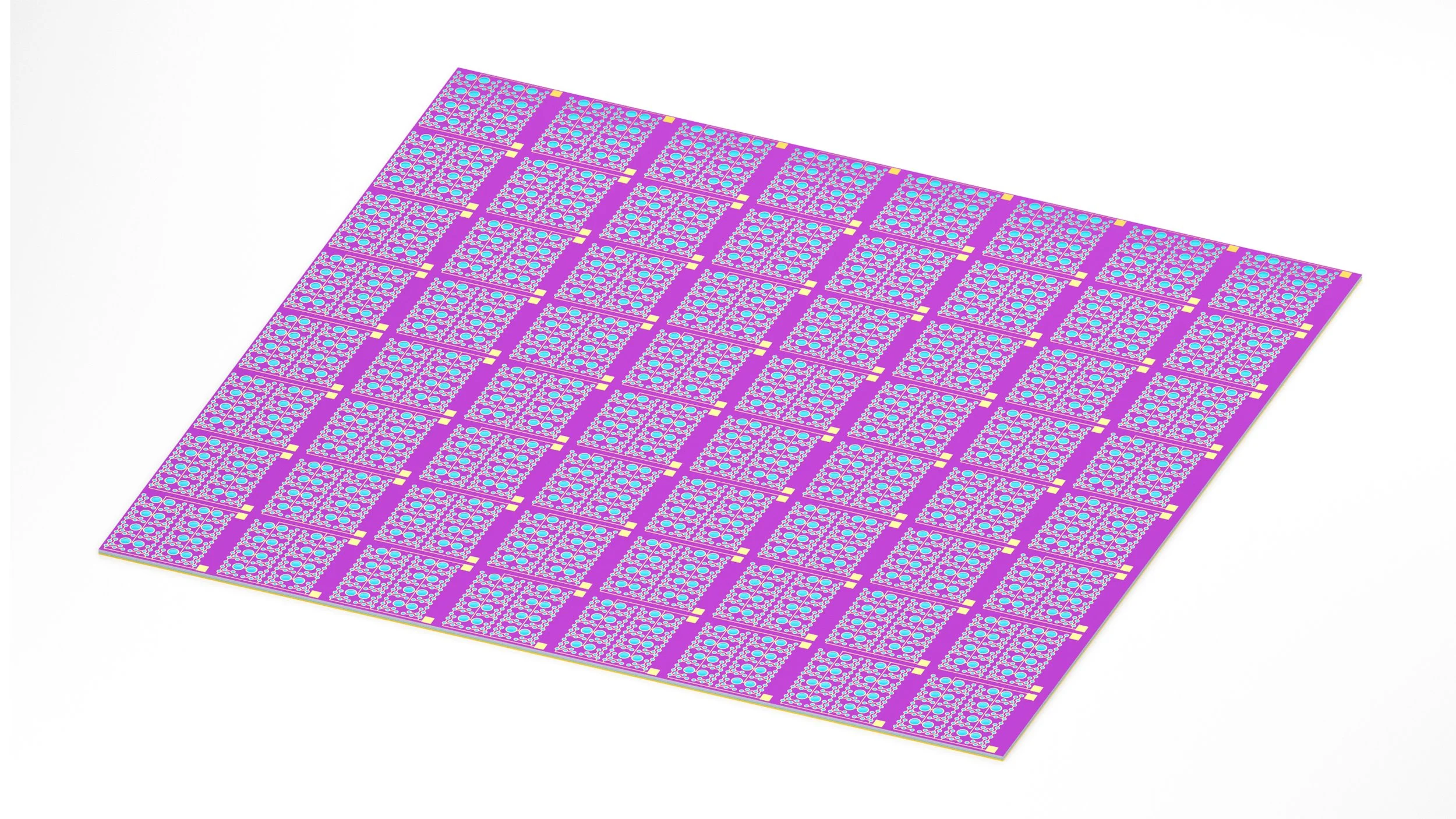
Typical design considerations include:
emitter number and pitch
active emitting area
operating wavelength
total optical power
current and voltage requirements
duty cycle
thermal dissipation
package dimensions
optical interface
These parameters are closely related. Increasing emitter count or drive current, for example, can raise optical output but may also increase thermal load.
Why Use a High Power VCSEL Array?
One reason to use an array is simple: some sensing systems need more illumination than a single VCSEL emitter can provide.
By distributing emission across multiple elements, the optical source can be designed around a larger emitting area while remaining relatively compact.
The array format also gives optical engineers more flexibility when matching the light source to lenses, diffusers, microlens arrays, or other beam-shaping components.
For industrial sensing, this can be useful in systems that require:
wide-area infrared illumination
structured or controlled optical patterns
pulsed illumination
fast modulation
compact optical assemblies
The final performance depends on the complete optical system, not on the VCSEL array alone.
High Power VCSEL Array Applications in Industrial Sensing
3D Machine Vision
3D machine vision is one of the most relevant applications for high-power VCSEL illumination.
Depth-sensing systems may use structured light, time-of-flight, or active stereo methods. Each architecture places different requirements on the light source.
A High Power VCSEL Array can provide infrared illumination for applications such as:
robotic guidance
bin picking
dimensional inspection
object recognition
surface inspection
automated optical inspection
In these systems, the required optical power depends on working distance, field of view, receiver sensitivity, optical efficiency, and ambient-light conditions.
Automated Inspection
Industrial inspection systems often need controlled illumination to identify dimensions, surface features, assembly errors, or defects.
A VCSEL array can be combined with optical components to create a suitable illumination field for the camera or detector.
The required configuration may differ considerably between a close-range electronics inspection system and a larger machine-vision station.
This is why wavelength, emitting area, beam distribution, and optical power should be defined according to the inspection geometry rather than selected independently.
Positioning and Alignment
Optical positioning systems are used in automated assembly, motion control, and precision equipment.
Depending on the optical design, a VCSEL array can be used with collimation or beam-shaping optics to produce controlled infrared illumination for camera-based positioning or alignment.
For these applications, repeatability of the optical source, mechanical integration, and thermal behavior can be as important as total output power.
Presence and Object Detection
Infrared VCSEL illumination can also be used in short-range sensing systems for detecting objects, operators, or changes within a defined area.
Examples include:
conveyor monitoring
object presence detection
automated handling equipment
industrial access systems
proximity sensing
The most suitable array configuration depends on sensing distance, coverage area, detector type, and the required illumination pattern.
Important Parameters When Selecting a High Power VCSEL Array
Selecting a high-power array should begin with system requirements rather than a single power figure.
Looking at these parameters together helps avoid a common mistake: choosing an array mainly because it has a higher optical-power specification.
In many industrial systems, the best solution is not the highest-power device, but the one that delivers the required illumination within the available thermal, electrical, and optical limits.
Array Layout and Optical Design
The physical arrangement of emitters is an important part of a High Power VCSEL Array.
Emitter pitch, active area, array geometry, and chip dimensions can influence the downstream optical design.
A dense array may be suitable for one optical architecture, while another application may need a different emitter distribution or emitting area.
The raw VCSEL output can be combined with:
collimation lenses
microlens arrays
diffusers
diffractive optical elements
other beam-shaping optics
These components determine how the emitted light is distributed in the final system.
For this reason, array design and optical design are often developed together.
Thermal Management
High optical output also means thermal design becomes more important.
The actual thermal load depends on the array structure, operating current, duty cycle, package, mounting method, and surrounding electronics.
Temperature may affect wavelength, optical output, electrical characteristics, and long-term operation.
A practical thermal evaluation should therefore consider:
continuous or pulsed operation
operating current
duty cycle
package thermal path
PCB or heat-sink design
ambient temperature
allowable junction temperature
There is no single thermal solution that fits every high-power array application.
The correct approach depends on how the device is driven and how it is integrated into the final module.
Packaging and Module Integration
A High Power VCSEL Array may be supplied in different forms depending on the integration method.
Possible configurations include:
bare die
ceramic package
SMD package
TO-style package
customized optical module
For industrial customers, package selection is often influenced by more than mechanical size.
Electrical connection, heat dissipation, optical alignment, mounting method, and the position of external optics should all be considered before the package is finalized.
Where required, the array can also be integrated with collimation or beam-shaping components to simplify system-level optical integration.
Custom High Power VCSEL Array Development
Ace Photonics supports High Power VCSEL Array development for industrial sensing, machine vision, 3D sensing, and customized optical systems.
Depending on the project, customization may include:
wavelength
emitter number
emitter spacing
array dimensions
optical power
package configuration
electrical interface
thermal structure
collimation
beam-shaping requirements
For OEM projects, providing the system requirements early usually makes device selection more efficient.
With these parameters defined, it becomes easier to determine whether an existing VCSEL array can be used or whether a customized array, package, or module is more appropriate.
High Power VCSEL Arrays for OEM Industrial Systems
A High Power VCSEL Array is best considered as part of the complete sensing system.
Output power matters, but so do the receiver, optics, thermal path, drive electronics, and mechanical design.
For industrial machine vision and 3D sensing, matching these elements early in the development process can reduce unnecessary redesign and help establish a more practical optical architecture.
Ace Photonics works with OEM customers on VCSEL array selection and customization based on wavelength, power, array layout, packaging, and optical integration requirements.