
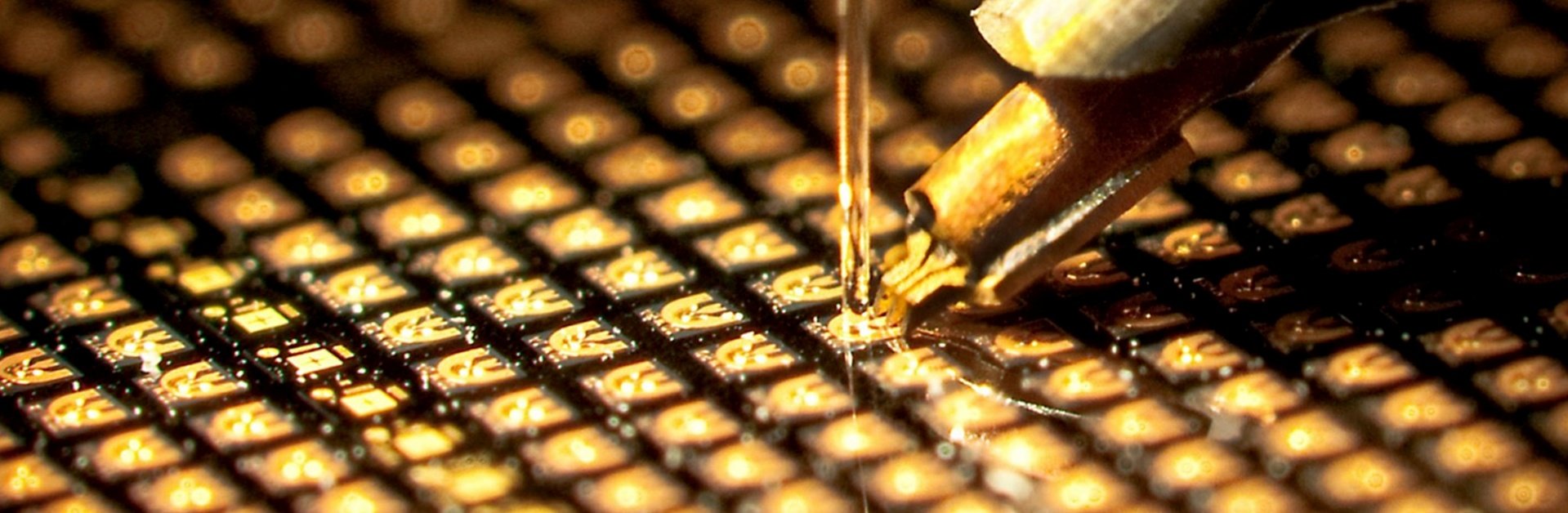
High-Speed 795 nm VCSELs for Rubidium Atomic Sensing
Why 795 nm VCSELs Matter in Rubidium Atomic Systems
Compact atomic sensors require laser sources that combine precise wavelength control, stable optical output, low electrical power consumption, and practical modulation capability.
For rubidium-based systems, the wavelength region around 795 nm is particularly important because it corresponds to the rubidium D1 transition.
Ace Photonics provides 795 nm VCSEL dies and packaged devices with output-power options including 1.8 mW for applications such as rubidium atomic clocks, optically pumped magnetometers, atomic spectroscopy, and other compact vapor-cell sensing systems.
For these applications, however, nominal wavelength and optical power are only part of the selection process. Engineers should also consider wavelength tuning, modulation response, spectral characteristics, polarization, thermal behavior, electrical noise, and package materials.
What Is a High-Speed VCSEL?
A VCSEL, or Vertical-Cavity Surface-Emitting Laser, emits light perpendicular to the semiconductor wafer surface rather than from the cleaved edge of the chip.
Its short vertical optical cavity and compact device structure make VCSELs suitable for direct current modulation and integration into miniature optical assemblies.
When describing a VCSEL as “high speed,” the relevant performance should be defined by measurable parameters such as:
Modulation bandwidth
Rise and fall time
Frequency response
Drive-current conditions
Parasitic capacitance and inductance
Package configuration
Temperature
The term “high speed” should therefore not be treated as a standalone specification.
For atomic sensing applications, the required modulation speed can be very different from the requirements of an optical data link. The correct device should be selected according to the modulation scheme used by the atomic sensor.
Why 795 nm Is Important for Rubidium
The rubidium D1 transition is located near 795 nm.
This makes a VCSEL designed for the 795 nm wavelength region useful as a compact light source for rubidium vapor-cell systems.
Typical applications include:
Rubidium atomic clocks
Optically pumped magnetometers
Rubidium spectroscopy
Atomic frequency references
Other Rb-based precision sensing systems
A nominal “795 nm VCSEL” does not automatically guarantee operation at the exact atomic resonance.
VCSEL emission wavelength changes with device temperature and drive current. The device must therefore provide an appropriate tuning range under the actual operating conditions of the system.
795 nm VCSELs for Rubidium Atomic Magnetometers
Atomic magnetometers measure magnetic fields by observing the response of optically prepared atomic spins.
In a rubidium vapor-cell magnetometer, light near the relevant atomic transition can be used to prepare and interrogate the atomic vapor.
A 795 nm VCSEL offers several practical advantages for compact systems:
Small chip and package size
Low electrical power requirements
Direct current modulation
Temperature and current wavelength tuning
Compatibility with miniature vapor cells
Availability in non-magnetic package configurations
The laser should nevertheless be evaluated as part of the complete magnetometer rather than as an isolated component.
Important system-level factors include beam size, polarization, vapor-cell temperature, optical power at the cell, magnetic shielding, modulation method, and detection architecture.
795 nm VCSELs for Rubidium Atomic Clocks
Rubidium atomic clocks use atomic transitions as highly stable frequency references.
Compact VCSELs are attractive in miniaturized clock architectures because a single semiconductor device can provide a small optical source that can be integrated with a vapor cell, micro-optics, electronics, and temperature-control components.
For clock applications, designers may need to consider:
Operating wavelength
Wavelength tuning range
Modulation characteristics
Optical power stability
Spectral behavior
Relative intensity noise
Temperature sensitivity
Long-term wavelength drift
The required values depend on the clock architecture and frequency-locking method.
A higher output-power device should not automatically be considered better. The goal is to provide the optical power required by the vapor cell and optical system while maintaining appropriate spectral and noise performance.
795 nm VCSELs for Atomic Spectroscopy
A 795 nm VCSEL can also provide a compact tunable source for rubidium D1 spectroscopy.
By adjusting drive current or device temperature, the emission wavelength can be scanned across the required spectral region.
Depending on the experiment or instrument, useful characteristics may include:
Predictable current tuning
Predictable temperature tuning
Stable single-mode operation
Controlled polarization
Suitable linewidth
Repeatable optical output
Low electrical and optical noise
For precision spectroscopy, actual device characterization is more useful than relying only on the nominal wavelength listed in a catalog.
Where Does a 1.8 mW VCSEL Fit?
Ace Photonics offers 795 nm VCSEL options with different output-power levels, including 1.8 mW devices.
A 1.8 mW device can provide additional optical-power margin when a system includes losses from components such as:
Optical windows
Polarizers
Beam splitters
Lenses
Filters
Vapor cells
Fiber or free-space coupling optics
However, 1.8 mW should not be treated as a universal requirement for atomic clocks or magnetometers.
The appropriate output power depends on factors such as:
Vapor-cell dimensions
Beam diameter
Optical pumping method
Optical path loss
Detector sensitivity
Required signal-to-noise ratio
Desired operating current
For this reason, engineers should specify the required optical power at the relevant point in the system rather than simply selecting the VCSEL with the highest available output.
Why Modulation Capability Matters
Many atomic sensing architectures require the laser to be modulated.
Depending on the system, modulation may be used for:
Spectroscopic detection
Frequency stabilization
Lock-in detection
Resonance interrogation
Signal modulation and demodulation
VCSELs can be directly modulated through their drive current, which can simplify compact system design.
However, the required modulation frequency varies substantially between applications.
When selecting a high-speed 795 nm VCSEL, engineers should therefore define:
Required modulation frequency
Modulation depth
Bias current
Drive waveform
Package configuration
Acceptable wavelength shift during modulation
Actual measured frequency-response data should be used when modulation bandwidth is a critical design requirement.
Key Specifications for a 795 nm High-Speed VCSEL
1. Target Wavelength
Confirm that the VCSEL can reach the required rubidium D1 operating wavelength under realistic current and temperature conditions.
Do not rely only on the nominal 795 nm product label.
2. Current Tuning
Changing drive current can affect both optical power and emission wavelength.
For applications using current modulation or frequency locking, the current-tuning behavior should be characterized around the intended operating point.
3. Temperature Tuning
Junction temperature influences VCSEL wavelength.
Designers should understand the temperature tuning coefficient and required operating temperature range before designing the control loop.
4. Modulation Response
If fast modulation is required, request relevant measurements such as:
Frequency response
Rise and fall time
Modulation bandwidth
Test current
Package type
Test temperature
A device-level result may also change after packaging because electrical parasitics affect high-frequency performance.
5. Spectral Characteristics
Atomic applications may be sensitive to:
Spectral linewidth
Side-mode suppression
Mode stability
Wavelength drift
The required values depend on the specific measurement architecture.
6. Output Power
Optical power should be selected according to the power required at the vapor cell or detector.
More power does not automatically produce better atomic-sensor performance.
7. Polarization
Many optical-pumping schemes depend on controlled polarization.
If polarization is important, specify the required polarization behavior during device selection.
8. Relative Intensity and Electrical Noise
Laser intensity fluctuations and current-driver noise can contribute to the overall sensor noise.
The VCSEL, driver, power supply, grounding, and detection electronics should therefore be evaluated as a complete system.
Thermal Management and Wavelength Stability
Temperature control is particularly important in atomic applications because VCSEL wavelength changes with junction temperature.
Thermal design may include:
Heat sinking
Thermistor monitoring
TEC control
Stable drive current
Package thermal-path optimization
Temperature-controlled mounting
The required thermal architecture depends on the acceptable wavelength drift and the wavelength-locking method used in the system.
A stable thermal environment also helps improve repeatability between startup cycles and changing ambient conditions.
Non-Magnetic Packaging for Atomic Magnetometers
For atomic clocks and general spectroscopy systems, standard packaging may be sufficient.
For highly magnetic-field-sensitive instruments such as atomic magnetometers, however, materials close to the vapor cell need additional attention.
A laser package can contain:
Package metals
Plating layers
Pins
Solder
Connectors
Fasteners
Mechanical mounts
Some materials can introduce unwanted magnetic contributions near the sensing region.
Ace Photonics therefore supports non-magnetic packaging options for applications where magnetic material content must be controlled.
Potential requirements can include:
Nickel-free plating
Controlled package materials
Non-magnetic pins and hardware
Selected solder and bonding materials
Custom ceramic packages
Magnetic screening or testing
The exact requirement should be specified by the customer because acceptable magnetic behavior depends on sensor sensitivity, component distance, shielding, and mechanical layout.
Packaging Options for 795 nm VCSELs
Different atomic systems require different forms of integration.
Possible configurations include:
Bare VCSEL die
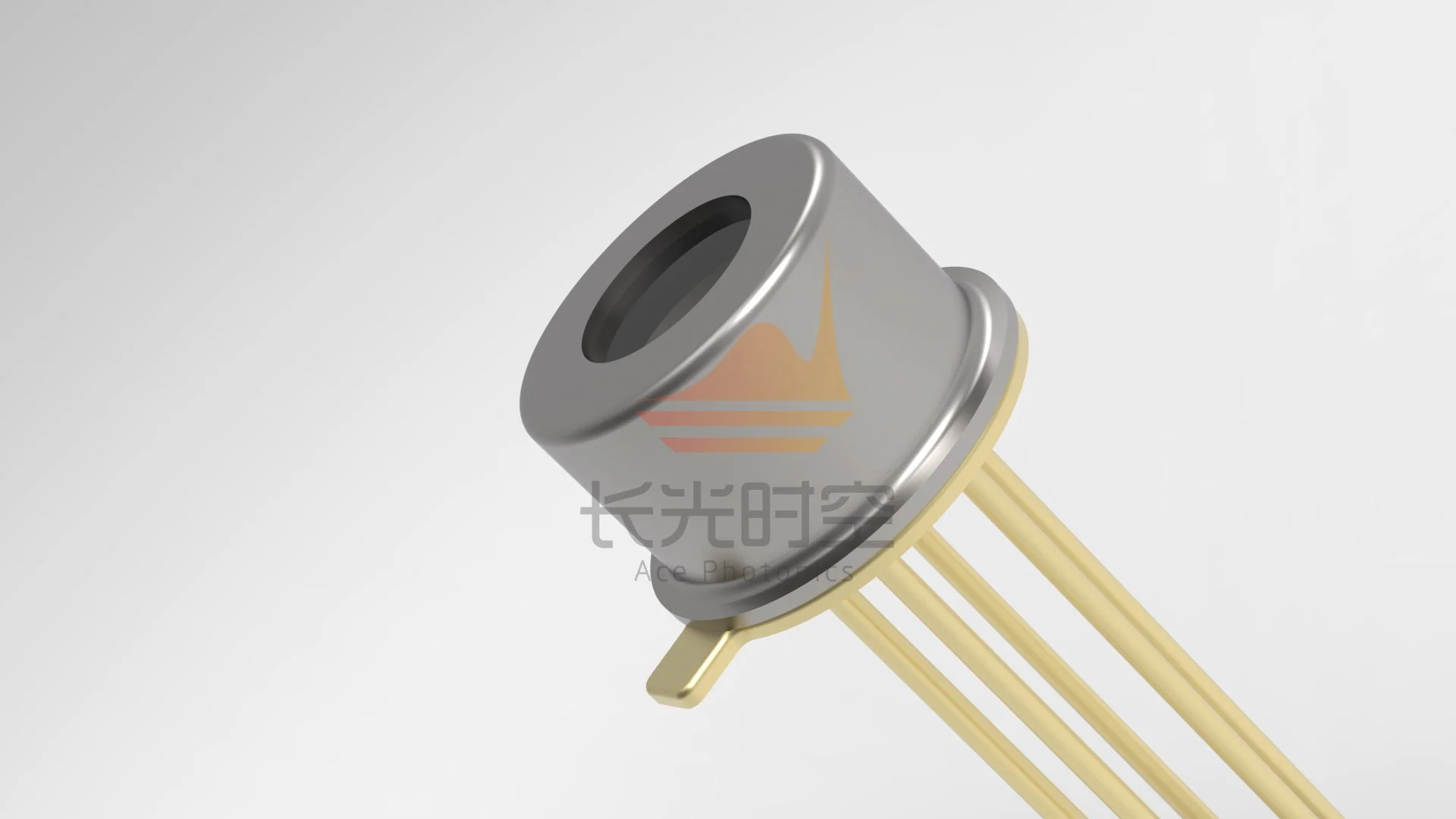
TO-can packages
Ceramic packages
SMD packages
Non-magnetic packages
Custom laser assemblies
Additional integration options may include:
Optical windows
AR coatings optimized for 795 nm
Thermistors
TECs
Lenses
Custom pin configurations
Custom mechanical dimensions
Package selection should consider not only mechanical compatibility but also thermal performance, electrical parasitics, optical alignment, and magnetic requirements.
Customization for 795 nm Atomic-Sensing Projects
A standard catalog VCSEL may not meet every atomic-sensing requirement.
Ace Photonics supports customization according to project requirements such as:
Target wavelength
Wavelength tolerance
Optical output power
Aperture design
Beam divergence
Spectral characteristics
Polarization
Modulation requirements
Package type
Non-magnetic materials
Window and coating
Thermal-control components
Device screening and testing
For demanding projects, it is useful to define the complete operating conditions before selecting the VCSEL.
What Information Should You Provide?
Frequently Asked Questions
Why is 795 nm used for rubidium atomic sensing?
The rubidium D1 transition is located near 795 nm. A VCSEL designed and tuned for this wavelength region can therefore interact with rubidium vapor in atomic clocks, magnetometers, and spectroscopy systems.
Does a nominal 795 nm VCSEL operate exactly on the Rb D1 transition?
Not necessarily.
VCSEL wavelength varies with current and temperature, so the required wavelength should be confirmed under the intended operating conditions.
Is 1.8 mW required for a rubidium atomic magnetometer?
No.
The correct optical power depends on the vapor cell, beam size, optical path, pumping scheme, and sensor architecture.
A 1.8 mW device provides one available power option rather than a universal specification.
What does “high-speed VCSEL” mean?
High speed should be defined through measurable modulation parameters such as bandwidth or rise and fall time.
The required speed depends on the application, so customers with specific modulation requirements should provide the target frequency and operating conditions.
Do I need a non-magnetic VCSEL package?
A non-magnetic package is particularly relevant when the laser assembly is positioned close to a highly sensitive magnetic-sensing region.
For other atomic systems, standard packaging may be acceptable.
The requirement should be determined from the magnetic sensitivity and mechanical design of the complete instrument.
Conclusion
A high-speed 795 nm VCSEL can provide a compact, tunable, and directly modulated laser source for rubidium-based atomic sensing.
Its most relevant applications include rubidium atomic clocks, optically pumped magnetometers, spectroscopy, and related vapor-cell instruments.
For these systems, successful VCSEL selection depends on more than nominal wavelength or maximum optical power.
Engineers should evaluate wavelength tuning, modulation response, spectral behavior, polarization, thermal stability, electrical noise, output power, and packaging together.
For magnetic-field-sensitive systems, non-magnetic packaging can also become an important part of the overall sensor design.
Ace Photonics provides 795 nm VCSEL dies, packaged devices, 1.8 mW output options, non-magnetic packages, and customized solutions for atomic sensing and precision photonics.
For a custom project, provide your target wavelength, required optical power, modulation requirements, package type, operating temperature, quantity, and any magnetic or optical requirements.