
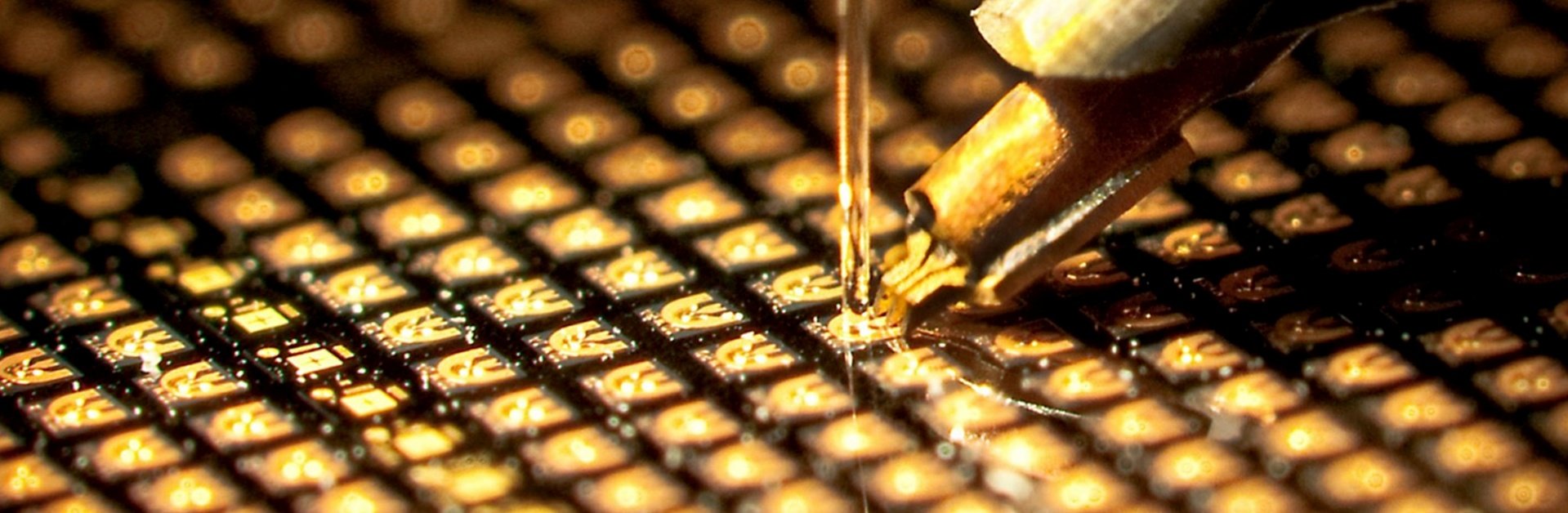
Laser diodo Explained from a VCSEL Manufacturer’s View
As a dedicated VCSEL manufacturer, Ace Photonics works with Laser diodo technology every day in applications ranging from quantum sensing to 3D imaging and datacom links. Our focus is on GaAs-based VCSEL and VECSEL devices in the 750–1550 nm spectral range, designed for demanding industrial and research environments.
This guide walks through what a Laser diodo is, how it operates, and why VCSEL laser diodes have become a preferred solution for modern optical systems.
What Is a Laser diodo?
A Laser diodo is a semiconductor device that converts electrical current into highly directional, nearly monochromatic light. Inside the chip, electrons and holes recombine in an active region, releasing photons that are amplified in a resonant cavity until laser oscillation starts.
Compared with conventional LEDs, a Laser diodo:
Emits a much narrower spectral band
Produces a beam that can be tightly focused or efficiently coupled into fiber
Supports very high modulation speeds for data transmission and precision sensing
VCSELs (Vertical-Cavity Surface-Emitting Lasers) are a specific class of Laser diodo that emit light vertically from the chip surface rather than from the edge, which dramatically changes how they are manufactured, tested and integrated.
Why Laser diodo & VCSEL Technology Matter
From our perspective as a VCSEL manufacturer, Laser diodo technology sits at the heart of several high-growth markets:
Telecommunications and datacom – backbone links, short-reach server interconnects and active optical cables rely on laser diodes and VCSELs for high-speed, low-loss data transmission.
3D sensing and imaging – VCSEL arrays power facial recognition in mobile devices, structured-light modules, depth cameras and LiDAR-style ranging.
Industrial and scientific systems – precision metrology, displacement sensing, spectroscopic gas detection and lab instrumentation frequently use single-mode Laser diodo sources.
Medical and healthcare – near-infrared VCSELs support diagnostic imaging, flow measurements and emerging bio-sensing techniques where stable, compact light sources are essential.
At Ace Photonics, these requirements drive the way we design VCSEL die, packages and modules—prioritizing stability, efficiency and application-specific customization.
Inside a Laser diodo: Materials and Structure
Semiconductor Materials
Most Laser diodo platforms today are based on:
GaAs (Gallium Arsenide) – typically used for 750–980 nm devices, including many VCSELs for short-reach datacom and 3D sensing.
InP (Indium Phosphide) – suited to 1310–1550 nm telecom windows.
GaN (Gallium Nitride) and related alloys – used for blue, violet and some UV devices.
Ace Photonics focuses on GaAs-based VCSEL structures within 750–1550 nm, which covers a wide range of industrial, quantum and sensing applications.
Junction and Active Region
In a typical Laser diodo:
A p-n junction or multi-quantum-well active region is engineered for efficient radiative recombination.
Current confinement structures (oxide apertures, implanted regions, or BCB patterns) funnel carriers into the lasing area.
For VCSELs, this region sits inside a vertical resonant cavity defined by distributed Bragg reflectors (DBRs) above and below the active layers, which enables compact devices and easy array integration.
Cavity Feedback and Threshold
Laser action begins once the optical gain from the active region exceeds total cavity losses:
Below threshold, the device behaves like a bright LED.
Above threshold, stimulated emission dominates and coherent, directional light emerges from the facet (edge-emitters) or surface (VCSELs).
VCSEL designs add technologies such as polarization control, thermal management and array integration to maintain performance even at elevated temperatures or in complex multi-channel systems.
Main Types of Laser diodos
Continuous-Wave vs. Pulsed Operation
Continuous-Wave (CW) Laser diodo
Provides constant optical output.
Used in barcode scanners, laser printers, CW illumination modules and pumping sources.
Pulsed Laser diodo
Generates short pulses with very high peak power.
Ideal for time-of-flight ranging, flash LiDAR, certain medical treatments and surface processing tasks.
Both modes can be implemented in edge-emitting lasers or VCSEL architectures; the choice depends on application constraints such as peak power, duty cycle and thermal design.
Single-Mode vs. Multi-Mode
Single-mode Laser diodo / VCSEL
Narrow linewidth, high side-mode suppression ratio (SMSR).
Best for fiber-optic communication, interferometry, precision sensing and quantum experiments.
Multi-mode Laser diodo / VCSEL
Supports higher total output power and relaxed alignment tolerances.
Well suited to short-range illumination, machine vision and many industrial tools.
Ace Photonics provides both single-mode and multi-mode VCSELs, allowing customers to optimize between beam quality and power density.
Emission Geometry: Edge-Emitting vs. VCSEL
Edge-Emitting Laser diodo (EEL)
Light exits from the chip edge.
Favoured for very high-power applications and some long-haul telecom links.
VCSEL (Vertical-Cavity Surface-Emitting Laser)
Light exits perpendicular to the wafer surface.
Allows wafer-level testing, 2D arrays and cost-effective mass production.
Combines laser-class performance with LED-like economies of scale.
Because of these benefits, VCSEL laser diodes have become central to 3D sensing, short-reach datacom and compact IR illumination systems—and are the core of Ace Photonics’ product portfolio.
Core Applications of Laser diodo & VCSEL
1. Datacom and Telecom
Laser diodos and VCSELs form the light engines inside:
Optical transceivers in data centers
Active optical cables between servers and switches
Short-reach interconnects in high-performance computing systems
VCSELs in particular have long been a workhorse in short-distance datacom, and market studies project continued revenue growth driven by next-generation data centers.
2. 3D Sensing, LiDAR and Machine Vision
Multi-channel VCSEL Laser diodo arrays are used for:
Structured-light depth cameras in smartphones and AR/VR devices
Short-range LiDAR and time-of-flight ranging
Machine vision illumination in industrial automation and smart agriculture
Ace Photonics offers IR VCSEL modules across 750–1550 nm tailored for these applications, emphasizing wavelength stability, compact size and energy efficiency.
3. Industrial Processing and Metrology
High-power Laser diodo bars and arrays enable:
Localized heating, cladding and surface treatment
Precision alignment and displacement measurement
Optical encoders and velocity sensors
4. Healthcare and Life Sciences
Near-infrared Laser diodo and VCSELs are increasingly applied to:
Non-invasive diagnostics
Flow and perfusion measurements
Optical biosensors and research instruments
5. Consumer Electronics
Laser diodo technology is now commonplace in:
Mobile 3D sensing and facial recognition
Laser projectors and mini beamers
Barcode scanning and autofocus assist modules
Advantages and Limitations of Laser diodo (with VCSEL Focus)
Key Advantages
For system designers, a well-specified Laser diodo offers:
High electrical-to-optical efficiency – especially in GaAs-based VCSEL laser diodes, which consume less power and often offer longer lifetimes than many traditional emitters.
Compact, integrable form factor – bare die, packaged devices and ready-to-use modules fit easily into tight boards and opto-mechanical assemblies.
Fast modulation capability – direct modulation of VCSELs supports multi-gigabit data rates and time-resolved sensing.
Controlled beam shape and divergence – simplifies coupling into fiber, lenses or structured-light optics for repeatable illumination patterns.
Typical Limitations
Thermal sensitivity – wavelength and output power drift with junction temperature; good heatsinking or TEC control is required in many designs.
Driver requirements – Laser diodo devices must be driven with constant-current sources and protected from ESD and over-current events.
Coherence-related effects – high coherence can introduce speckle in imaging and requires careful optical design in some systems.
VCSEL architectures mitigate some issues—such as temperature-induced wavelength shifts—through careful cavity design and advanced packaging, which is a key area of engineering at Ace Photonics.
Selecting the Right Laser diodo: Practical Checklist
When our customers specify a Laser diodo or VCSEL solution, we generally walk through the following parameters:
Wavelength (nm)
Match to fiber transmission windows (e.g., 850 nm for short-reach datacom, 1310/1550 nm for long-haul) or to sensor/target absorption features in sensing and medical systems.
Output Power and Operating Mode
CW output (mW to W range) for steady illumination or pumping.
Peak pulse power and duty cycle for LiDAR, ranging or time-gated imaging.
Beam Quality and Divergence
Single-mode VCSEL for tight fiber coupling and interferometric sensing.
Multi-mode arrays for broader, higher-power illumination fields.
Modulation and Bandwidth
Required data rate or timing resolution.
Choice of direct modulation, external modulation or driver architecture.
Coupling Scheme
Free-space optics, single-mode fiber, multimode fiber or polarization-maintaining fiber.
Need for microlens arrays or custom beam shaping (common in VCSEL-based 3D sensing modules).
Package & Thermal Design
Bare VCSEL die for custom integration.
Standard packages or custom non-magnetic packages for quantum and high-temperature environments.
Reliability and Lifetime Data
Operating temperature range, burn-in procedures, lifetime and MTTF information, especially important for aerospace, automotive and telecom deployments.
Ace Photonics supports each of these points by offering a full VCSEL stack—VCSEL die, gain chips, packages and modules—so engineers can choose the integration level that best matches their product roadmap.
Care, Handling and Safety
To protect both performance and lifetime, Laser diodo devices should be handled with the same discipline used in high-end semiconductor and optical components:
ESD and Moisture Protection
Always treat laser diodes as ESD-sensitive.
Store in anti-static, low-humidity packaging when not in use.
Cleaning Practices
Avoid touching output facets or windows.
Use only optical-grade cleaning tools and solvents where absolutely necessary.
Electrical Driving
Use a constant-current laser driver with soft-start and current limiting.
Never connect a Laser diodo directly across a raw power supply.
Thermal Management
Provide low-thermal-resistance paths via heat spreaders, proper mounting and, if needed, thermoelectric coolers (TECs).
Laser Safety
Classify the laser system according to IEC 60825 and regional regulations.
Wear wavelength-appropriate safety eyewear and follow standard laser lab procedures.
Laser diodo vs. LED: Quick Comparison
In many modern systems—especially where size, efficiency and data rate matter—a carefully chosen Laser diodo or VCSEL has become the preferred option.
Where the Technology Is Heading
Industry analyses point to a VCSEL market reaching multiple billions of dollars over the coming years, driven by datacom, 3D sensing and other emerging applications.
Key directions include:
Higher efficiency and power density through improved epitaxial design and facet passivation.
Tighter integration of VCSEL Laser diodo arrays with drivers, optics and sensors for compact modules in AR/VR headsets, wearables and autonomous systems.
Broader wavelength coverage, including short-wave infrared bands for spectroscopy, environmental monitoring and advanced imaging.
Quantum and sensing applications, supported by non-magnetic packaging and high-stability VCSEL designs—an area specifically highlighted in Ace Photonics’ roadmap.
Quick FAQ on Laser diodo Selection and Use
Q1. How long can a Laser diodo last?
A: Lifetime depends heavily on junction temperature, drive current and packaging quality. With proper thermal management and a stable constant-current driver, well-designed VCSEL laser diodes can achieve operating lifetimes of tens of thousands of hours in many applications.
Q2. When should I choose CW vs. pulsed operation?
A: Use CW Laser diodo where you need stable, continuous power—barcode readers, alignment tools, CW sensors. Choose pulsed operation when high peak power, time-of-flight measurements or gated imaging are required, such as LiDAR or certain medical treatments.
Q3. Can I power a Laser diodo directly from a DC supply?
A: No. A Laser diodo should always be driven with a constant-current laser driver that includes soft-start, over-current protection and appropriate filtering. Direct connection to a power supply risks catastrophic damage.
Q4. Single-mode or multi-mode VCSEL—how do I decide?
A:
Choose single-mode for narrow linewidth, clean spectra and efficient coupling into single-mode fiber or interferometric setups.
Choose multi-mode where higher total power and more tolerant alignment into optics or sensors are more important than ultimate beam purity.
If you are planning a new design around a Laser diodo—whether for 3D sensing, quantum experiments, smart agriculture or high-speed datacom—Ace Photonics can help you match wavelength, power, package and cost to your exact system requirements using our VCSEL die, gain chips, packages and modules.