

Laser Vertical Innovations: How VCSELs Are Redefining Consumer Electronics
Consumer devices are evolving fast—from secure face authentication on phones to more accurate wellness tracking on wearables and lifelike depth in AR/VR. At the center of this shift is laser vertical technology: Vertical-Cavity Surface-Emitting Lasers (VCSELs) engineered for compact, low-power, high-precision optical performance.
What “Laser Vertical” Means in Practice
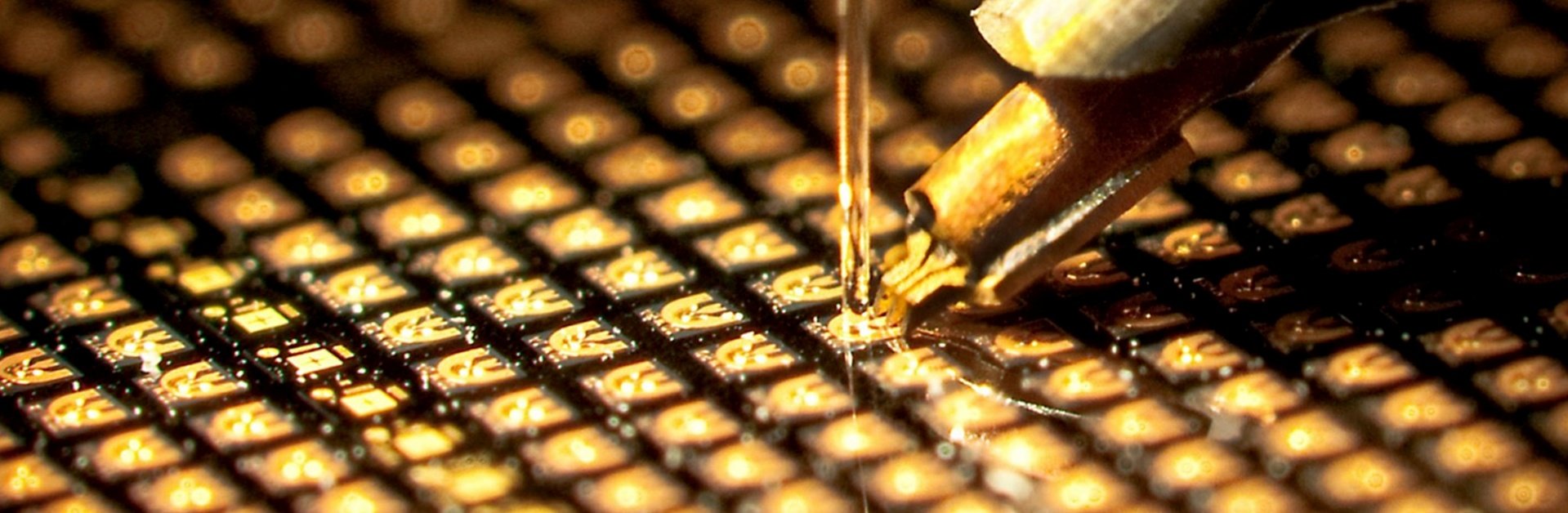
Laser vertical refers to VCSELs that emit light perpendicular to the chip surface. Compared with edge-emitting lasers, VCSELs offer:
Stable, repeatable beam profiles suitable for arrays
Wafer-level testing for tighter binning and lower total cost
Easy integration into compact modules for consumer form factors
This combination makes VCSELs a first choice for 3D sensing, proximity detection, biometric security, and health-related photoplethysmography (PPG).
From Lab to Lifestyle: Real-World Consumer Use Cases
Smartphones
Face authentication & attention detection: Structured-light or time-of-flight (ToF) systems powered by VCSELs enable fast, secure unlock and liveness checks.
Autofocus & proximity: Laser vertical emitters support rapid, low-power distance measurements for camera focusing and screen-on/off behavior.
Wearables & Health Tech
PPG for heart-rate and SpO₂: VCSELs provide stable output and narrow spectral bandwidth, improving signal quality on skin of varying tones and under motion.
Fitness & wellness analytics: Consistent optical power enhances data reliability for algorithmic interpretation.
AR/VR/MR
Depth sensing & hand tracking: Compact VCSEL arrays project patterns for highly accurate depth maps, enabling natural gesture control and room-scale awareness.
Environment mapping: Low-latency ranging helps devices render scenes more realistically.

Why VCSELs Win for Consumer Devices
Precision at low power: High wall-plug efficiency reduces thermal load and extends battery life.
Array scalability: Thousands of emitters can be tiled for higher optical power or custom dot patterns.
Compact, manufacturable design: Surface emission and wafer-level testing support high yield and predictable supply.
Wavelength options fit the job: 850–940 nm ranges are common for consumer 3D sensing and PPG, balancing eye safety, detector response, and ambient-light immunity.
What Sets Ace Photonics Apart
As a VCSEL producer focused on laser vertical innovation, Ace Photonics Co., Ltd. provides:
Custom VCSEL arrays and single emitters
Power classes for short-range (mm to a few meters) applications, with options for beam shaping and diffuser integration.Integration-ready packaging
SMD/LGA modules and compact subassemblies designed for automated pick-and-place; options for on-board thermistors and drivers.Tight optical/electrical binning
Wafer-level screening and burn-in to ensure uniform optical power, threshold current, and forward voltage across lots.Design support
Reference optical stacks, driver guidelines, and safety documentation to accelerate qualification.
Result: Faster time-to-market, lower system power, and consistent perception performance across devices and SKUs.
Looking Ahead: Trends Shaped by Laser Vertical Tech
Smarter IoT & edge AI: Always-on sensing with sub-milliwatt idle budgets thanks to efficient VCSEL duty-cycling.
Advances in 3D sensing: Higher-density arrays and improved dot-pattern uniformity for robust depth across materials, textures, and lighting.
Better wellness metrics: Multi-wavelength VCSEL combos that strengthen signal extraction for next-gen health features.
Frequently Asked Questions (Buyer-Focused)
What’s the difference between a VCSEL and an edge-emitting laser?
VCSELs emit vertically from the wafer surface, allowing wafer-level testing and easy array formation; edge-emitters radiate from the chip edge and are harder to scale into dense arrays.
Which wavelengths are most common for consumer devices?
For 3D sensing and PPG, 850–940 nm is typical. Choice depends on sensor response, ambient-light filtering, and eye-safety limits.
How does laser vertical improve battery life?
Higher wall-plug efficiency and precise pulsing reduce power draw in depth and biometric workloads—particularly in always-on modes.
Are VCSELs eye-safe?
We design to applicable laser safety standards and provide guidance on optics, duty-cycle, and diffuser use to meet system-level requirements.
Do you offer custom arrays?
Yes—dot counts, pitches, and emission profiles can be tuned to your optical stack and algorithmic needs.
Work With Us
Whether you’re building a next-gen smartphone module, an AR headset, or a health wearable, our laser vertical portfolio and engineering support help you hit power, size, and performance targets—without sacrificing reliability.
Contact Ace Photonics Co., Ltd. to request samples, datasheets, and evaluation guidance.