
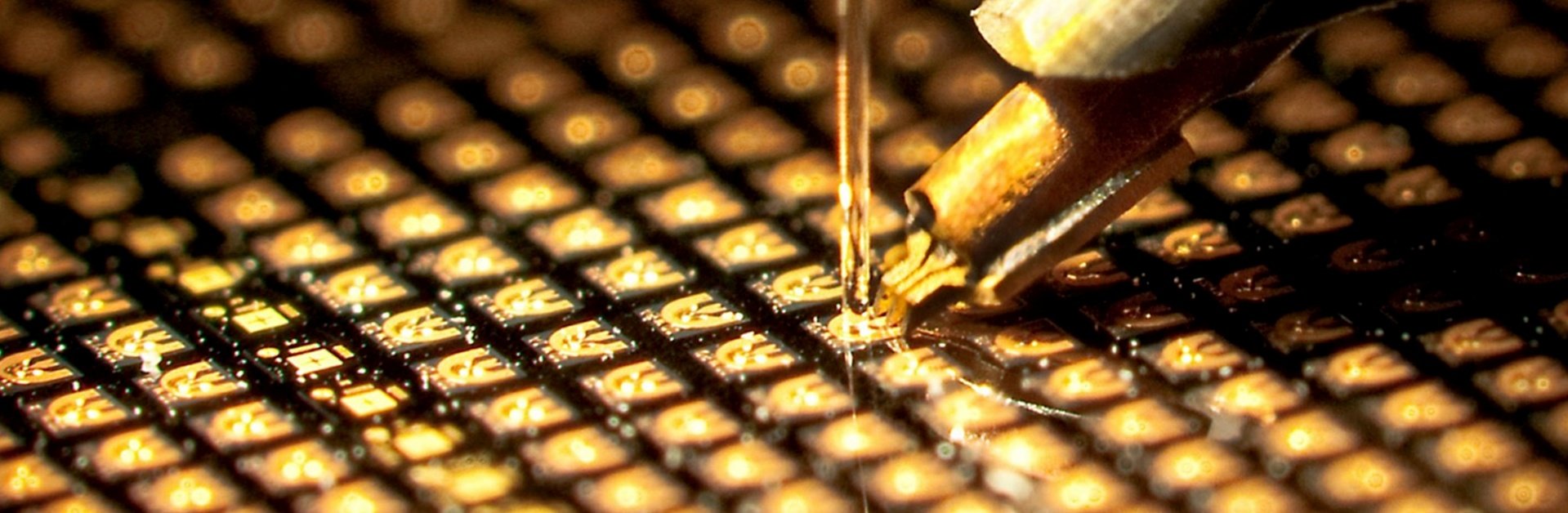
Exploring the Versatile Applications of VCSEL Laser Diode
As a VCSEL laser diode manufacturer, we get a front-row seat to how fast photonics is moving. A few years ago, many teams only associated VCSELs with short-reach datacom. Today, the same core advantages—vertical emission, wafer-level testability, and easy array scaling—are driving growth in sensing, imaging, and emerging quantum/medical use cases.
At Ace Photonics, we support customers from VCSEL die and arrays to board-friendly packages (including SMD) and application-ready modules—so you can prototype quickly and still have a clean path to volume.
What is a VCSEL laser diode?
A VCSEL (Vertical-Cavity Surface-Emitting Laser) laser diode is a semiconductor laser that emits light perpendicular to the chip surface, rather than out of a cleaved edge like an edge-emitting laser. That geometry is a big deal in manufacturing: it enables wafer-level probing/screening and binning before singulation, improves consistency, and makes dense arrays much easier to build and integrate.
Why system teams choose VCSEL laser diodes
1) Integration-friendly, scalable from single emitters to arrays
Because the beam exits from the top surface, VCSELs scale naturally into 1D/2D arrays for structured light, flood illumination, and multi-channel systems—without the alignment pain of stitching together multiple edge emitters.
2) Efficient operation and predictable manufacturing
Wafer-level LIV/spectral mapping and screening (and even wafer-level burn-in options) help push only “known-good” devices into assembly—improving yield, lowering scrap, and stabilizing performance lot-to-lot.
3) Practical wavelength targeting for real applications
On Ace Photonics’ application notes, you’ll see near-IR wavelengths positioned around needs like sensing bands, atomic transitions, and short-reach photonics—e.g., 760 nm, 795 nm, 850 nm, and ~895 nm depending on use case.

Where VCSEL laser diodes are used
Telecommunications and data links (short-reach optical)
VCSEL laser diodes are a staple for short-reach optical communication, where arrays and fast modulation support compact, cost-effective links. In the Ace Photonics materials, the emphasis is on stable wavelength behavior over temperature, efficient coupling, and manufacturability at scale.
Where they show up:
Data center and enterprise interconnects
Multi-channel optical modules and parallel links
High-density switch and rack connections (system-dependent design choices)
Mobile & consumer: 3D sensing, ToF and biometrics
For depth sensing, a VCSEL laser diode (often as an array) provides controlled illumination for structured light or time-of-flight modules. Board height and assembly throughput are why SMD VCSEL packages matter here—SMT-friendly builds help shrink stack height and speed manufacturing.
Automotive & industrial: LiDAR illumination
In LiDAR architectures that use VCSELs, arrays help distribute optical power across many emitters, supporting flexible illumination patterns and system-level reliability strategies. Ace Photonics positions VCSEL diode lasers as well-suited for array packaging and scalable manufacturing for these sensing stacks.
Biomedical and advanced sensing
Across medical/diagnostics content on the Ace Photonics site, VCSEL chips and arrays are framed around stable wavelengths, low power consumption, and dense illumination—useful traits for compact instruments and sensing modules.
How Ace Photonics adds value beyond a catalog VCSEL
Portfolio: die, chips/arrays, SMD packages, and application builds
Depending on where you want integration responsibility to sit, teams may start with:
VCSEL die for custom integration and tight control over optics/thermal paths
VCSEL chips and arrays when you need scalable illumination and consistent beams
SMD VCSEL when assembly speed and low Z-height drive the design
Manufacturing + QA signals engineers care about
Ace Photonics describes process control and test practices such as SPC on critical steps, wafer-level LIV/spectral mapping, and screening/burn-in options—plus multi-condition characterization (current/temperature), beam checks, and wavelength stability verification for sensing programs.
Design support that maps to real datasheets
If you’re building with VCSELs, the “numbers that matter” tend to cluster around:
Threshold current / forward voltage
Output power and stability
Wavelength behavior vs. temperature
Beam divergence / profile
Mechanical + environmental limits
Ace Photonics explicitly highlights these categories in its datasheet guidance.