
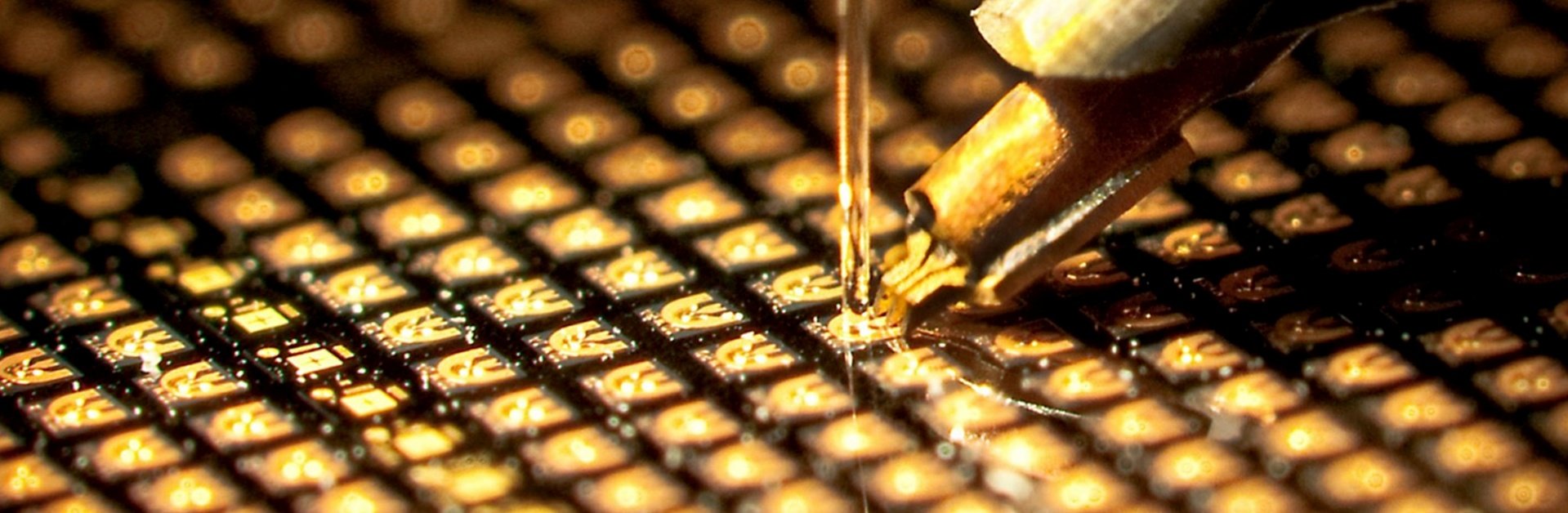
VCSEL Array for Facial Recognition and 3D Sensing
1. Facial Recognition in Everyday Devices
Facial recognition and short-range 3D sensing systems often need an active infrared light source to work reliably under changing ambient light. In many of these systems, a VCSEL array is used to provide the illumination required by structured-light, time-of-flight, active stereo, or infrared imaging modules.
The choice of VCSEL array depends on the optical architecture of the system. Wavelength, emitter layout, optical power, package size, thermal conditions, and the way the light is shaped all need to be considered together.
For this reason, a VCSEL array used in facial recognition is usually selected as part of the complete sensing module rather than as an isolated laser component.
How VCSEL Arrays Are Used in Facial Recognition
Different 3D sensing methods use the light source in different ways.
In a structured-light system, the VCSEL array is combined with optical elements that project a defined infrared pattern onto the face. A camera captures the reflected pattern, and the system uses the deformation of that pattern to calculate depth.
Time-of-flight systems work differently. The VCSEL array provides pulsed or modulated infrared light, while the receiver measures information from the returned signal to estimate distance.
Active stereo systems may use infrared illumination to improve image acquisition when ambient light is weak or uneven.
The same term, VCSEL array, can therefore refer to quite different optical configurations depending on the final 3D sensing architecture.
Why VCSEL Arrays Fit Compact 3D Sensing Modules
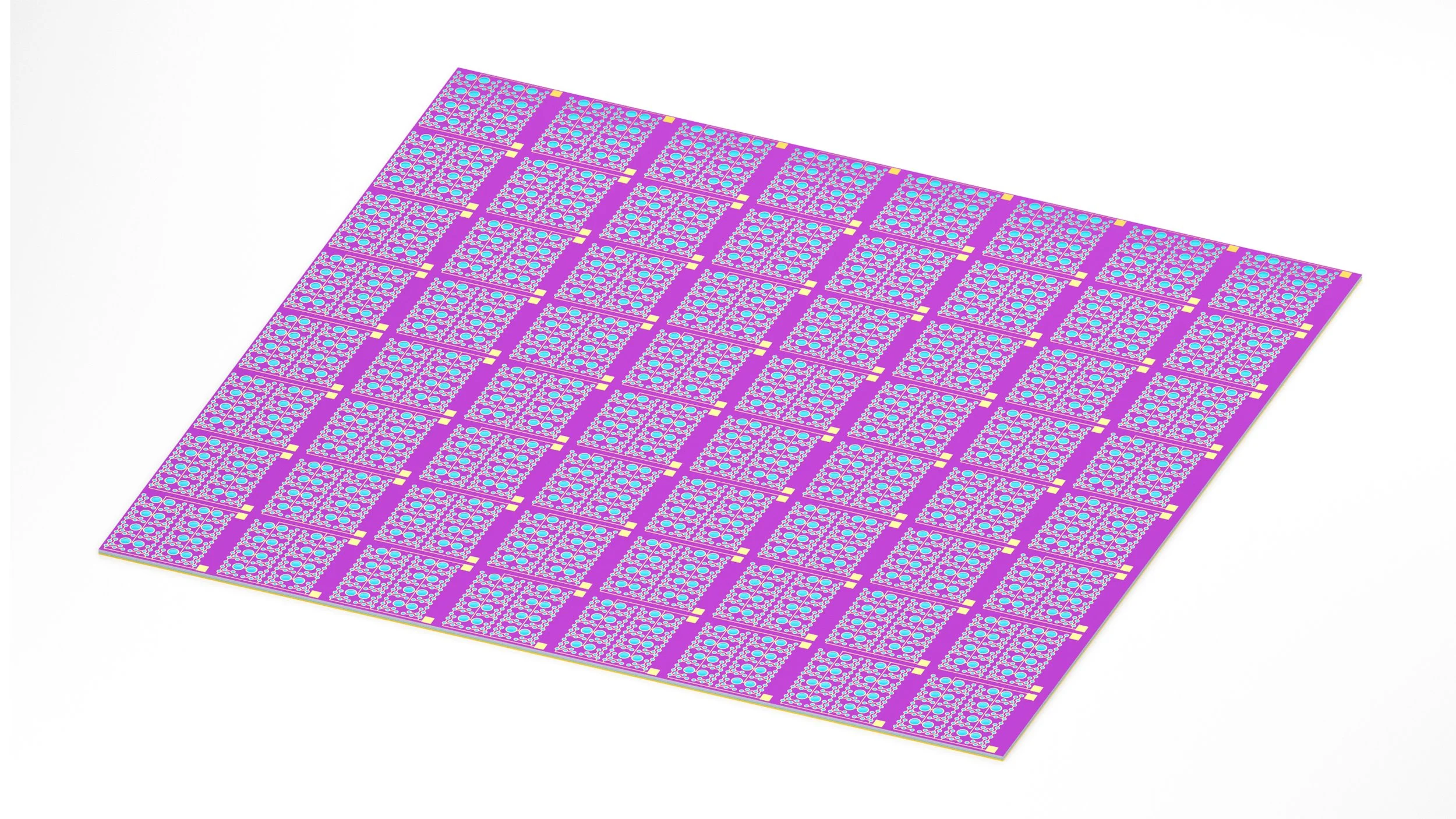
A VCSEL array combines multiple emitters on one chip. This allows the total emitting area, emitter number, and array geometry to be adjusted according to the required optical design.
The compact structure is useful in products where the illumination source has to fit into a small optical module.
Direct electrical modulation is another practical feature. Depending on the device and driving conditions, the light output can be controlled rapidly, which is useful for systems based on pulsed or modulated infrared illumination.
VCSEL emission can also be combined with collimation lenses, diffusers, diffractive optical elements, and other beam-shaping components. The final optical pattern is therefore determined by both the VCSEL array and the optical system around it.
Key Parameters for VCSEL Array Selection
For facial recognition and 3D sensing, it is more useful to start from system requirements than from a single laser specification.
These parameters are closely related. Increasing optical power, for example, may also change thermal requirements. A different array size may require changes to the downstream optics. In practice, the VCSEL array and optical module are usually designed together.
Optical Power Is Not the Only Selection Criterion
It is easy to focus on output power when comparing VCSEL arrays, but higher power alone does not guarantee better 3D sensing performance.
The required power depends on the complete optical path, including:
working distance
field of view
detector sensitivity
optical transmission losses
ambient light
modulation method
duty cycle
applicable eye-safety requirements
A compact facial recognition module operating at short range may require a very different VCSEL configuration from a wider-field 3D sensing system.
The goal is therefore not simply to maximize output power, but to match the light source to the receiver and optical architecture.
Array Layout and Beam Shaping
The geometry of the VCSEL array has a direct influence on how the illumination system is designed.
Emitter spacing, number of emitters, active area, and chip dimensions can all be adjusted according to the required optical configuration.
However, the array itself does not usually determine the final illumination pattern.
Depending on the application, the VCSEL may be combined with:
collimation optics
diffusers
diffractive optical elements
micro-optics
other beam-shaping components
For structured-light facial recognition, the downstream optical system may be used to create a specific projected pattern.
For active infrared imaging, the requirement may instead be a wider and more uniform illumination field.
These are different optical problems, even though both systems may use a VCSEL array.
Thermal Design in 3D Sensing Modules
Thermal behavior should be considered early in the module design.
The VCSEL array generates heat during operation, and the actual temperature rise depends on factors such as current, duty cycle, package structure, mounting method, and surrounding electronics.
Temperature can influence wavelength, optical output, and other device characteristics.
For this reason, thermal management should be considered together with:
drive conditions
package structure
PCB design
heat dissipation
operating temperature range
The appropriate solution depends on the final system rather than on the VCSEL chip alone.
Integration into Facial Recognition Systems
A practical facial recognition module normally includes more than the VCSEL array itself.
Typical components may include:
VCSEL array
laser driver
collimation or beam-shaping optics
infrared camera or detector
optical filter
control electronics
mechanical housing
Their relative position and mechanical tolerances can influence the final optical result.
In compact products such as smart locks, access-control terminals, payment terminals, or embedded 3D sensing units, available space may also limit the package size and optical configuration.
This is why OEM projects often require some degree of customization.
Custom VCSEL Arrays for Facial Recognition and 3D Sensing
Ace Photonics supports VCSEL array development for facial recognition and 3D sensing systems.
Depending on the project, customization may include:
wavelength
emitter layout
array dimensions
optical power
package structure
electrical configuration
collimation optics
beam-shaping requirements
Before selecting or developing a VCSEL array, it is useful to define the main system parameters.
Providing these details early makes it easier to evaluate whether an existing VCSEL array can be used or whether a custom layout, package, or optical configuration is required.
For facial recognition and 3D sensing, the most effective VCSEL solution is usually the one designed around the complete optical system rather than around a single headline specification.