
The Evolution of the VCSEL Diode: Insights From a Manufacturer
Understanding the VCSEL Diode
A VCSEL diode (Vertical-Cavity Surface-Emitting Laser) is a semiconductor laser that radiates vertically from the chip surface. Its core structure consists of two high-reflectivity DBR mirrors that enclose a quantum-well active region. This architecture creates an extremely short resonant cavity that supports efficient, stable, and uniform optical performance.
Why VCSEL Diodes Matter in Real-World Manufacturing
For manufacturers, the structure of a VCSEL diode directly shapes its scalability and system performance:
1. High Efficiency & Low Threshold
The vertical cavity minimizes threshold current, enabling efficient single emitters and high-density arrays—critical for applications where power budgets are tight.
2. Wafer-Level Screening
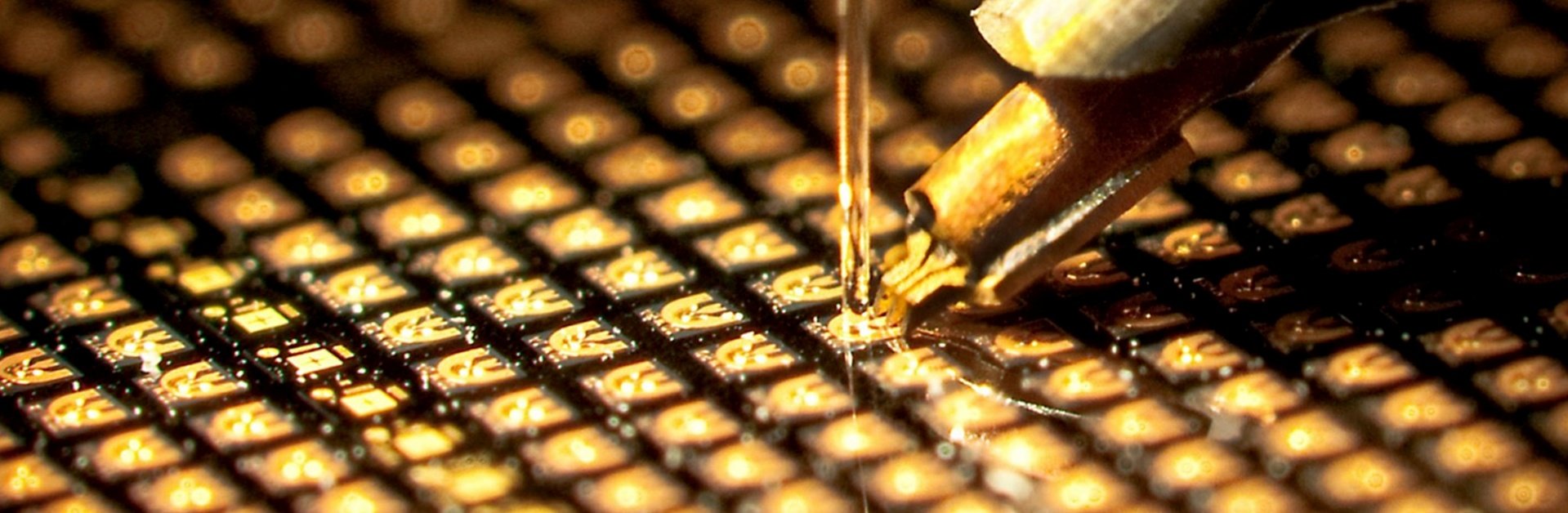
Vertical emission allows full electrical-optical characterization before dicing. This reduces cost variability, improves quality control, and enhances yield predictability—an advantage we prioritize in large-volume production.
3. Stable Wavelength & Clean Beam
VCSEL diodes naturally support narrow spectra and uniform far-field patterns, which are essential in 3D sensing optics, high-reliability links, and structured illumination.
4. Flexible Packaging Options
Manufacturers can integrate VCSEL chips into TO packages, COS formats, LGA modules, or optical assemblies with micro-lens arrays and DOEs depending on system requirements.
At Ace Photonics, engineering begins by defining wavelength targets, modulation depth, thermal behavior, and far-field profile—then validating consistency at both wafer and module level.
Why VCSEL Diodes Are More Important Than Ever
As system bandwidth and sensing complexity expand, the VCSEL diode has become essential in:
Short-reach optical communication: data centers, enterprise networks
3D sensing: structured-light, ToF, dot-pattern projection
Industrial automation: barcode scanning, alignment, positioning
Biomedical devices: spectroscopy, optical monitoring
Their blend of speed, efficiency, and compact geometry keeps VCSELs at the center of next-generation photonics.

Key Application Domains
1. Data Centers & HPC Interconnects
VCSEL diodes are widely used in multimode-fiber links and parallel optical modules (SR4, SR8, AOCs), offering high bandwidth per watt and excellent thermal stability.
2. Enterprise & Personal I/O
Short-reach Ethernet, storage networks, and peripheral interconnects benefit from the VCSEL’s small footprint and low operating current.
3. Sensing & Imaging
The stable wavelength and beam quality are ideal for depth cameras, NIR imaging, gesture tracking, and biomedical instrumentation.
4. Logistics & Retail
VCSEL arrays support barcode systems, machine vision, and 2D/3D pattern projection.
From Concept to Industry Standard: Development Timeline
The idea of the VCSEL emerged in the 1970s, but reliable devices only began to appear in the late 1980s as epitaxy, DBR control, and microfabrication matured.
Early challenges included:
limited power output
unstable mode behavior
reliability concerns
prohibitive fabrication costs
Advances in DBR reflectivity, current confinement, and wafer-level processing eventually pushed VCSEL diodes into scalable commercial use.
Key Technology Breakthroughs
Epitaxy Control
MBE and MOCVD growth provided precise control of DBR periods and quantum-well thickness, enabling tight wavelength binning.
Current & Optical Confinement
Oxide apertures and ion-implantation techniques improved beam symmetry and reduced threshold currents.
Wafer-Level Array Testing
Standardized array designs and automated inspection dramatically lowered cost per channel.
Where VCSEL Diodes Deliver the Most Impact
1. Telecom & Data-Center Links
VCSELs support multi-Gb/s direct modulation and scale effectively through parallel array architectures.
2. Enterprise Communication
Servers, workstations, and network appliances rely on VCSELs for efficient, low-heat optical connectivity.
3. Precision Sensing
VCSEL arrays combined with DOEs create stable, repeatable dot patterns and structured light essential for 3D sensing and robotics.
Current R&D Pathways
Manufacturers are actively advancing:
Higher optical power and efficiency through improved thermal paths
Wider wavelength coverage across NIR and SWIR bands
Integrated solutions with drivers and silicon photonics
Higher symbol rates for optical I/O in advanced computing systems
Emerging markets include robotics, ADAS, AR/VR spatial sensing, and co-packaged optical modules.
How Manufacturers Build Custom VCSEL Diode Solutions
1. Define System Requirements
Each project begins by mapping the optical and mechanical targets:
Wavelength & binning range (e.g., 760–940 nm)
Beam divergence & M²
Array pitch & emitter count
Modulation format and bandwidth
Package type & thermal management strategy
Eye-safety thresholds (IEC 60825-1 compliance)
2. Optimize for Each Industry
Data-center modules: prioritize stability, bandwidth, and thermal robustness
3D sensing & biomedical: emphasize pattern uniformity and SNR
Industrial consumer devices: focus on shock resistance and cost efficiencies
3. Verification & Qualification
Manufacturers perform:
Wafer-level optical/electrical testing
Stress tests: temperature, humidity, current cycling
Module-level validation with optics, drivers, and thermal load
Only devices that meet system-level margins move to full production.
FAQs About VCSEL Diodes
Q1: What differentiates a VCSEL diode from edge-emitting lasers?
VCSELs emit vertically, enabling wafer-level testing and dense arrays. Edge emitters offer higher individual power but complicate packaging and array assembly.
Q2: Are VCSEL diodes suitable for high-speed data links?
Yes. VCSELs support multi-Gb/s direct modulation and scale effectively through parallel arrays.
Q3: How is wavelength stability maintained in large-volume manufacturing?
By maintaining strict epitaxy control and using wafer-level binning alongside thermal management.
Q4: Can VCSEL arrays generate dot-pattern illumination for 3D sensing?
Yes. Arrays pair naturally with micro-optics such as DOEs or MLAs to form structured light or dot patterns.
Q5: How do manufacturers balance eye safety with optical power?
Through optimized aperture design, pulse shaping, duty-cycle control, and IEC-aligned safety calculations.