
The Science Behind VCSEL Emitters: How They Work
What Is a VCSEL Emitter?
A VCSEL emitter is a Vertical-Cavity Surface-Emitting Laser, a semiconductor laser that emits light vertically from the surface of the chip rather than from the edge. This surface emission is what makes VCSELs easy to test at the wafer level, highly scalable, and ideal for integration into compact optical systems.
As a VCSEL manufacturer, Ace Photonics designs and fabricates VCSEL emitters that combine laser-class performance with LED-like manufacturing efficiency, supporting demanding markets such as quantum sensing, 3D sensing, LiDAR, and optical communication.
Inside the Structure of a VCSEL Emitter
Although a VCSEL emitter often looks like a tiny chip or packaged diode from the outside, its internal structure is highly engineered. A typical device includes:
1. Active Region
At the center of the VCSEL emitter is the active region, where electrons and holes recombine to generate photons. The composition and thickness of this region determine:
The emission wavelength (for example, VCSEL designs in the 750–900 nm band for sensing and communication)
The threshold current and efficiency
Linewidth and noise performance needed for high-precision sensing
In our devices, the active region is grown epitaxially on GaAs-based wafers, allowing tight control of wavelength and output characteristics tailored to customer applications.
2. Distributed Bragg Reflectors (DBRs)
Above and below the active region sit Distributed Bragg Reflectors (DBRs)—multilayer mirrors that form the vertical optical cavity. Each DBR is built from alternating layers of materials with different refractive indices.
These DBRs:
Reflect light back through the active region to amplify the photon field
Define the cavity resonance and thus the exact emission wavelength
Help shape a symmetric, low-divergence beam that is easy to couple into optics or free space

3. Current Confinement and Thermal Management
For reliable operation, the VCSEL emitter must drive current precisely through the active region while controlling heat.
Typical design measures include:
Current confinement structures (such as oxide apertures or implanted regions) that force the drive current into a well-defined optical mode
Optimized thermal paths in the chip and package to remove heat, enabling stable performance even at elevated ambient temperatures—up to around 150 °C for Ace Photonics VCSELs in specific product families
These techniques increase efficiency, extend lifetime, and maintain wavelength stability over temperature.
4. Electrical Contacts
Finally, electrical contacts on the top and bottom of the VCSEL emitter inject the drive current into the device. Their geometry and materials are chosen to:
Minimize series resistance and power loss
Distribute current uniformly across the aperture
Support integration into different packages (TO-can, SMD, non-magnetic ceramic headers, and customized OEM modules)
How a VCSEL Emitter Works
The operation of a VCSEL emitter can be broken into three main steps:
Current Injection
When a forward bias is applied, electrons and holes are injected into the active region through the electrical contacts and confinement structures.Stimulated Emission in the Cavity
As carriers recombine, they emit photons. The DBRs reflect these photons back and forth across the active region. Once the photon density exceeds a threshold, stimulated emission dominates, and a coherent laser field builds up inside the vertical cavity.Surface Emission
A small fraction of the light escapes through the top DBR, which is designed to be partially transmitting. The result is a vertically emitted, near-Gaussian beam with low divergence and good symmetry—ideal for collimation, beam shaping, and array configurations.
Modulation: Turning VCSEL Emitters into Fast Data Carriers
One of the defining advantages of a VCSEL emitter is its ability to be directly modulated at high speed. By varying the injection current, the optical output power can be switched or modulated, enabling:
High-speed data transmission in optical communication links
Time-of-flight or structured-light patterns in 3D sensing
Modulated illumination for advanced quantum and oxygen sensing, where lock-in detection techniques benefit from precise timing and frequency control
Thanks to the device’s small active volume and low capacitance, VCSEL emitters support fast rise and fall times, making them highly attractive for modern digital and sensing systems.
Why VCSEL Emitters Stand Out
From a manufacturer’s perspective, VCSEL emitters combine several strengths that are difficult to achieve in other laser architectures.
Energy Efficiency
VCSEL emitters convert a large portion of electrical power into optical output. Their high wall-plug efficiency helps:
Reduce system-level power budgets
Extend battery life in portable devices
Lower thermal load, simplifying thermal design
Wafer-Level Testing & Scalability
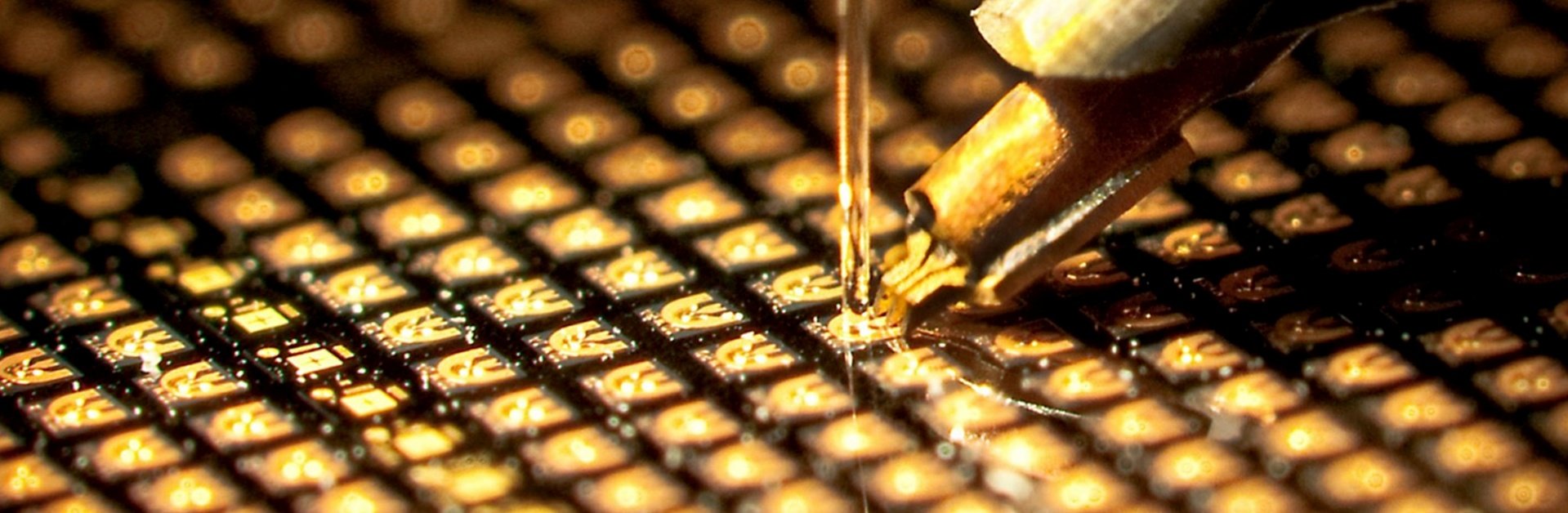
Because the beam emerges from the wafer surface, VCSELs can be tested at the wafer level before dicing. This supports:
Cost-effective production and binning
High-yield manufacturing of arrays and multi-channel devices
Rapid customization of aperture sizes and array layouts for OEM designs
Beam Quality and Low Divergence
VCSEL emitters typically produce symmetrical, low-divergence beams that are easy to collimate and shape with micro-optics. When combined with chip-level optical structures, they can even realize diffuser-less illuminators for compact depth-sensing modules.
Reliability and Temperature Stability
Well-engineered VCSELs offer:
High reliability and long operational lifetimes
Low wavelength shift over temperature, enabling narrowband operation with bandpass filters
Stable output over wide operating temperature ranges—critical for industrial, automotive, and aerospace environments
Non-Magnetic and Customized Packaging
For sensitive quantum sensing applications, Ace Photonics provides non-magnetic VCSEL packaging, avoiding the stray fields associated with steel cans and enabling ultra-low-noise measurements. We also integrate thermistors and TECs where needed to achieve excellent temperature control directly at the light source.
Real-World Applications of VCSEL Emitters
The combination of efficiency, speed, and beam control makes VCSEL emitters a key enabling technology across multiple markets.
Optical Communication
VCSELs are widely used in short-reach optical links, data centers, and high-speed interconnects. Their:
Direct modulation capability
Good coupling to multimode or single-mode fibers
Competitive cost structure
make them ideal for high-bandwidth, energy-efficient data transmission.
3D Sensing and Facial Recognition
In consumer electronics, VCSEL emitter arrays power:
Facial recognition and biometric authentication
Time-of-flight and structured-light 3D sensing
Depth cameras for AR/VR devices
High efficiency, narrow spectral width, and beam-shaping options at the chip level allow compact, reliable illumination modules without bulky diffusers.
LiDAR and Ranging
For LiDAR and ranging systems, VCSEL emitters provide:
Fast modulation for precise time-of-flight measurements
Scalable arrays to increase optical power and field of view
Stable performance across demanding automotive and industrial conditions
These features are vital for autonomous vehicles, robotics, and mapping solutions.
Quantum Sensing
VCSELs have become a preferred source in quantum sensing platforms, including atomic magnetometers, NV-center sensors, and other precision instruments. Their narrow linewidth, controllable wavelength (e.g., around 795 nm and 895 nm), and compatibility with non-magnetic packages enable highly sensitive measurement systems.
Medical and Oxygen Sensing
In medical and industrial environments, VCSEL emitters are paired with oxygen-sensitive dyes and optics to create compact oxygen sensors. Their wavelength stability, modulation capability, and efficiency enhance measurement accuracy and long-term reliability.
Future Trends in VCSEL Emitter Technology
Ongoing development is pushing VCSEL emitters into new performance regimes:
Higher output power and larger, more complex arrays for illumination and LiDAR
Extended wavelength coverage beyond traditional near-infrared windows
Improved integration with drivers, micro-optics, and temperature control within a single compact module
Advanced polarization control and ultra-narrow linewidth designs for next-generation quantum and spectroscopy applications
As these trends continue, VCSEL emitters will play an even larger role in sensing, communication, and computing systems.
Conclusion: Partnering with a VCSEL Emitter Manufacturer
VCSEL emitters may be physically small, but their impact on modern photonics is enormous. By combining:
A carefully engineered vertical cavity
High-efficiency active regions
Precise current confinement and thermal design
Flexible, application-driven packaging
they deliver the performance demanded by today’s optical communication, 3D sensing, LiDAR, quantum, and medical markets.
At Ace Photonics, we focus on designing and manufacturing custom VCSEL emitter solutions—from bare die to modules and non-magnetic packages—so that engineers can integrate the right light source directly into their systems. Whether you are developing a new quantum sensor, a compact 3D camera, or a high-speed communication link, our VCSEL technology is built to help you achieve robust, scalable, and efficient designs.