
VCSEL IR Laser Applications in Agricultural Technology
As a specialist VCSEL manufacturer, Ace Photonics designs and builds VCSEL IR laser solutions across the 750–1550 nm band. Our GaAs-based VCSEL die, packages and modules are engineered to be compact, energy-efficient and wavelength-stable, making them a natural fit for next-generation agricultural sensing, smart irrigation and machine vision systems.
By integrating VCSEL IR laser modules with optics and cameras, agricultural OEMs and system integrators can turn conventional equipment—drones, tractors, irrigation lines—into precise sensing platforms that monitor crops, soil and microclimates in real time.
What Is a VCSEL IR Laser?
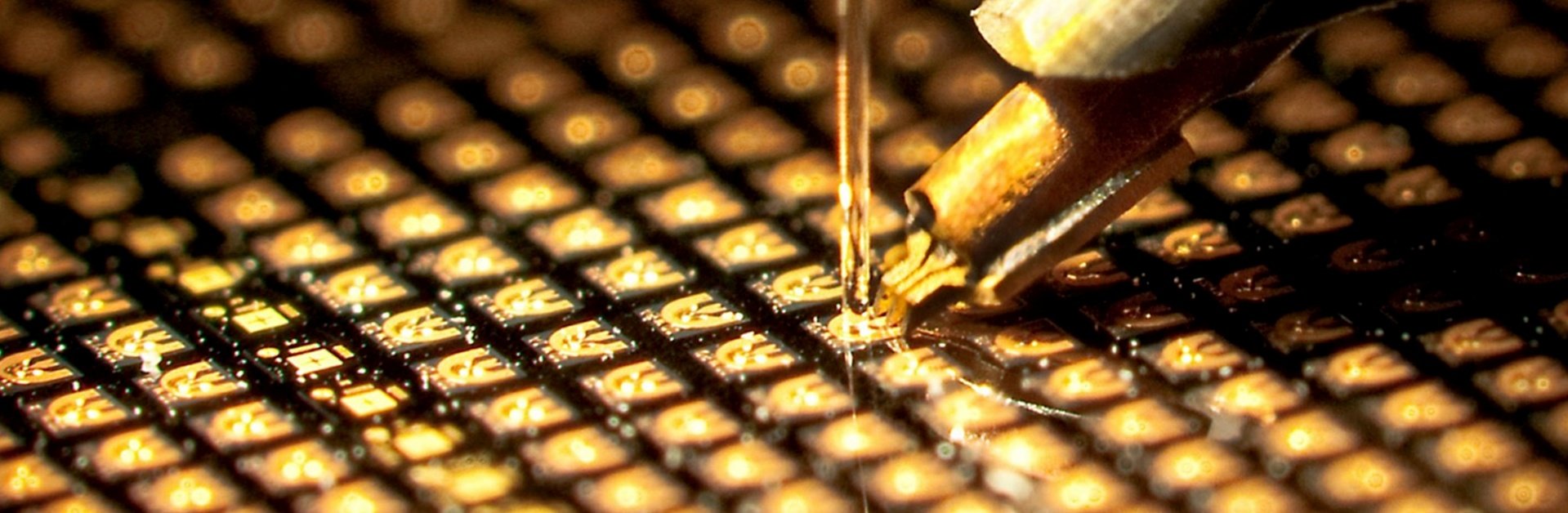
A VCSEL (Vertical-Cavity Surface-Emitting Laser) emits light perpendicular to the wafer surface rather than from the chip edge. This vertical emission geometry supports:
Wafer-level testing and high-volume manufacturing
Dense 2D arrays with many emission channels
Fine control over beam shape and divergence in a very small footprint
When configured as a VCSEL IR laser, the device operates in the near-infrared (NIR) and short-wave infrared (SWIR) range. In agricultural environments, these invisible beams are used to illuminate crops, canopies and soil so cameras and sensors can:
Differentiate crop species from weeds
Detect stress related to water, nutrients, pests or disease
Guide targeted treatment at the level of individual plants or rows
Because Ace Photonics VCSEL IR laser modules are compact and lightweight, they can be embedded in drones, robotic implements, fixed sensor nodes and other space-constrained agricultural hardware.
Why VCSEL IR Lasers Suit Modern Agriculture
1. High Energy Efficiency for Mobile Platforms
VCSELs are known for low threshold current and strong electro-optical efficiency. For agricultural systems, this translates into tangible benefits:
Longer UAV flight times for aerial scouting
Smaller battery packs on autonomous ground robots
Feasible solar-assisted nodes in remote plots
By choosing VCSEL IR laser sources instead of conventional infrared emitters, farm operators and OEMs gain high-frequency data collection without constant battery changes or oversized power supplies.

2. Tight, Controllable Illumination
Ace Photonics VCSEL modules are designed for:
Narrow beam divergence
Clean, well-defined spots or structured light patterns
High output performance in a compact package
This precise control helps agricultural systems:
Illuminate only the intended plant or soil strip
Reduce waste of chemicals, fertilizers and water
Capture higher-contrast IR images in dusty, low-light or night-time conditions
By using VCSEL arrays with integrated microlens arrays (MLA), multiple channels can be shaped into uniform lines or fields of light along crop rows, enabling robust machine vision even under challenging ambient conditions.
3. Cost-Effective, Scalable Infrared Sensing
Because VCSELs can be tested and sorted at the wafer level, they lend themselves to high-volume, cost-efficient production. For agricultural equipment builders, this means:
Affordable VCSEL die for custom boards and optics
Standard VCSEL packages ready to drop into sensor heads
Pre-aligned VCSEL modules that shorten development time
As VCSEL IR laser arrays scale up, the cost per beam drops, making dense sensing—across entire fields or fleets of machines—economically realistic, even for mid-sized farms and regional service providers.
4. Stable Operation in Changing Field Conditions
A key advantage of Ace Photonics VCSEL technology is wavelength stability over temperature, significantly better than many edge-emitting designs. acephotonics.com For agriculture, this stability is essential:
Day–night and seasonal temperature swings do not push emission out of calibrated spectral bands
Multispectral and hyperspectral algorithms remain reliable over long deployment periods
Many systems can avoid bulky active temperature control, reducing cost and complexity
Stable wavelength output leads to cleaner data, simpler calibration routines and more trustworthy agronomic recommendations.
VCSEL IR Lasers at Work on the Farm
UAVs for Aerial Crop Intelligence
When VCSEL IR laser modules are integrated with multispectral or hyperspectral cameras on drones, they support:
High-resolution crop vigor mapping
Early detection of disease or pest hot spots
Variable-rate spraying and seeding routes guided by real-time data
The low mass and compact footprint of Ace Photonics VCSEL modules align well with tight UAV payload constraints, while still delivering structured illumination for consistent data acquisition.
Smart, Sensor-Driven Irrigation
In automated irrigation systems, VCSEL IR lasers can be used to:
Measure leaf reflectance as a proxy for water status and canopy temperature
Track soil surface height and canopy height to optimize nozzle position
Generate continuous feedback so pumps and valves match water flow to plant demand
Combining these IR measurements with control software enables zone-by-zone water management, improving yield while reducing wastage and the risk of over-irrigation.
Machine Vision for Tractors and Field Robots
Modern tractors, harvesters and autonomous field robots rely heavily on cameras and LiDAR-like sensors. Here, VCSEL IR lasers serve as:
IR illuminators to boost contrast in dusty fields or at night
Structured-light sources to estimate plant height, canopy density and row position
Safety aids for detecting obstacles and people near heavy machinery
Ace Photonics VCSEL IR illuminator solutions are designed to interface cleanly with industrial cameras and sensors, offering tailored intensity and beam direction to support robust on-board image processing.
Emerging AgTech Opportunities
Indoor and Vertical Farming
In controlled-environment agriculture, VCSEL IR laser solutions add value at multiple layers:
Monitoring: IR illumination supports non-intrusive tracking of leaf area, morphology and growth rate.
Closed-loop control: Reflectance signatures help tune nutrient formulation, CO₂ levels and LED “light recipes.”
Space optimization: Slim VCSEL modules fit inside narrow racks and multi-tier growth systems without stealing growing area.
Nutrient and Stress Management
By combining VCSEL IR lasers at different wavelengths, spectral analytics can detect subtle plant responses, such as:
Changes in chlorophyll and pigments linked to nitrogen or phosphorus levels
Early indicators of disease, pest pressure or physiological stress
Effects of salinity, compaction or root damage
These metrics feed into variable-rate fertilization and targeted application of biostimulants and crop protection, turning spectral data into actionable agronomy.
Environmental and Ecosystem Monitoring
Beyond direct crop health, farms must monitor their wider environmental footprint. VCSEL IR lasers can support:
Air quality and gas monitoring around livestock facilities and storage areas
Optical sensors that track surface water quality and drainage patterns
Mapping of canopy cover, buffer zones and erosion-prone areas along field edges
This extends the same VCSEL core technology used in quantum sensing and 3D imaging into continuous environmental intelligence.
From VCSEL Chip to Agricultural Module
Ace Photonics provides a complete VCSEL product stack tailored to equipment builders:
VCSEL Die – for integrators who design custom PCBs, optics and packaging around bare chips
VCSEL Packages – robust, easy-to-assemble housings for sensor heads and control units
VCSEL Modules & IR Illuminators – compact, high-output units that combine VCSEL arrays with microlens arrays for uniform beams in a small footprint acephotonics.com
VCSEL Gain Chips – for advanced laser architectures and specialized agritech instrumentation
Using a common family of VCSEL IR lasers across drone payloads, fixed sensor stations and on-machine vision systems allows OEMs to streamline qualification, electronics design and long-term maintenance.
Looking Ahead: VCSEL IR Lasers in Future Agriculture
As VCSEL technology progresses toward higher power density, broader wavelength coverage and finer beam shaping, its role in agriculture will continue to expand. Ongoing developments include:
Enhanced thermal management for continuous outdoor operation
Extended NIR/SWIR options for richer spectral discrimination of crops and soils
Standardized module interfaces for faster, plug-and-play integration into new platforms
For VCSEL IR laser manufacturers such as Ace Photonics, the objective is clear: supply reliable, scalable and application-ready VCSEL solutions that enable truly data-driven, sustainable farming—whether in open fields, greenhouses or vertical farms.