VCSEL Package Types, Selection and Custom Options
A VCSEL package does more than protect the laser chip. It provides electrical connections, supports heat dissipation, maintains mechanical stability and helps the VCSEL integrate with the optical and electronic components of the final system.
The correct package depends on the wavelength, output power, operating environment, production method and application. A compact PCB-based device may require an SMD package, while an atomic magnetometer may require carefully selected non-magnetic materials. Some OEM systems also need custom windows, lenses, temperature sensors or integrated drivers.
Ace Photonics provides TO-can, SMD, ceramic, non-magnetic and custom VCSEL package options for quantum sensing, atomic clocks, industrial sensing, 3D sensing and other photonic systems.
What Is a VCSEL Package?
A VCSEL package is the mechanical, electrical and optical structure used to house a vertical-cavity surface-emitting laser chip.
Depending on its design, the package may perform several functions:
Protect the VCSEL die from handling and environmental damage
Provide electrical connections to the laser chip
Transfer heat away from the active device
Maintain mechanical stability and optical alignment
Support integration with a PCB, lens, window or optical module
Accommodate a thermistor, TEC or other temperature-control components
Reduce magnetic interference in sensitive measurement systems
Packaging should therefore be considered during the early stages of product design rather than after the VCSEL chip has already been selected.
Common VCSEL Package Types
There is no single VCSEL package that is best for every system. Package selection should begin with the actual operating conditions and integration requirements.
TO-Can VCSEL Package
A TO-can VCSEL package is a familiar choice for laboratory equipment, industrial sensing systems, optical instruments and engineering prototypes.
Its metal housing provides mechanical protection and makes the device relatively easy to handle, mount and test. TO-can packages may also accommodate different windows, caps, pin configurations and optical structures.


A TO-can package can be suitable when:
The device will be installed in a laboratory or industrial system
Easy electrical connection and mechanical handling are important
The project requires a familiar package format
The design needs a window, cap or additional optical component
Prototype quantities are required before production
However, standard TO-can materials should not automatically be used in magnetically sensitive systems. Some conventional structures may contain magnetic components. For atomic magnetometers and other precision sensing applications, the package materials and assembly process should be evaluated carefully.
SMD VCSEL Package
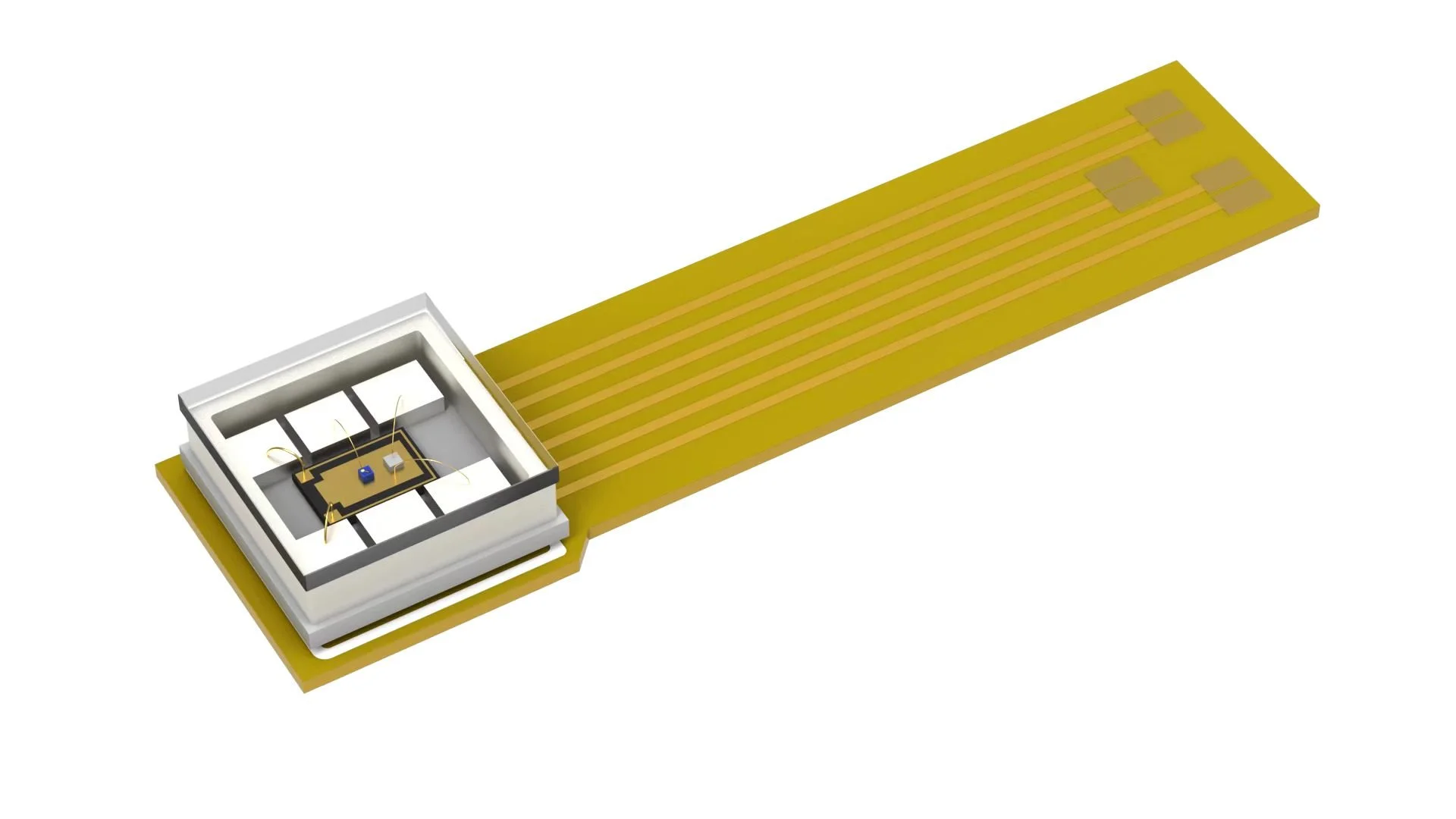
An SMD VCSEL package is designed for direct integration onto a printed circuit board. It is commonly selected when compact dimensions, automated assembly and production scalability are important.
SMD packaging can support:
Smaller product dimensions
Surface-mount assembly
High-volume manufacturing
Shorter electrical connections
Integration with PCB-based control electronics
Compact sensor and optical module designs
Typical applications include 3D sensing, proximity detection, wearable electronics, compact sensing instruments and other products with limited PCB space.
The SMD package cannot be selected by size alone. Designers should also confirm the reflow process, package thermal resistance, optical axis, window properties and required alignment tolerance.
Non-Magnetic VCSEL Package
A non-magnetic VCSEL package is designed for systems in which magnetic materials near the sensor may influence measurement stability or accuracy.
This requirement is particularly important for:
Atomic magnetometers
Quantum sensing systems
Atomic clocks
Quantum gyroscopes
Precision measurement instruments
Other magnetically sensitive optical systems
In these applications, package selection must consider more than the external housing. Pins, bonding materials, internal structures, temperature-control components and nearby electronic parts may all contribute to the magnetic environment.
A non-magnetic VCSEL package can help reduce package-related magnetic interference, but the acceptable magnetic level should be defined according to the complete system. Customers should provide the working distance between the VCSEL and sensor, measurement sensitivity and any material restrictions before package development begins.Learn more about non-magnetic VCSEL packaging.

Ceramic and Custom VCSEL Packages
Standard TO-can and SMD packages do not meet every project requirement. A ceramic or custom VCSEL package may be more suitable when the system has strict optical, thermal, mechanical or environmental constraints.
A custom package can be developed around requirements such as:
Target wavelength and wavelength tolerance
Required optical output power
Package dimensions and mounting method
Pin configuration and electrical interface
Operating and storage temperature
Non-magnetic material selection
Window material and anti-reflection coating
Lens or beam-shaping requirements
Thermistor or temperature sensor integration
TEC integration
PCB and driver integration
Module-level assembly
Custom packaging is especially useful when the VCSEL must fit an existing optical system or operate in an environment that cannot accept a standard catalog package.
Ace Photonics supports OEM VCSEL packaging services from requirement evaluation and sample development to production preparation.
How to Select the Right VCSEL Package
The following factors should be evaluated before choosing a package.
1. Application
The application determines which package characteristics matter most.
For example, an atomic magnetometer may prioritize non-magnetic materials and wavelength stability. A wearable device may prioritize package size and PCB assembly. A laboratory instrument may instead require easy handling and optical access.
2. Wavelength and Output Power
The target wavelength and output power influence chip selection, heat generation, optical components and package design.
Ace Photonics provides VCSEL die options at wavelengths including 760 nm, 790/795 nm, 850 nm, 880 nm and 890/895 nm, with different output power and packaging configurations available.
The final wavelength tolerance and power requirement should be confirmed under the intended operating conditions.
3. Thermal Management
Temperature can affect output power, wavelength and device reliability. The package should provide an appropriate thermal path for the operating current and duty cycle.
Important questions include:
Will the VCSEL operate in continuous-wave or pulsed mode?
What is the maximum ambient temperature?
How stable must the wavelength remain?
Is passive heat dissipation sufficient?
Is a thermistor or TEC required?
Thermal requirements should be discussed before finalizing package dimensions and materials.
4. Optical Interface
The package may need to work with a window, lens, microlens array, optical filter or fiber-coupling structure.
Confirm:
Optical aperture
Optical axis position
Beam divergence
Required working distance
Window material
Anti-reflection coating
Lens or beam-shaping requirements
Acceptable reflection back toward the VCSEL
These factors can influence optical efficiency and system alignment.
5. Mechanical and Electrical Integration
The package must fit the available space and connect correctly to the system.
Customers should define:
Maximum package dimensions
Mounting method
Pin layout
Connector requirements
PCB assembly process
Electrical drive conditions
Shock and vibration environment
Alignment tolerance
Resolving these details early can reduce redesign during prototype testing.
6. Prototype and Production Requirements
A package suitable for laboratory testing may not be the best package for volume production.
During early development, a TO-can or custom test package may make evaluation easier. For larger production volumes, an SMD or application-specific package may offer better assembly efficiency.
Production planning should consider sample quantity, expected annual volume, testing requirements and required documentation.
VCSEL Package Selection by Application
The table provides a starting point. Final selection should be based on the complete system rather than the application name alone.
What to Provide Before Requesting a Custom VCSEL Package
Providing clear project information helps the supplier evaluate feasibility and recommend the appropriate structure.
For a new design, drawings, interface documents and information about the surrounding optical system are also helpful.
Custom VCSEL Package Support from Ace Photonics
Ace Photonics supports VCSEL development from die selection and package design to application-specific module integration.
Available customization may include:
VCSEL wavelength and output power
TO-can, SMD, ceramic and custom housings
Magnetic or non-magnetic package structures
Window and lens selection
Beam-shaping components
Thermistors and TEC structures
Custom pin configurations
PCB and driver integration
Prototype testing
Transition from engineering samples to production
The design process normally begins with application requirements, followed by technical evaluation, package design, sample production and performance validation.
For projects that require additional electronics or optical components, see our VCSEL modules and OEM packaging services.
Frequently Asked Questions
What is the main purpose of a VCSEL package?
A VCSEL package protects the laser chip, provides electrical connections, supports thermal management and helps integrate the device with the final optical or electronic system.
What is the difference between a TO-can and an SMD VCSEL package?
A TO-can package provides a familiar, mechanically protected format that is convenient for laboratory and industrial integration. An SMD package has a smaller footprint and is better suited to automated PCB assembly and compact volume-produced devices.
When is a non-magnetic VCSEL package required?
A non-magnetic package should be considered when the VCSEL operates close to an atomic magnetometer, quantum sensor or another system that is sensitive to magnetic materials. The acceptable package materials should be determined from the system-level measurement requirements.
Can a VCSEL package include a TEC or temperature sensor?
Yes. Custom packages may incorporate a TEC, thermistor or other temperature-control components when the application requires tighter wavelength or temperature stability.
Can the window or lens be customized?
Window material, coating, optical aperture, lens design and beam-shaping components can be evaluated as part of a custom VCSEL package project.
What information is needed to request a sample?
Provide the application, wavelength, output power, preferred package type, operating temperature, optical requirements, quantity and expected project schedule. For custom projects, drawings and interface specifications are also recommended.
Request a VCSEL Package
The correct VCSEL package depends on how the laser will operate inside the complete system.
Send Ace Photonics your application, wavelength, output power, package preference, temperature range and quantity requirements. Our team will evaluate whether a TO-can, SMD, ceramic, non-magnetic or custom package is the most suitable starting point for your project.
Contact Ace Photonics to discuss engineering samples or a custom VCSEL package.