
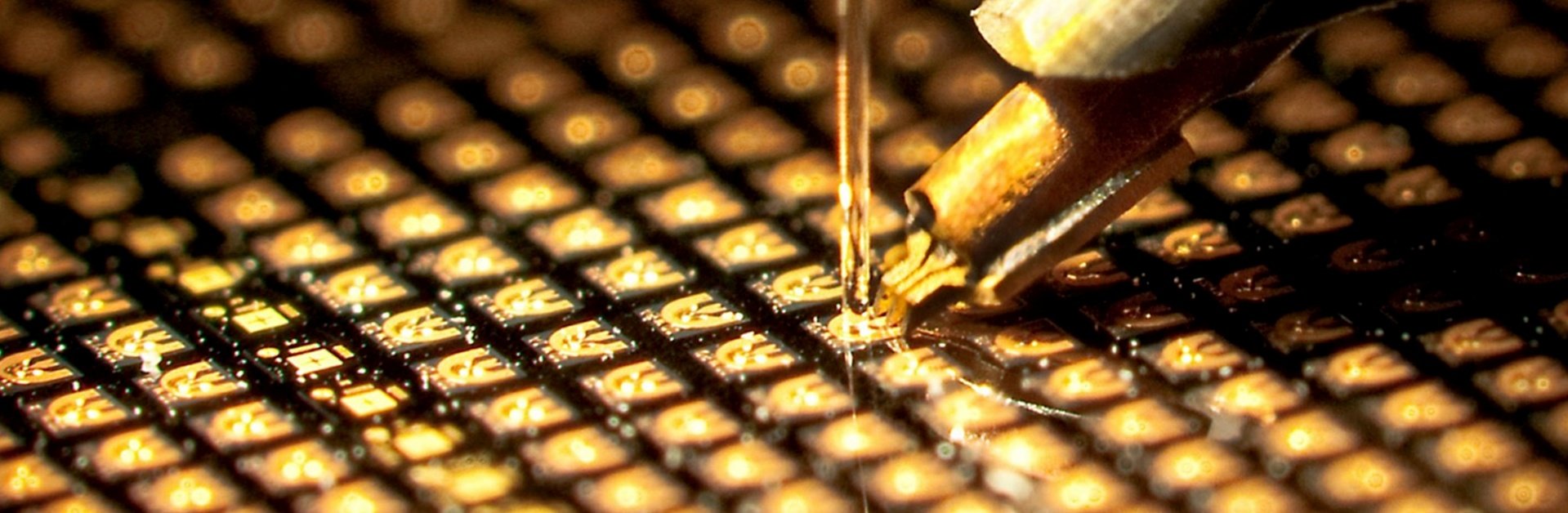
Purpose-Built for Quantum technology
We develop precision VCSEL solutions for atomic clocks, quantum technology,
and advanced photonic systems for research, industrial, and emerging quantum applications.
Laser VCSELs for Consumer Electronics and 3D Sensing
VCSELs are now widely used in consumer electronics because they combine compact size, fast modulation, efficient light output and easier integration. From 3D facial recognition to wearable health sensing, VCSEL technology helps devices measure distance, detect motion, recognize users and support optical sensing in a smaller space.
For engineers and product teams, the value of a VCSEL is not only the laser itself. The right wavelength, output power, beam profile, package type and testing method all affect the final performance of the device. This is especially important in consumer electronics, where products must be compact, reliable and suitable for volume production.
Ace Photonics provides VCSEL dies, arrays, packaged devices and custom VCSEL solutions for sensing and optical integration projects. Our work focuses on matching the VCSEL design to the real application, including wavelength selection, optical power, package format, beam requirements and production testing.
Why VCSELs Are Used in Consumer Electronics
Consumer electronics products need light sources that are small, efficient and stable. Traditional edge-emitting lasers can provide high optical power, but they often require more complex alignment. LEDs are simple and low-cost, but their beam control and modulation speed are limited in many sensing applications.
VCSELs offer a different balance. Because a VCSEL emits light vertically from the surface of the chip, it can be tested at wafer level, arranged into arrays and integrated into compact optical modules. This makes VCSELs suitable for high-volume consumer products where size, cost, consistency and reliability all matter.
Common advantages include:
Compact chip structure for small devices
Fast modulation for ToF and depth sensing
Good beam symmetry for optical design
Array scalability for higher power or wider illumination
Wafer-level testing for production consistency
Flexible packaging for different module layouts
These features make VCSELs useful in smartphones, tablets, AR/VR headsets, wearable devices, smart home sensors and other compact electronic systems.

VCSELs for 3D Sensing
3D sensing is one of the most important consumer applications for VCSELs. A 3D sensing system uses light to measure distance, depth or shape. Depending on the system design, the VCSEL may be used for structured light, time-of-flight sensing or active illumination.
In structured light systems, the VCSEL works with optics to project a pattern onto the target. The camera then reads the deformation of the pattern to calculate depth. In ToF systems, the VCSEL emits modulated or pulsed light, and the sensor measures the time or phase difference of the reflected signal.
VCSELs are well suited for these systems because they can support fast optical modulation, compact packaging and array-based power scaling. For consumer devices, this helps improve depth accuracy while keeping the optical module small.
Typical 3D sensing applications include:
Face recognition
Gesture control
Depth cameras
AR/VR tracking
Proximity sensing
Smart home detection
Consumer robotics
For each application, the VCSEL must be selected based on wavelength, power level, beam profile, eye-safety design and the sensitivity of the detector.
VCSELs for Face ID and Facial Recognition
Face ID and facial recognition systems require a stable and compact infrared light source. The VCSEL provides active illumination so the device can recognize facial features even when ambient light is weak or inconsistent.
In these systems, VCSELs are often used together with optical components such as lenses, diffusers or diffractive optical elements. The final beam shape depends not only on the VCSEL chip, but also on the full optical path. This is why VCSEL selection should begin early in the module design process.
Important design factors include:
Wavelength compatibility with the image sensor
Optical power and eye-safety limits
Uniformity of illumination
Modulation performance
Thermal stability
Package height and alignment tolerance
Production testing and binning requirements
A well-designed VCSEL solution can help facial recognition modules become smaller, faster and more reliable.
VCSELs for Wearable Devices
Wearable devices place strong limits on size, power consumption and thermal behavior. A light source must fit into a small housing, operate efficiently and remain stable during daily use.
VCSELs can be used in wearable sensing systems where compact infrared illumination is required. In some designs, they may support proximity sensing, gesture sensing, optical detection or health-related sensing functions. The specific wavelength and output power depend on the detector, skin interaction, optical path and safety requirements.
For wearable products, the most important VCSEL considerations are:
Low power consumption
Compact package size
Stable output over temperature
Controlled beam profile
Reliable operation under repeated use
Compatibility with the optical and mechanical design
Because wearable devices are close to the body, system-level design is especially important. VCSEL power, duty cycle, optics and safety requirements should be evaluated together rather than separately.
VCSELs for AR, VR and MR Devices
AR, VR and MR devices often need depth sensing, eye tracking, gesture tracking or environmental detection. These systems require compact optical components that can work inside a headset or wearable module.
VCSELs are attractive for AR/VR applications because they can provide infrared illumination in a small form factor. They can also be arranged in arrays when higher optical power or wider illumination is required.
Possible AR/VR uses include:
Eye tracking
Hand tracking
Depth mapping
Inside-out tracking
Proximity detection
Structured light projection
For these applications, VCSEL design is closely related to the field of view, optical layout, sensor response and thermal control of the device.
Choosing the Right VCSEL for Consumer Electronics
A VCSEL should not be selected only by wavelength or output power. In real product design, several parameters must work together.
For consumer electronics, the best solution is usually not the highest-power VCSEL. It is the VCSEL that fits the system design, production target and reliability requirements.
Common VCSEL Wavelengths for Consumer Sensing
Consumer sensing systems often use near-infrared wavelengths because they are suitable for optical detection while remaining invisible to the human eye. Common wavelength ranges include 850 nm and 940 nm, depending on the sensor, filter, ambient light conditions and eye-safety design.
In some specialized projects, other wavelengths may be required. Ace Photonics supports wavelength selection based on customer application needs, including custom VCSEL designs where standard products are not enough.
When choosing a wavelength, engineers should consider:
Detector sensitivity
Ambient light interference
Optical filter design
Eye-safety requirements
Required sensing distance
Thermal wavelength drift
Availability of matching optics
A clear wavelength requirement helps reduce redesign work later in the project.
VCSEL Package Options
The package has a direct impact on optical alignment, thermal behavior and assembly process. Different consumer electronics products may need different package formats.
Common VCSEL package options include:
Bare die for custom module integration
SMD package for compact assembly
TO-can package for testing or optical development
Custom package for special optical or mechanical requirements
Array-based package for higher optical power or wider illumination
For high-volume products, package selection should be considered together with PCB layout, lens design, reflow process, thermal path and inspection method.
Custom VCSEL Support from Ace Photonics
Ace Photonics works with customers who need VCSEL solutions beyond standard catalog parts. Our support can cover chip selection, wavelength matching, package discussion and production testing requirements.
Custom support may include:
Wavelength selection
Optical power customization
Single-emitter or array design
Beam profile discussion
Bare die, SMD, TO-can or custom package
Testing and binning support
Application-based VCSEL recommendation
For projects involving 3D sensing, Face ID, AR/VR, wearable sensing or compact optical modules, early communication can help define the right VCSEL structure before the system design is fixed.
What to Prepare Before Requesting a VCSEL
To help the VCSEL supplier evaluate the project accurately, it is useful to prepare the main optical and mechanical requirements before inquiry.
The more complete the initial information is, the faster the VCSEL selection process will be.
Conclusion
VCSELs have become an important light source for consumer electronics because they support compact design, fast response, array integration and reliable optical sensing. They are widely used in 3D sensing, facial recognition, ToF systems, AR/VR devices and wearable products.
For successful integration, the VCSEL must be matched to the full system. Wavelength, power, beam profile, package type, modulation and testing requirements should all be considered together.
Ace Photonics provides VCSEL dies, arrays, packaged devices and custom VCSEL support for sensing and consumer electronics applications. If your project requires a compact infrared light source for 3D sensing, Face ID, wearables or optical modules, our team can help evaluate the right VCSEL solution.
FAQ
What is a VCSEL?
A VCSEL is a vertical-cavity surface-emitting laser. Unlike an edge-emitting laser, it emits light vertically from the chip surface. This structure supports compact design, wafer-level testing and array integration.
Why are VCSELs used in consumer electronics?
VCSELs are used because they are compact, efficient, fast and suitable for integration into small optical modules. They are especially useful for 3D sensing, facial recognition, ToF sensing, AR/VR tracking and wearable devices.
What is the difference between a VCSEL and an LED?
An LED is simple and low-cost, but it usually has wider beam divergence and slower modulation. A VCSEL offers better beam control, faster response and stronger compatibility with optical sensing systems.
What is the difference between a VCSEL and an edge-emitting laser?
A VCSEL emits light from the surface of the chip, while an edge-emitting laser emits light from the side. VCSELs are often easier to test at wafer level and can be integrated into arrays more easily.
Which wavelengths are common for consumer VCSEL sensing?
Common consumer sensing wavelengths include 850 nm and 940 nm. The best choice depends on detector sensitivity, optical filters, ambient light conditions, eye-safety design and system requirements.
Can VCSELs be used for Face ID?
Yes. VCSELs are widely used in facial recognition and Face ID systems because they can provide compact infrared illumination for 3D sensing and depth detection.
Can VCSELs be used in wearable devices?
Yes. VCSELs can be used in wearable sensing systems when compact infrared illumination, stable output and efficient optical design are required.
What package types are available for VCSELs?
Common package types include bare die, SMD, TO-can and custom packages. The best choice depends on the optical module, assembly method, alignment requirement and production volume.
Can Ace Photonics provide custom VCSEL solutions?
Yes. Ace Photonics can support custom VCSEL wavelength selection, optical power requirements, array design, package discussion and testing needs based on the customer’s application.
What information should I provide before requesting a VCSEL?
You should provide the application, target wavelength, output power, beam profile, package type, modulation condition, temperature range, volume target and any special testing or documentation requirements.