
Understanding the Cost Benefits of VCSELs Lasers
For OEMs and system designers, choosing a light source is no longer only about optical performance. Cost, production yield, power consumption, packaging, and long-term reliability all affect whether a product can move smoothly from prototype to mass production.
This is where VCSELs lasers offer a practical advantage. Compared with many traditional edge-emitting laser solutions, VCSEL technology can support efficient manufacturing, compact integration, scalable array design, and stable performance over the product lifetime.
As a dedicated VCSEL manufacturer, Ace Photonics focuses on helping customers build optical systems that are not only technically reliable, but also easier to manufacture, test, and scale.
Why VCSELs Lasers Can Reduce System Cost
A laser diode may look like a small component on the bill of materials, but its influence reaches far beyond the device price. It can affect assembly methods, calibration time, thermal design, power consumption, and field reliability.
VCSELs lasers are widely used because they help control many of these hidden costs at the same time.
Wafer-Level Testing Improves Yield
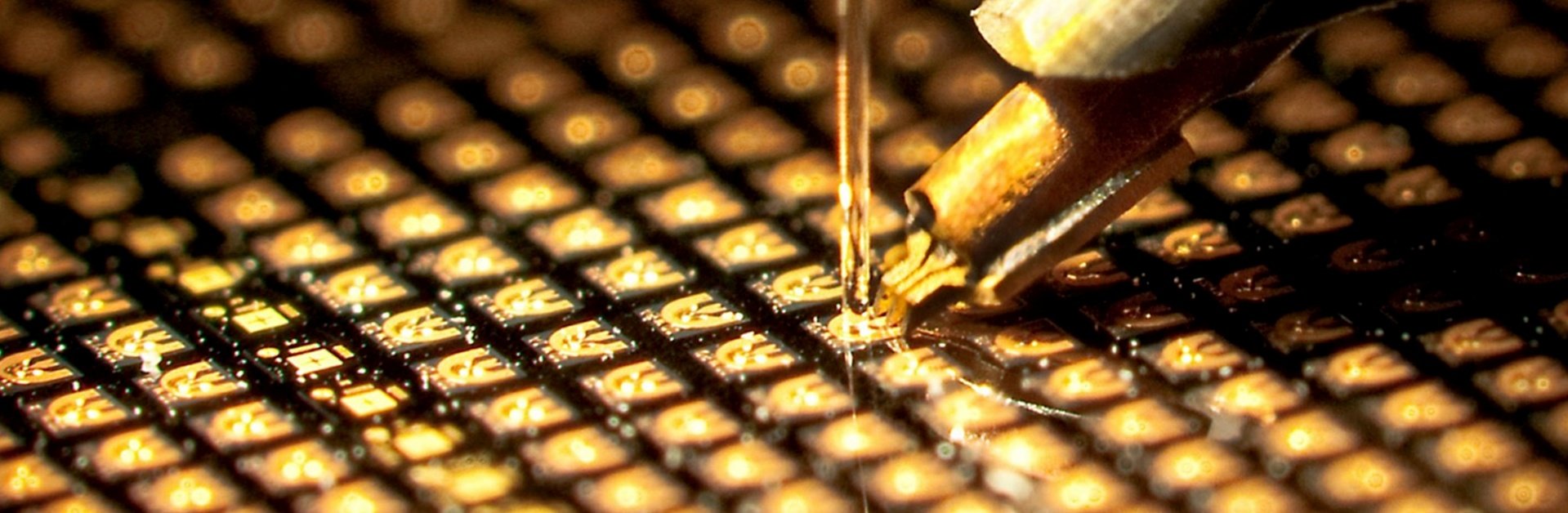
One major cost advantage of VCSEL technology comes from wafer-level testing. Before the wafer is diced into individual chips, each die can be tested electrically and optically. This allows defective devices to be identified earlier in the production process.
For manufacturers and OEM customers, this matters because it reduces the risk of packaging bad chips. Since packaging, alignment, and module assembly all add cost, removing defective devices before those steps can improve total production efficiency.
This is especially valuable in high-volume applications where even a small improvement in yield can have a noticeable effect on unit cost.

Array-Friendly Design Supports Scalable Production
VCSELs lasers emit light vertically from the surface of the wafer. This structure makes them suitable for array integration, where multiple emitters can be placed on the same chip.
For applications such as 3D sensing, ToF ranging, LiDAR illumination, and optical communication, this array-friendly design can simplify system architecture. Instead of building around many separate light sources, engineers can use a compact VCSEL array to reach the required optical power, beam pattern, or channel density.
From a cost perspective, this means higher integration, fewer assembly steps, and better use of the same manufacturing platform.
Lower Power Consumption Reduces Operating Cost
VCSEL laser diodes are also known for low threshold current and good electro-optical efficiency. In real products, this can reduce power consumption, lower heat generation, and simplify thermal design.
For battery-powered devices such as wearables, handheld instruments, and mobile sensors, power efficiency directly affects user experience and product size. For industrial or data communication systems, lower heat can also reduce the need for complex cooling structures.
Over the lifetime of a product, these savings can become more important than the initial device cost.
Total Cost of Ownership Matters More Than Device Price
When comparing laser technologies, it is easy to focus only on the price of the component. However, for OEM projects, the more important question is often the total cost of ownership.
A VCSEL-based design may help reduce cost in several areas:
fewer defective packaged devices due to wafer-level testing
simpler optical alignment in many system designs
lower power consumption and less heat
compact packaging options for space-limited products
scalable arrays for higher output or wider coverage
stable performance that reduces calibration and maintenance pressure
These factors make VCSELs lasers attractive not only for prototype development, but also for products that must be manufactured consistently at scale.
Application Areas Where VCSELs Lasers Add Value
The cost benefit of VCSEL technology is closely connected to its versatility. A single VCSEL platform can often be adapted for different applications by adjusting wavelength, output power, array layout, package type, and optical design.
Data Communication and Optical Interconnects
VCSELs have been widely used in short-reach optical communication, especially in data centers and high-speed interconnect systems. They support high-speed modulation, compact optical layouts, and efficient coupling for short-distance links.
For system designers, the advantage is not only speed. VCSELs can also support high-volume production and predictable performance, which are important for optical engines, transceivers, and other communication modules.
Consumer Electronics and 3D Sensing
Many modern consumer devices depend on compact optical sensing. Facial recognition, proximity sensing, gesture control, AR/VR tracking, and Time-of-Flight depth sensing all need small, efficient, and reliable light sources.
VCSELs lasers are well suited to these applications because they can provide controlled illumination in a compact package. Their array structure can also support different beam patterns and output levels, depending on the sensing distance and optical design.
For consumer products, where millions of units may be shipped, manufacturability and cost control are just as important as optical performance.
Medical and Biosensing Devices
Medical and biosensing systems often require stable wavelength, compact size, and consistent optical output. VCSELs can be used in wearable sensors, diagnostic instruments, pulse oximetry-related designs, and other optical measurement systems.
In these applications, stable output helps improve measurement repeatability, while compact packaging makes integration easier. For sensitive environments, customized packages, including non-magnetic options, may also be considered depending on system requirements.
Industrial Automation and Machine Vision
In industrial systems, VCSEL modules can be used for robotic vision, inline measurement, quality inspection, positioning, and 3D sensing. These environments often require long service life, stable performance, and resistance to production-line variation.
The cost benefit here is practical: a reliable optical source can reduce downtime, improve inspection consistency, and support faster automated processes.
Quantum and Atomic Sensing
VCSEL technology is also useful in atomic clocks, magnetometers, quantum sensing systems, and vapor-cell-based instruments. These applications may require specific wavelengths, stable spectral behavior, and carefully selected packaging materials.
For this type of project, customization is often more important than buying a standard catalog device. Matching the VCSEL design to the optical system can reduce unnecessary complexity and improve long-term system stability.
Customization as a Cost-Control Strategy
Customization is often discussed as a performance advantage, but it can also be a cost advantage. A device that is over-specified may increase cost without improving the final product. A device that is under-specified may create problems in testing, assembly, or field operation.
As a VCSEL manufacturer, Ace Photonics can support project-specific design choices, including:
wavelength selection for target applications
output power and array configuration
beam profile and optical structure
die, SMD, TO-can, and module packaging
magnetic or non-magnetic package options
integration support for OEM systems
The goal is not to add unnecessary features. The goal is to match the VCSEL to the real system requirements, so customers can control cost while keeping the performance they need.
How VCSELs Lasers Improve ROI for OEM Projects
Return on investment is not only about buying a lower-cost component. It is about shortening development time, improving production yield, reducing assembly risk, and lowering long-term operating cost.
When evaluating VCSELs lasers against other light sources, OEMs usually need to consider:
initial device and module cost
test and calibration time
packaging and alignment complexity
power consumption and thermal design
reliability and warranty risk
production scalability
time needed to move from prototype to mass production
VCSEL technology performs well in many of these areas because it is suitable for wafer-level testing, array integration, compact packaging, and high-volume manufacturing.
For companies building sensing, communication, medical, or industrial products, these advantages can lead to a stronger ROI once production volume increases.
Future Trends in VCSEL Technology
The role of VCSELs lasers is expected to continue expanding. Improvements in epitaxial design, multi-junction structures, high-power arrays, and advanced packaging are helping VCSELs reach higher efficiency and broader application coverage.
Several markets are likely to drive future demand:
automotive LiDAR and driver assistance systems
AI data centers and high-density optical interconnects
wearable health monitoring
robotics and machine vision
quantum sensing and atomic systems
compact 3D sensing modules
As these markets grow, VCSEL manufacturing platforms will continue to benefit from scale. This can further reduce cost per channel, cost per watt, and cost per sensing function.
Conclusion
VCSELs lasers offer more than compact size and strong optical performance. Their real value comes from the way they support the full product lifecycle, from wafer-level testing and scalable production to lower power consumption and long-term reliability.
For OEMs and system designers, this means VCSEL technology can help reduce hidden costs in manufacturing, assembly, thermal design, testing, and field maintenance.
Ace Photonics works with customers to align VCSEL design, packaging, and production strategy with real application needs. Whether the project involves data communication, 3D sensing, medical devices, industrial automation, or quantum sensing, the right VCSEL solution can improve both technical performance and total cost of ownership.
For companies evaluating light sources for their next product generation, VCSELs lasers are not only a technical choice. They are a practical path toward scalable, efficient, and cost-conscious optical system design.