
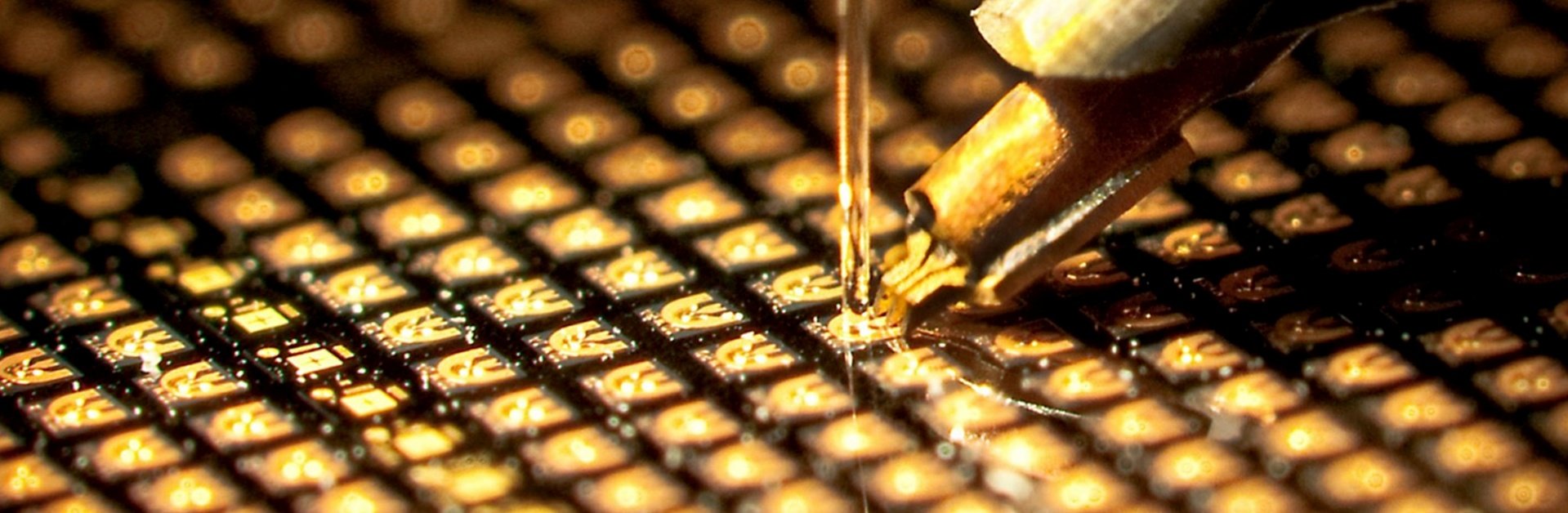
Manufacturing Vertical Laser: The Key to High-Performance Devices
In demanding optical systems, the vertical laser has become a core building block. By emitting light perpendicular to the surface of the semiconductor chip, these devices enable compact footprints, efficient power use, and clean beam profiles that are hard to achieve with traditional edge-emitting lasers. For designers of sensing, communication, and medical platforms, choosing the right vertical laser partner is now a strategic decision, not just a purchasing one.
What Is a Vertical Laser?
A vertical laser is a semiconductor laser whose beam exits vertically from the top surface of the chip instead of from a cleaved edge. The best-known implementation is the Vertical-Cavity Surface-Emitting Laser (VCSEL).
In a VCSEL, pairs of high-reflectivity mirrors (distributed Bragg reflectors) form a short vertical cavity around an active region. When current is injected, the active region emits light that bounces between these mirrors until it reaches the threshold for laser oscillation and exits along the surface normal as a narrow, well-defined beam.
This geometry allows:
Wafer-level testing of every die before dicing
Dense arrays that fit hundreds of emitters on a thumbnail-sized chip
Symmetric, low-divergence beams suitable for imaging, sensing, and coupling into optics
High efficiency at low drive currents, reducing heat load and power budgets
In practical terms, this means a vertical laser can deliver laser-class performance in a very small, power-friendly package.

Why Vertical Lasers Matter in Modern Technology
Because of their unique architecture and efficiency, vertical lasers underpin a wide range of now-standard and emerging applications:
Fiber-optic and short-reach data communications – VCSELs are widely used in multimode fiber links within data centers and high-density interconnects.
3D sensing and imaging – Structured-light and time-of-flight (ToF) depth cameras, facial recognition, and AR/VR depth sensing rely on uniform, controllable illumination from VCSEL arrays.
Quantum and precision sensing – Single-mode VCSELs around 795 nm and 895 nm support atomic spectroscopy, quantum magnetometry, and other precision instruments.
Medical diagnostics and wearables – Compact, efficient sources serve in non-invasive monitoring, imaging, and medical wearables where thermal and size constraints are tight.
Industrial and automotive systems – From in-cabin driver monitoring and short-range LiDAR to metrology and micromachining, vertical lasers offer stable, repeatable beams in harsh environments.
In all of these settings, the combination of small footprint, low power, and precise beam control is exactly what system designers need.
Ace Photonics Co., Ltd.: Vertical Laser and VCSEL Specialists
Ace Photonics Co., Ltd. is a semiconductor laser manufacturer focused primarily on VCSELs and related vertical laser technologies across roughly the 750–1550 nm spectral range.
Key facts:
Based in Wuxi, China, founded in 2022
Core team with deep experience in VCSEL design, epitaxial growth, and chip processing, many with backgrounds from the Chinese Academy of Sciences
Specialization in single-mode and multi-mode VCSELs, plus advanced laser modules for quantum sensing, laser ranging, high-end industrial and aerospace applications
Certified under ISO 9001:2015 and recognized as a National High-tech Enterprise, underscoring robust quality systems and IP management
This focused portfolio places Ace Photonics in a strong position to deliver vertical laser solutions that bridge research-grade performance and industrial-scale reliability.
Vertical Laser Portfolio and Manufacturing Expertise
Ace Photonics offers a vertically integrated lineup of VCSEL-based vertical lasers, tailored to different levels of integration:
1. VCSEL Dies and Gain Chips
Single-mode VCSEL dies in the ~750–900 nm region, with flagship lines at 795 nm and 895 nm for atomic and quantum sensing platforms
VCSEL gain chips for customers building custom resonators or optical benches, allowing external optics and frequency-conversion elements for specialized tools
The surface-emitting format supports full wafer-level testing, refined binning, and layout flexibility for arrays and chip-scale packaging.
2. Packaged VCSEL Vertical Lasers
Ace Photonics supplies a range of vertical laser packages, including:
SMD packages for compact consumer and industrial electronics
TO-46 cans for lab setups and rugged OEM modules
Non-magnetic ceramic or composite packages for sensitive quantum sensors requiring minimal parasitic magnetic fields
Many packages integrate thermistors or TECs to stabilize wavelength and output power over wide temperature ranges, enabling reliable operation up to 150 °C in selected product lines.
3. Complete Vertical Laser Modules
For plug-and-play integration, Ace Photonics also builds VCSEL modules that combine:
A VCSEL gain chip or array
Collimating/focusing optics and optional frequency-conversion elements
Electrical interfaces tailored to the target system
These modules serve laser processing, educational demonstrators, medical tools, and other application-specific platforms.
Customization: Tailoring Every Vertical Laser to the Application
One of Ace Photonics’ major strengths is application-driven customization. As vertical laser requirements vary widely between, say, quantum magnetometers and automotive depth cameras, this flexibility is critical.
Typical customization options include:
Wavelength engineering – tailored epitaxial stacks for specific operating wavelengths (for example, 795/895 nm for quantum sensing, 850 nm for data communications) and thermal budgets
Output power and aperture design – adjusting aperture size and array layout for structured-light patterns, higher power densities, or beam-shaping requirements
Packaging and footprint – SMD, TO-can, or non-magnetic ceramic solutions tuned for footprint, thermal path, and integration method
Module-level design – co-design of optics, packaging, and electrical interfaces to meet system-level constraints
Engineering teams work directly with customers’ optical, mechanical, and system engineers to reduce iteration cycles and de-risk new product introductions.
Quality Assurance and “Laser Vertical” Alignment in Production
For vertical lasers, performance depends not only on chip design but also on how the beam is aligned and held in production. Ace Photonics emphasizes both:
Wafer-Level and Device Testing
Each die, package, or module undergoes:Electrical and optical characterization across drive currents and temperatures
Beam profile, divergence, and pointing stability checks
Wavelength and polarization stability verification for sensing-grade applications
Laser Vertical Alignment on the Line
In high-precision manufacturing, “laser vertical” refers to aligning the beam so that its propagation is normal to the work surface within a tight angular tolerance and keeping that condition stable over time and temperature. Ace Photonics optimizes this in its customer solutions by focusing on:Angular tilt vs. fixture reference, often ≤ ±0.02–0.05°
Z-axis focal height control within a few micrometers
Beam pointing stability over temperature (µrad/°C levels)
Spot shape and eccentricity at the working plane
These controls are especially important in automotive sensing, semiconductor processing, and metrology, where a small tilt can translate into taper, parallax, or measurement bias.
Together, rigorous testing and careful vertical alignment practices lead to higher first-pass yield, more consistent performance at volume, and lower cost per unit.
Key Application Domains for Ace Photonics Vertical Lasers
Quantum Sensing and Precision Instrumentation
Ace Photonics’ single-mode VCSELs around 795 nm and 895 nm are engineered for:
Atomic spectroscopy and vapor-cell clocks
Quantum magnetometers and NV-center-based sensors
Cold-atom and other quantum experiments requiring stable, narrow-line sources
Non-magnetic packaging options help minimize parasitic fields in shielded chambers, enabling femtotesla-level sensitivity in specialized instruments.
3D Sensing, Imaging, and Consumer Electronics
VCSEL arrays from Ace Photonics power:
Facial recognition and biometric authentication
Structured-light and ToF cameras for mobile, AR/VR, and robotics
Compact depth sensors for smart glasses and consumer devices
High efficiency, low speckle, and compatibility with micro-optics make these vertical lasers ideal for compact modules.
Data Communications and Telecom
In short-reach multimode fiber links, vertical laser devices based on VCSELs offer:
High-speed transmission with attractive cost per channel
Low drive voltage and current for energy-efficient data centers
Compatibility with high-density pluggable modules and active optical cables
Industrial, Medical, and Emerging Fields
Beyond sensing and data, Ace Photonics supports:
Laser processing and micromachining
Medical imaging and non-invasive diagnostics
Laser ranging and environmental monitoring
High-end industrial and aerospace systems where reliability and size are critical
Looking Ahead: The Future of Vertical Lasers
As new markets emerge, the vertical laser is positioned to play a central role in:
Autonomous vehicles, where short-range LiDAR, driver monitoring, and cabin sensing depend on robust, temperature-stable illumination
Next-generation AR/VR and spatial computing, requiring ultra-compact, low-power depth sensing and eye-safe illumination
Environmental and industrial sensing, where low-power, wavelength-stable sources enable precise gas and particle detection
Ace Photonics is already exploring advanced approaches—such as smarter alignment stations, predictive thermal modeling, and new materials—to push vertical laser efficiency, reliability, and scalability even further.
Conclusion
Vertical lasers, especially VCSEL-based devices, are now a strategic technology behind many of today’s and tomorrow’s systems. Their vertical emission geometry allows wafer-level testability, dense array layouts, compact modules, and high efficiency—exactly what modern optical, sensing, and communication platforms demand.
By focusing on VCSEL and vertical cavity technologies, Ace Photonics Co., Ltd. delivers a combination of:
Deep GaAs-based VCSEL expertise
A complete product stack from dies and gain chips to packages and modules
Proven quality systems and certifications
Strong customization capabilities aligned with real-world integration challenges
For teams building quantum sensors, depth cameras, advanced medical instruments, or high-speed communication links, working with Ace Photonics means partnering with a vertical laser manufacturer that understands both device physics and system-level requirements—and can translate that understanding into reliable, scalable products.