
Future Prospects: Wearable Devices VCSEL in Next-Generation Wearables
As wearables move from simple step counters to always-on health companions and immersive AR terminals, the light source inside the sensor stack becomes a strategic design choice. At Ace Photonics Co., Ltd., we design and manufacture wearable devices VCSEL solutions that let brands build smaller, smarter and more power-efficient devices without compromising on measurement accuracy.
What Is VCSEL Technology in Simple Terms?
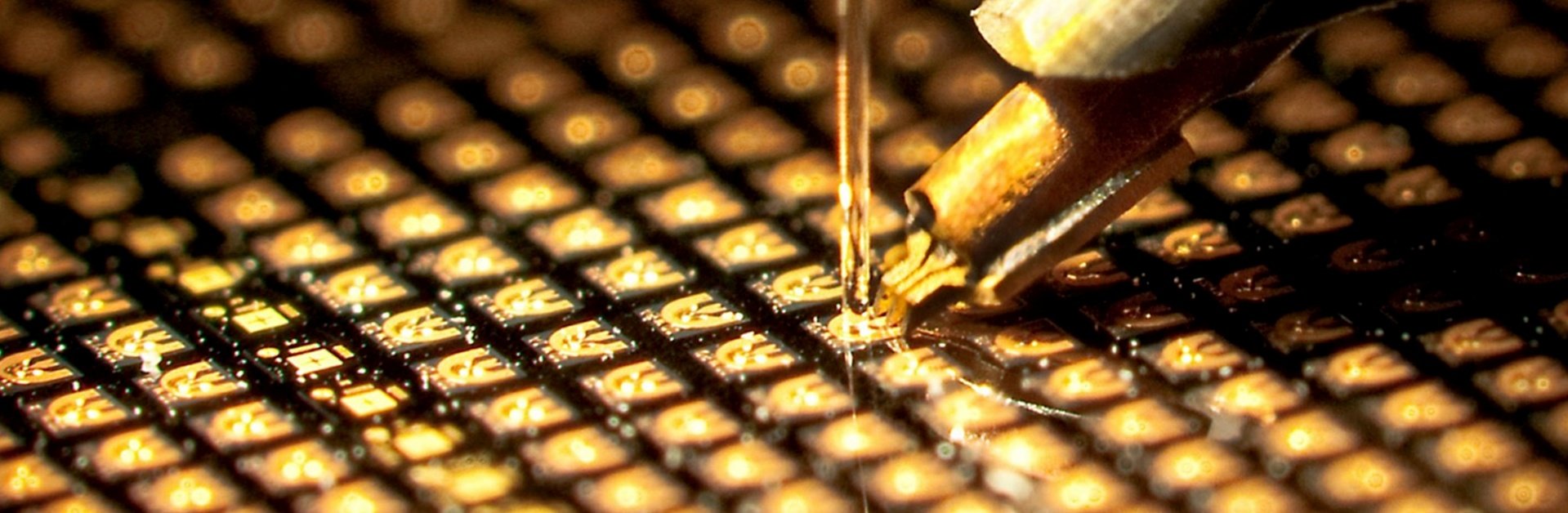
VCSEL stands for Vertical-Cavity Surface-Emitting Laser. Unlike edge-emitting lasers that send light out from the side of the chip, a VCSEL emits light perpendicular to the surface of the wafer. This vertical emission:
Enables on-wafer testing before packaging, lowering overall cost
Makes it easy to create 2D arrays for multi-channel sensing
Delivers low threshold current and therefore low power consumption – ideal for battery-powered devices
For wearable engineers, this means a light source that is compact, energy-efficient, and straightforward to integrate into modules, SMD packages or custom optical engines.
Why Wearable Devices VCSEL Matter
Compact, Efficient Light Sources for the Wrist, Face and Body
The core value of wearable devices VCSEL is the combination of:
High measurement precision for optical sensing
Very low power draw to protect battery life
Tiny footprints suitable for curved or highly constrained PCBs
These properties are critical for applications such as continuous heart-rate monitoring, blood-oxygen sensing, eye-safe depth sensing and gesture recognition in AR glasses.

Key Application Areas for Wearable Devices VCSEL
1. Health and Wellness Monitoring
Modern smartwatches, fitness bands and medical patches increasingly rely on optical sensing. Integrating a wearable devices VCSEL allows OEMs to deliver:
Heart rate and HRV tracking
Blood oxygen (SpO₂) monitoring
Sleep and respiratory metrics
The VCSEL emits near-infrared or visible light through the skin; the reflected light pattern is captured by a photodiode, and signal processing algorithms convert the waveform into physiological parameters in real time.
Because VCSELs provide a narrow spectral output and stable wavelength over temperature, they help reduce noise and improve the signal-to-noise ratio compared with broadband LEDs.
2. Fitness and Activity Analytics
For fitness-focused wearables, wearable devices VCSEL modules support:
More robust step and cadence detection during high-motion workouts
Calorie and training load estimation based on accurate heart-rate data
Stress and recovery assessment using multi-wavelength optical sensing
Paired with low-noise VCSEL drivers, devices can pulse light in short bursts, capturing high-resolution data while keeping average power consumption extremely low—key for multi-day battery life.
3. Augmented Reality and Smart Glasses
In AR and smart-glasses platforms, wearable devices VCSEL arrays are used for:
3D depth sensing via structured-light projection
Eye and head tracking for natural interaction
Gesture recognition at close range
The circular, low-divergence beam of a VCSEL is well suited to projector-style depth cameras, allowing compact optical modules that fit into thin temple arms or lens frames.
Technology Advancements Enabling Next-Generation Wearables
Miniaturization and SMD Integration
Recent progress in VCSEL SMD packaging has produced footprints down to a few square millimeters, including multi-emitter arrays and integrated lenses. These packages can be placed with standard SMT processes, simplifying mass production for high-volume wearable lines.
For device designers, this means:
More space for larger batteries or additional sensors
Easier routing on dense, multilayer flex-rigid PCBs
Cleaner mechanical integration in ultra-thin enclosures
Power Efficiency and Thermal Control
VCSELs inherently feature low threshold current. Combined with optimized driver electronics and duty-cycled operation, they enable:
Lower average current draw compared with LED-only stacks
Reduced self-heating, which is critical on skin-contact devices
More stable optical output over temperature
Ace Photonics supports wavelength-stable VCSEL dies and modules that maintain performance in the temperature ranges typical of wearables and body-worn devices.
Improved Sensor Accuracy
As VCSEL manufacturing and cavity design mature, devices achieve:
Narrower spectral linewidth
Higher optical power stability
Better beam quality for coupling into optical stacks
These improvements translate directly into more reliable heart-rate traces, cleaner depth maps, and robust performance across skin tones, ambient-light levels and motion conditions.
Ace Photonics: Custom Wearable Devices VCSEL Solutions
At Ace Photonics Co., Ltd., we provide a full portfolio of VCSEL building blocks – from bare VCSEL die and SMD packages to integrated VCSEL modules – that can be tuned to the specific needs of wearable OEMs.
Tailoring VCSELs to Your Wearable Platform
Depending on your use case, we can help optimize:
Wavelength (e.g., 780–950 nm ranges commonly used for PPG and depth sensing)
Output power and array configuration for single-spot or multi-spot sensing
Package style (chip-on-board, SMD, custom module) to match your industrial design
Thermal and eye-safety constraints to comply with IEC/IEC-60825 and related standards
By engaging our engineering team early in the design cycle, customers can refine optical stack dimensions, choose appropriate filter sets and align driver requirements before the first prototype.
Collaborative Development with Device Makers
We routinely collaborate with:
Consumer electronics brands building fitness trackers and smart rings
Enterprise AR vendors developing lightweight smart glasses
Med-tech start-ups working on continuous monitoring patches and non-invasive sensors
Our support covers feasibility analysis, sample selection, characterization data and guidance on PCB layout, optics and safety compliance.
Future Trends for Wearable Devices VCSEL
Deep Integration with IoT Ecosystems
As wearables become nodes in larger IoT and healthcare networks, wearable devices VCSEL sensors will feed high-quality data into:
Personal health dashboards and coaching apps
Remote patient-monitoring platforms
Enterprise AR/VR collaboration tools
Edge processing will handle noise reduction and first-level analytics locally, while cloud platforms aggregate long-term trends. Low-power VCSELs are central to enabling these always-connected scenarios without sacrificing battery life.
Smart Clothing and Textile-Based Sensors
Looking ahead, VCSEL emitters are expected to migrate from rigid watch modules into smart garments and textile patches, enabling:
Distributed heart-rate and respiration monitoring
Localized muscle-fatigue measurement
Context-aware temperature and motion sensing
Flexible modules and compact arrays make it possible to embed VCSELs along seams or panels, while maintaining wearer comfort.
Continuous Glucose and Advanced Biomarker Monitoring
Emerging device concepts use multi-wavelength VCSEL arrays in combination with advanced signal processing and AI to estimate biomarkers such as:
Glucose trends
Hydration and electrolyte levels
Stress-related indicators
While many of these systems are still in development or regulatory review, VCSELs provide the spectral control and modulation speed needed for robust, non-invasive optical measurements.
Engineering Challenges and Practical Solutions
Power Budget and Battery Life
The main constraint in any wearable is energy. To manage this, designers can:
Operate VCSELs in short, high-peak pulses with very low duty cycle
Use adaptive sampling, increasing measurement rate only when motion or anomalies are detected
Combine efficient VCSELs with optimized drivers and power-management ICs
These strategies keep average current consumption low while preserving signal quality.
Thermal and Mechanical Constraints
Compact enclosures leave little room for heat spreaders. Ace Photonics supports customers with recommendations such as:
Thermal vias and copper inlays under VCSEL pads
Careful placement away from skin-contact points where possible
Package choices that balance optical power with thermal performance
Data Security and Privacy
Wearables collect sensitive health data. While the VCSEL itself is an optical component, responsible system design must ensure:
Strong encryption for data at rest and in transit
Secure firmware update paths for sensor hubs
Clear user controls over data sharing
These measures help end users trust the insights derived from their wearable devices.
Conclusion: Partnering for the Next Wave of Wearable Innovation
The integration of wearable devices VCSEL into next-generation wearables marks a decisive shift in how precisely—and how continuously—we can sense the human body and the surrounding environment. From round-the-clock health monitoring to intuitive AR interfaces, VCSEL-based designs offer:
Higher accuracy
Better energy efficiency
Smaller, more comfortable form factors
Ace Photonics Co., Ltd. is committed to supporting device makers at every stage, from concept and wavelength selection to pilot runs and mass production. By combining advanced VCSEL die, SMD packages and modules with close technical collaboration, we help you bring smarter, more reliable wearables to market—faster.