
Wearable ED Devices and VCSELs: A Perfect Match for Health Monitoring
Health has moved from the doctor’s office to the wrist, finger, and even the eyeglass frame. Wearable ED devices are now constant companions, quietly collecting data that helps us understand our bodies better. At the same time, advances in VCSEL (Vertical-Cavity Surface-Emitting Laser) technology are changing what these devices can measure and how long they can run on a single charge.
As a VCSEL manufacturer, Ace Photonics focuses on laser solutions that make wearable sensors more accurate, more efficient, and easier to integrate into compact form factors.
What Are Wearable ED Devices?
Wearable ED devices are electronic gadgets designed to be worn on the body—such as smartwatches, fitness bands, smart rings, medical patches, and even AR glasses. They continuously or periodically track health-related metrics, for example:
Heart rate and heart rate variability (HRV)
Blood oxygen saturation (SpO₂)
Sleep and respiration patterns
Activity level, steps, and training load
By turning raw sensor signals into easy-to-read dashboards, these devices help users follow fitness goals, manage chronic conditions, or share data with healthcare teams when necessary.
VCSEL Technology in a Nutshell
What Is a VCSEL?
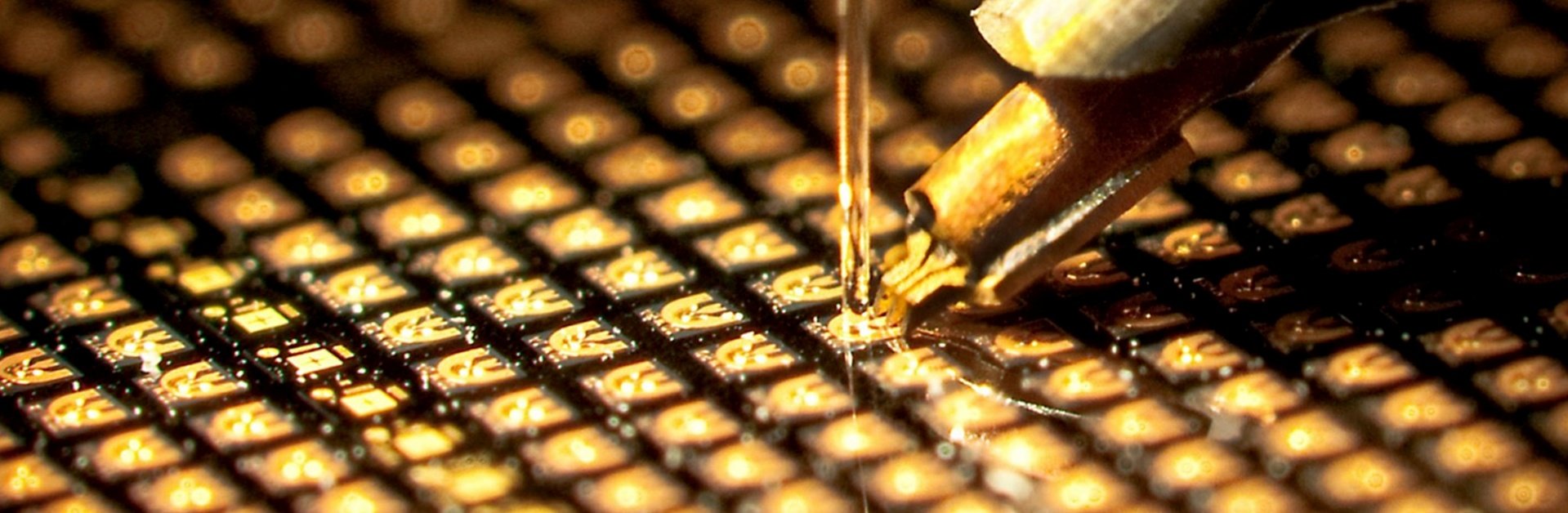
VCSEL stands for Vertical-Cavity Surface-Emitting Laser. It is a semiconductor laser that emits light vertically from the surface of the chip rather than from its edge. This geometry brings several practical advantages:
Efficient, low-power operation
Symmetric, low-divergence beam profile
Easy array integration on a single chip
Wafer-level testing for higher yield and lower cost
Ace Photonics develops VCSELs across the 750–1550 nm spectral range, including popular wavelengths like 795 nm, 850 nm, and 895 nm used in sensing and medical applications.

Why VCSELs Fit Wearable ED Devices
Compared with traditional LEDs or edge-emitting lasers, VCSELs offer characteristics that are particularly important for wearables:
Higher energy efficiency at typical sensing currents → longer battery life
Narrow spectral output → better signal-to-noise ratio for optical bio-sensing
Stable wavelength over temperature → more reliable medical readings
Tiny footprints and SMD packages → easier integration into slim, curved PCBs
These features make VCSELs a natural choice for optical health sensors that must run continuously on very limited power.
Wearable ED Devices and VCSELs: How They Work Together
Optical Sensing with VCSELs
Many health metrics in wearables rely on photoplethysmography (PPG) or related optical techniques. The basic process:
A VCSEL in the near-infrared or visible band emits light into the skin.
Blood vessels and tissue absorb and scatter part of this light.
A photodiode captures the reflected or transmitted light.
Algorithms analyze small changes in the optical signal to extract heart rate, HRV, SpO₂, respiration, and more.
Because VCSELs deliver a clean, well-defined wavelength and can be pulsed at high speed, the resulting signals are easier to filter and interpret, which directly supports more accurate health monitoring.
Practical Benefits in Wearables
When you combine Wearable ED Devices and VCSELs, you get tangible improvements at both user and engineering levels:
Better accuracy in heart-rate and oxygen readings, even during motion
Lower average power through short, high-efficiency light pulses
Smaller sensor stacks, enabling thinner watches, rings, and patches
Improved reliability thanks to robust VCSEL packaging and stable output over time
Real-World Applications of VCSELs in Wearable ED Devices
Today, VCSELs are already embedded in a wide range of wearable and near-body systems:
Smartwatches & fitness bands
Continuous heart-rate and HRV tracking
SpO₂ monitoring for sports and sleep
Stress and recovery estimates from multi-wavelength sensing
Medical patches and remote monitoring devices
Long-term cardiovascular monitoring
Respiratory and sleep apnea screening
Integration into hospital or telemedicine platforms
Smart glasses and AR wearables
Eye and head tracking
Gesture recognition and short-range depth sensing
Combined 3D sensing and basic wellness tracking
In each of these, VCSELs provide a compact, low-power light source that fits easily into constrained mechanical designs while delivering high-quality sensing data.
Customization Options for Wearable OEMs
Tailoring VCSELs to Specific Wearable Needs
Because wearable applications vary widely—sports vs. clinical, wrist vs. face vs. chest—manufacturers rarely want a one-size-fits-all light source. Ace Photonics supports OEMs and device brands with:
Custom wavelengths (e.g., around 850 nm for PPG, or specialized lines for medical or quantum sensing)
Adjustable output power levels to balance eye safety, measurement depth, and battery life
Different package types, including compact SMD VCSELs and integrated VCSEL modules
Array options for multi-channel sensing or structured-light projection
By tuning these parameters, wearable designers can optimize for accuracy, comfort, or runtime—depending on the device’s target use case.
Engineering Support Beyond the Chip
In addition to supplying VCSEL die and modules, Ace Photonics works with OEM teams on:
Feasibility and wavelength selection
Characterization data and thermal behavior
PCB layout and driver recommendations
Safety and regulatory considerations for consumer and medical markets
This collaboration shortens the path from concept to mass production and helps ensure the VCSEL is used to its full potential inside the wearable sensor stack.
The Growing Importance of Health Monitoring
As consumers become more health-conscious, Wearable ED Devices and VCSELs are moving from “nice-to-have gadgets” to critical components of personal health ecosystems. High-quality optical data from VCSEL-based sensors can feed into:
Personal wellness apps and coaching platforms
Remote patient monitoring systems in healthcare
Enterprise wellness and occupational safety programs
For end users, this means earlier detection of anomalies, more personalized insights, and the ability to share meaningful data with doctors rather than just occasional snapshots.
Future Trends: Where Wearable ED Devices and VCSELs Are Heading
Looking ahead, several trends are set to deepen the connection between Wearable ED Devices and VCSELs:
AI and machine learning on-device
Models that learn individual baselines and flag subtle changes in cardiovascular or respiratory patterns.
Multi-sensor fusion
Combining VCSEL-based optical sensing with temperature, motion, ECG, and environmental sensors in a single module.
More advanced form factors
Smart rings, earbuds, glasses, and soft patches using ultra-compact VCSEL SMDs for discreet, always-on monitoring.
Deeper integration with healthcare systems
Secure data pipelines linking wearable measurements to hospital dashboards and telemedicine platforms.
VCSEL customization—especially in wavelength, power, and packaging—will be a key enabler of these innovations.
Embracing the Future of Health Monitoring
The partnership between wearable ED devices and VCSELs is reshaping how we think about health data. Efficient, customizable VCSELs allow wearables to be smaller, smarter, and more power-aware—without sacrificing measurement quality.
As a dedicated VCSEL manufacturer, Ace Photonics continues to expand its portfolio of VCSEL die, packages, and modules tailored to demanding sensing applications, including medical and wellness wearables.
For brands building the next generation of health-focused wearables, integrating VCSEL technology is no longer just an option—it’s a strategic way to deliver more accurate insights, longer battery life, and truly user-friendly designs.